10.12.2025 22:40
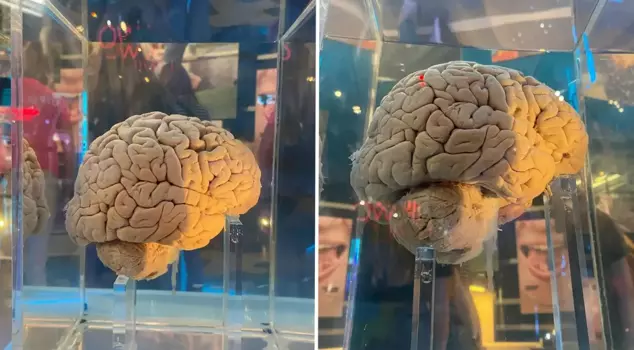
The Brain Bank located in Amsterdam has become one of the most critical data sources for the scientific community by storing over 5,000 human brains under special conditions. The institution is now opening the doors to a new era by analyzing this vast collection with artificial intelligence to reveal the molecular structure of the brain.
The Amsterdam Brain Bank, which has one of the largest brain collections in the world, is guiding the scientific community by preserving over 5,300 human brains under special conditions. The center aims to analyze this vast archive using artificial intelligence to create a molecular atlas of the human brain.
40-YEAR JOURNEY
The bank, located in the southeast of Amsterdam, was founded in 1985 by neurobiologist Prof. Dick Swaab.
Swaab found his first donors in nursing homes to solve the mystery of Alzheimer’s, personally performing the brain extraction procedures.
Today, the collection has become a vast archive consisting of healthy and diseased brains, with samples sent to over 1,500 research projects worldwide each year.
DONATION PROCESS
When a donor passes away, the team immediately springs into action upon receiving a call from the "donor phone." The brain is extracted within a maximum of 6 hours after death.
The left hemisphere is frozen at –70 degrees,
while the right hemisphere is fixed in paraffin to prepare for microscopic examination.
The only way to obtain such detailed access to the human brain is through tissue samples taken after death.
Structures that cannot be shown by brain scanners can be examined in detail at this bank.
This enables critical research on many diseases such as Alzheimer’s, Parkinson’s, PTSD, schizophrenia, bipolar disorder, and depression.
Today, many treatment approaches are based on samples sent from the Amsterdam Brain Bank.
MAJOR GAP IN THE BRAINS OF PSYCHIATRIC PATIENTS
The bank's director, Inge Huitinga, states that their biggest deficiency is donors with psychiatric disorders.
Although there are records of 1,500 volunteers with depression, bipolar disorder, and schizophrenia, currently only 258 brains are in the collection.
According to scientists, at least 20 times this number is needed for robust research.
CONTROVERSIAL PAGE: AIDS ERA
Some anatomical differences found in the brains of young men who died from AIDS in the 1980s, while considered scientifically significant, sparked major public debates.
Criticism continued for many years on the grounds that the findings could lead to stigmatization.
250 DIFFERENT SAMPLES FROM ONE BRAIN
Especially in the research of complex disorders like depression, samples need to be taken from 250 different regions of a single brain.
In Alzheimer’s studies, this number is recorded as an average of 80 samples.
To sustain all these activities, the center needs to raise 1.3 million euros in funding each year.
NEW GOAL: MOLECULAR ATLAS OF THE BRAIN WITH ARTIFICIAL INTELLIGENCE
The Amsterdam Brain Bank is raising the bar even higher with government grants and new projects.
The aim is to detail the genetic structure, proteins, and molecular map of the human brain with the support of artificial intelligence.
This way, it is aimed that in the future, diseases such as depression, anxiety, and bipolar disorder can be diagnosed solely at the molecular level.