09.11.2026 10:12
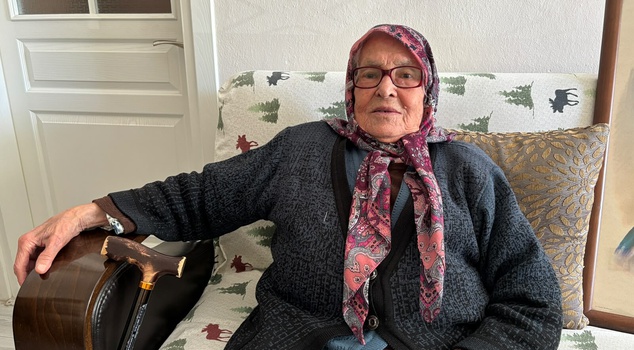
Nezihe Dilmen, 96, who lives in the Foça district of Izmir, recounted that she saw Atatürk when she came to Izmir with her family from the Kavala region of Greece as a child. Dilmen, who remembers that Atatürk was wearing baggy trousers and a cap, also recounted with tears in her eyes the persecution in Kavala that she had heard about from her mother.
Nezihe Dilmen, 96, living in IZMIR, said that she saw Atatürk in Izmir, where she and her family had fled from Greek persecution during her childhood. Dilmen said, "Wouldn't I love Atatürk? I do. Atatürk saved us and brought us here."
HE HAD BAGGY TROUSERS ON HIS LEGS AND A CAP ON HIS HEAD
Nezihe Dilmen, living in the Foça district of Izmir, said that she saw Atatürk when she came to Izmir with her family from the Kavala district of Greece while she was still very young. Describing those moments, Dilmen said, "We came from 9 villages in Kavala. We reached Izmir in a month. They put us in a large place like a store. A full 9 villages with their belongings and animals. While we were there, Atatürk came. He had baggy trousers on his legs. And he had a cap on his head. I was little. It was very crowded. Wouldn't I love Atatürk? I do. Atatürk saved us and brought us here. Atatürk gave us these lands. Everyone sat wherever they wanted."
SHE DESCRIBED THE GREEK PERSECUTION WITH TEARS IN HER EYES
Dilmen, who was born in Kavala, described with tears in her eyes the persecution her family experienced in their homeland. Dilmen said, "Our father went to war and returned wounded. He also came to Turkey wounded. At that time there were no doctors, no information. People knew nothing. After that, he died of his wounds. My mother and the others were in Kavala. The Greeks would raid their homes and take the milk of their animals. They would take their wheat. They would take and eat their food and bread. My mother always used to tell these things. My mother and the others would hide their wheat in a tree with a hole in the middle. They took over our homes. Atatürk gathered a total of 9 villages. After that, we came to Izmir."
Noting that her mother always told about the persecution they saw there, Nezihe Dilmen said, "They suffered great oppression. Young men went to military service; they tied the arms of the remaining elderly behind their backs and threw them into wells. Some of the elderly escaped and hid among the bushes. They took our crops."