18.11.2026 09:30
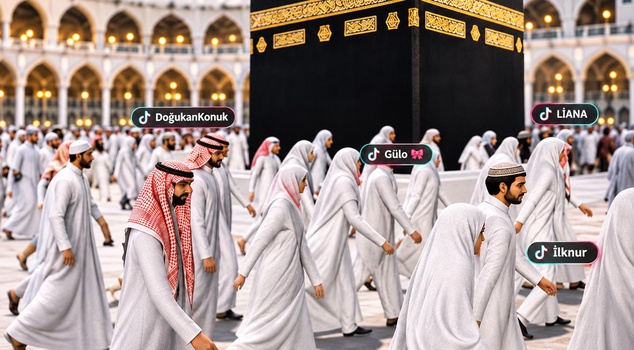
Another method used to make money on TikTok has been added. It has emerged that tokens were collected from viewers by creating "virtual tawaf" animations over an image of the Kaaba during live broadcasts. The presentation of effects such as digital Zamzam serving and the stoning of the devil depending on the amount of gifts sent has drawn reactions.
In some live broadcasts on TikTok, animated characters bearing users' names are made to circulate around an image of the Kaaba. While the names of those who send tokens to the broadcast are displayed on screen, different effects are activated depending on the amount sent. It drew attention that broadcasters who previously collected gifts with animations such as halay and convoys are this time trying to earn income by using religious values.
ZAMZAM AND STONING THE DEVIL BASED ON TOKEN AMOUNT
According to information relayed by CNN TÜRK correspondent Ceren Meriç, in the live broadcasts, users who send 1 to 4 tokens are offered a digital zamzam offering effect. Those who send more tokens encounter a stoning the devil animation and special support messages. While expressions such as "May Allah accept it" are used in the broadcasts, viewers are encouraged to send more tokens in order to have their names shown among the first 5 people.
ATTENTION DRAWN TO POSSIBILITY OF MONEY LAUNDERING
Meriç stated that the software creating the animations in question has been put up for sale and can be used in different broadcasts. Expressing that these broadcasts are organized for the purpose of making money, Meriç drew attention to the possibility that money transfers made through tokens could also be used for money laundering. However, no verified money laundering transaction or official investigation information linked to the broadcasts was shared.
"THERE IS NO VIRTUAL WORSHIP IN ISLAM"
Theologian writer Lütfü Özşahin reacted to the use of religious values for the purpose of making money. Özşahin said, "According to Islam, there is no virtual worship. In worship, the purpose is absolutely for the person to participate in person with their words, body, and soul." Evaluating the creation of worship imagery in exchange for money as religious exploitation, Özşahin emphasized that the use of such practices for educational purposes is a different matter.