02.11.2026 12:02
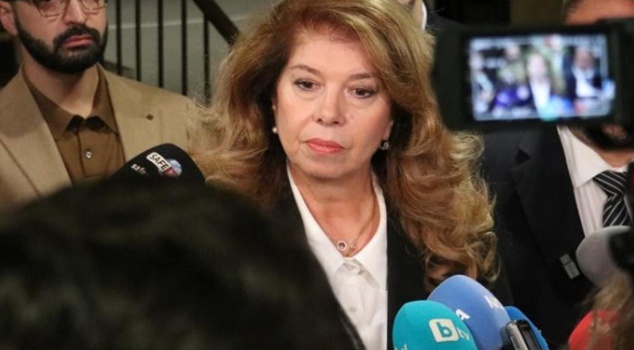
Iliyana Yotova won the second round of Bulgaria’s presidential election, advocating improved relations with Russia and the lifting of sanctions on Moscow. Yotova, who opposes military and financial aid to Ukraine, received 57.58% of the vote, beating her pro-Western rival Andrey Gyurov. Yotova, the country’s first female president elected to office, is expected to make improving relations with Russia her first action.
In Bulgaria, an EU and NATO member, voters preferred the candidate advocating dialogue with Russia. Yotova, who describes herself as “the President of Peace,” is expected to open the door to a new era in relations with the Kremlin.
“WANTS TO BE ‘PRESIDENT OF PEACE’”
Throughout her election campaign, Yotova advocated that dialogue with Russia should be maintained and opposed financial and military aid to Ukraine. Emphasizing that the war in Ukraine should end through negotiations and peacefully, Yotova stated that she wanted to position herself as “President of Peace.”
During Yotova’s presidency, she is expected to continue her policies envisioning improved relations with Russia and the lifting of sanctions on Moscow while Bulgaria continues its integration process with Europe.
RADEV GOVERNMENT HAD CUT MILITARY SUPPORT TO UKRAINE
Yotova is known as a close ally of Prime Minister Rumen Radev, known for his Kremlin-friendly stance. After Radev resigned from the presidency in January to lead his party into parliamentary elections, Yotova had been serving as acting president.
According to a report by Kyiv Independent, the Radev government ended military support to Ukraine from the Bulgarian army’s stocks and withdrew from the “Coalition of Volunteers” supporting Ukraine. It was noted that the government also avoided explicitly blaming Russia for drone attacks on commercial ships near Bulgaria’s coast.
WON WITH 57.58 PERCENT OF THE VOTE
According to the results announced by the Central Election Commission after 99.95 percent of the votes were counted, Yotova received 57.58 percent of the vote. Her rival Gyurov received 39.46 percent, while 2.95 percent of voters marked the option “I do not support any candidate.”
In the election, where turnout remained at 27 percent, Yotova received a total of 1,093,564 votes. Yotova, the country’s 7th president, will serve for 5 years.
WESTERN-LEANING CANDIDATE EMERGED FROM ABROAD
Yotova, who ran on the same ticket as vice presidential candidate Kiril Valchev, came first in 28 electoral districts across the country. Gyurov received the most votes in Sofia’s 23rd and 24th electoral districts and in Kardzhali.
Abroad, the picture was reversed. Of Bulgarian citizens who voted abroad, 55.4 percent supported the pro-Western Gyurov, and 42.2 percent supported Yotova.
NEW LEADER’S FIRST MESSAGE
After the results became clear, Yotova, who appeared before the cameras together with Prime Minister Radev and Valchev, thanked Radev in her first message. Yotova said, “If it weren’t for you, we couldn’t have achieved this. There was full mobilization in recent days, and you did not give up your support for me for even a moment.”
Claiming that her rival ran a “pressure campaign,” Yotova said, “From the very first moment, we ran a positive campaign. We did not allow the language of hate, conflict, and division to be part of our campaign for even a second. Unfortunately, we did not see the same approach from the other side.” Yotova also announced that Gyurov called her by phone to congratulate her.
GYUROV WANTED STRONG SUPPORT FOR UKRAINE
Gyurov, backed by the pro-EU opposition, a former deputy central bank governor and who served as interim prime minister in the first months of this year, advocated developing relations with Western partners and giving stronger support to Ukraine against Russia’s attacks. Regarding the results, Gyurov said, “We did not expect such a difference. I think this is a disappointment for everyone who supported us.”
CONGRATULATIONS FROM VON DER LEYEN
European Commission President Ursula von der Leyen also congratulated Yotova. Von der Leyen stated that she looked forward to “continuing joint work” in the fields of security, competitiveness, and energy.
ELECTION HELD IN THE SHADOW OF THE COST OF LIVING
The election in Bulgaria took place in the shadow of the security threats caused by the Russia-Ukraine War in the Black Sea. The cost of living, which deepened as conflicts in Ukraine and the Middle East raised energy prices, was also among the prominent issues of the election.