18.11.2026 07:00
A group of Awá-Guajá indigenous people, who have lived in Brazil's Maranhão state for decades without direct contact with the outside world, emerged from the forest and approached the village of another indigenous community. While moments of about 20 people, including women and children, obtaining food were recorded, the extremely thin appearance of some children and elderly people caused concern. Brazilian authorities increased health and safety measures after the rare encounter.
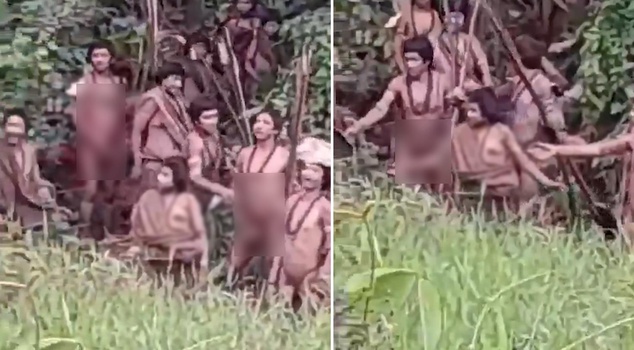
A remarkable encounter took place in the Arariboia Indigenous Territory, located in the state of Maranhão in northeastern Brazil. Members of the Awá-Guajá community, who have lived in voluntary isolation for many years, approached the village of Tawari, inhabited by the Guajajara people, on November 16. According to local sources, the group of about 20 people included men, women, and children. In footage recorded by local residents, some Indigenous people were seen carrying bows and arrows.
THEY TOOK FOOD FROM THE VILLAGERS AND RETURNED TO THE FOREST
In the footage, one of the village residents was seen taking food to the group, and the Indigenous people approached and took it. According to local sources, the group was given fruit and Jerusalem artichokes. The Awá-Guajá members soon returned to the depths of the forest. The encounter was considered one of the most remarkable contacts recorded in the region in recent years.
THE CONDITION OF CHILDREN AND THE ELDERLY CAUSED CONCERN
The Coordination of Indigenous Peoples' Organizations of Maranhão (Coapima) announced that some children and elderly people in the group appeared visibly weak. It is believed that the Indigenous people may have approached the village because they were struggling to find food. However, it has not yet been medically confirmed that they are experiencing food shortages or that there is malnutrition in the group. Illegal logging, hunting, and interventions in forest areas in the region are also cited among the factors threatening the living conditions of Indigenous communities.
MEASURES TAKEN AGAINST THE RISK OF DISEASE TRANSMISSION
The Brazilian National Foundation for Indigenous Peoples (Funai) mobilized special protection teams after the incident. A crisis coordination mechanism was established together with health authorities, and measures were taken to prevent uncontrolled entry into the area. Officials drew attention to the fact that communities with limited contact with the outside world may be more vulnerable to certain infectious diseases. Funai emphasized that its priorities are to protect the health and lives of Indigenous people and their right to maintain their own ways of life.
THE REASON FOR THE CONTACT IS NOT YET KNOWN
Experts say that the exact reason the group approached the village has not yet been determined. Authorities state that the brief encounter does not mean that the Awá-Guajá community has completely abandoned voluntary isolation. The Brazilian government continues to monitor developments in the region.