27.11.2026 04:40
In Sweden, a state-funded clinic is reassessing people who have previously been diagnosed with ADHD or autism, and hundreds have applied. Among the applicants are those who say the diagnosis has blocked their path to policing and military service. In a small study conducted before the clinic opened, it was found that about 80 percent of 72 people who wanted to get rid of their diagnosis did not meet the criteria. Advocates, however, warn that the practice could deepen stigma.
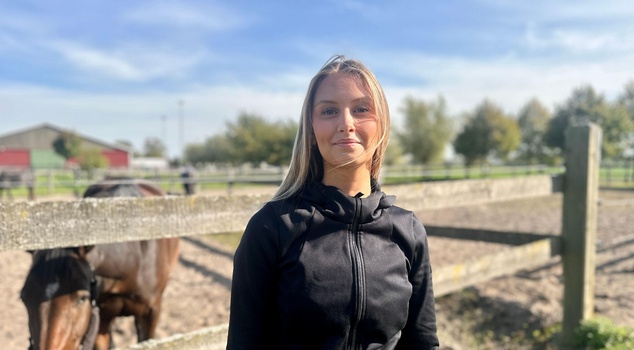
Freya was nervous as she entered a psychiatric clinic in Sweden for an Attention Deficit Hyperactivity Disorder (ADHD) assessment.
In recent years, there has been a large increase in ADHD diagnoses around the world. For many people, this can be a positive turning point. They describe it as a process that helps them understand themselves better and get support.
However, Freya (not her real name) is not going to the appointment she has waited a long time for in order to get a diagnosis.
This state-funded clinic offers reassessment of autism and ADHD diagnoses. The doctors here believe it is the first clinic in the world dedicated solely to this purpose.
When Freya was 12, she was experiencing anxiety problems at school and sought professional help.
“They thought I had ADHD,” she says.
But as she grew older, she began to feel that she did not experience ADHD symptoms.
Now she says, “I don’t think I have had it from the beginning.”
Her doubts about the diagnosis increased further when she learned during her teenage years that her dream of becoming a police officer in Sweden could be blocked because of it.
“I want all my options to be open,” she explains.
If the doctors at the clinic decide that Freya does not meet the criteria for ADHD, her medical records will be updated and it will be easier for her to apply for a job with the police force.
The clinic, known as Mottagning Neuropsykiatri, opened at a time when ADHD and autism diagnosis rates are under scrutiny. Many say the increase in diagnoses is due to greater awareness of symptoms and the greater inclusion of previously neglected groups, especially women and girls. But others argue that the rising numbers are due to overdiagnosis.
Clinical guidelines from relevant institutions in the UK and the World Health Organization define autism as a lifelong condition and ADHD as a neurodevelopmental condition that can continue into adulthood. Medical consensus is that both diagnoses are valid for life, even if symptoms fluctuate.
Some neurodiversity advocates warn that a special reassessment service like the one in Sweden could reinforce the idea that receiving an ADHD or autism diagnosis is undesirable and could deepen stigma around both conditions.
Nevertheless, hundreds of people have applied to the clinic for reassessment.
POLICE AND MILITARY BARRIER
Other young adults like Freya have also sought reassessment of their diagnoses after feeling that they had become an obstacle in front of them.
This was because, historically in Sweden, people diagnosed with ADHD or autism were not allowed to serve in the military or enter certain professions such as police officer, train driver and pilot. This was the case despite research suggesting that some neurodivergent traits may be advantageous in certain tasks. These rules vary around the world. Since 2022, people with ADHD can join the Swedish military provided they do not use medication. In addition, since 2021, people diagnosed with ADHD or autism can apply to the police force, but they must submit a specially obtained medical report that can cost around 15,000 SEK (about 75,000 TL).
Freya says she was relieved when she was referred to the clinic and learned that she could have her diagnosis reassessed there for free. Johanna, 24, was diagnosed with ADHD at age 14 after a period of what she describes as bad behavior at school. She initially found the diagnosis helpful and received additional support from her teachers.
But as she stepped into adulthood, she says she began to feel that she no longer needed additional support. She also began to question whether the diagnosis was correct after learning that it was an obstacle to becoming a police officer.
Johanna says she has some ADHD traits, such as a short attention span, but she thinks this is “not enough to receive an ADHD diagnosis.”
Johanna was reassessed at age 21 during one of the reassessment clinic’s first pilot programs, and it was concluded that she did not meet the diagnostic criteria for ADHD. She currently works at her father’s company and does not plan to become a police officer.
WHAT IS REASSESSMENT?
Both ADHD and autism are neurodevelopmental conditions that affect how people think and interact with the world. These diagnoses are made through detailed assessments, including questionnaires and interviews, rather than a single clinical test.
Doctors at the Mottagning Neuropsykiatri Clinic say their approach differs from traditional assessments because it focuses less on the person’s history and more on the symptoms they are currently experiencing.
“This is not the removal of a diagnosis, but a reassessment of the functioning you have today,” says the clinic’s chief psychologist, Sebastian Lundström.
The doctors say they do not make a judgment about whether the initial assessment was correct, so instead of deleting the original diagnosis from patients’ medical records, they add the new assessment as a note.
Lundström says some people who once received a diagnosis but were found in the clinic’s assessment not to meet the criteria may have been misdiagnosed. However, he also believes that for a small minority, ADHD and autism are not lifelong conditions and that individuals may stop experiencing symptoms as they age.
However, changing a person’s diagnosis because they do not currently show symptoms is a controversial approach.
“We must not forget that these are lifelong conditions,” says Navid Ghannad, president of Autism Skåne, a local non-governmental organization working for autistic individuals and their families in Sweden.
“The removal of a person’s diagnosis at a certain point in adulthood in a clinical setting does not mean that ADHD or autism has disappeared,” he adds.
He says symptoms may reappear later in life.
“The problem is that when symptoms reappear, this person, who no longer has a diagnosis, will not be able to receive timely and appropriate support. ”
Lundström says he does not think it is a major risk that people will be reassessed and deprived of necessary support.
He recounts that during the pilot program, he encountered people who “really wanted to get rid” of their diagnoses, but the psychologist told them, “we still think you meet the criteria.”
Vilda, 22, requested reassessment of the autism diagnosis she received after experiencing a trauma.
“I could not find myself in the autism diagnosis,” she says. “I was stuck. I know that is not me, but there was nothing I could do about it.
Lundström explains that requests from people such as Johanna and Vilda led to the clinic being established.
"It gained momentum on its own and spread by word of mouth. A large number of people contacted us, and we decided that this was a valid reason to start the service," she says. The clinic is open only one day a month.
Before opening the clinic, Lundström conducted a small peer-reviewed study. It found that about 80% of the 72 people who took part did not meet the criteria for ADHD or autism. The participants were not randomly selected people; they were people who already wanted to be rid of their diagnoses.
"It is important to emphasize that this patient group may not represent everyone with autism and ADHD," she adds.
In the first year of the pilot scheme, about 400 to 500 people spoke with Lundström, who is also an associate professor in child and adolescent psychiatry sciences at the University of Gothenburg, about having a reassessment.
The project has support from leading figures in Swedish psychiatry, including Sophia Eberhard, a senior consultant specializing in child and adolescent psychiatry.
"It was psychiatry that made these diagnoses in the first place," she says. "I believe we have a responsibility to help these young adults move forward. "
In September, the BBC was allowed to accompany Freya, the first patient to come to the newly opened clinic, which serves both men and women.
During her appointment, Freya takes part in questionnaires and verbal assessments to see whether she meets the criteria for ADHD. Although the questions are different, the process works the same way for both ADHD and autism.
After the appointment, Freya says she hopes she can "get rid of" her ADHD diagnosis.
But the doctors insist they do not simply give applicants the result they want. They also carry out other checks, such as assessing body language and communication skills, speaking with the parents of young patients, and reviewing medical records to see ongoing treatments.
FEAR OF STIGMA
The opening of the clinic has drawn criticism from people concerned that it sends the wrong message about autism and ADHD.
Jenny Hedin, from Organiserade Autister Västernorrland, an advocacy organization set up by and for autistic adults, says: "The clinic presents neurodiversity and autistic people as if we were something bad, a problem that needs fixing. But we are not."
Hedin, who is autistic herself and has an ADHD diagnosis, warns that people who can successfully "mask" or imitate neurotypical behavior may feel pressure to be rid of their diagnoses in order to be better accepted by society.
"This is especially a problem for women and girls, because girls are often very good at masking," she adds.
Others say the focus should be on changing rules that make it difficult for people with ADHD or autism to pursue certain professions.
Eric Donell, president of the Swedish national charity Riksförbundet Attention, is lobbying to remove employment restrictions that affect people with neurodiversity and that he considers unjust.
He emphasizes that receiving a diagnosis is extremely important for many people.
"Instead of asking people to get rid of their diagnoses, we should sometimes ask whether the rules themselves are justified," he says.
He adds that reassessments risk becoming "a way of adapting the individual to society instead of adapting society to human differences."
According to Lundström, people from the UK, Denmark, Norway and Germany have also contacted them requesting reassessment, but because the clinic serves only local residents, these people were turned away.
Georgina, 35, from the UK, contacted the clinic because she wanted the autism diagnosis she received at 25 to be "removed."
"It felt like a magic spell; as if I would get this label and the world would be more understanding toward me," she says.
But instead, she says, her colleagues looked down on her.
Georgina was later offered a reassessment by the national health service. The method will be the same as her first examination, but it is possible that different results will be obtained.
The reassessment clinic in Sweden says it does not make new or additional diagnoses without referring people elsewhere. That was also what interested Georgina, because in the UK reassessment she would be able to receive additional diagnoses that she had not received so far.
"It is a situation where you can go in and come out with other labels. That is really discouraging," she says. For now, she has decided not to enter the UK's reassessment process. Instead, before deciding whether to proceed, she is trying to find out how often a diagnosis is reassessed.
Back in Sweden, Freya comes out of the examination room a few hours after entering the clinic. The doctors there have concluded that Freya currently does not meet the criteria required for an ADHD diagnosis.
Freya says this is a "confirmation" that she was right to question her diagnosis.
"Now I finally have the same opportunities as everyone else. "
We used artificial intelligence to translate this article, the original of which is in English. A BBC journalist checked the translation before publication.
.