29.11.2026 07:50
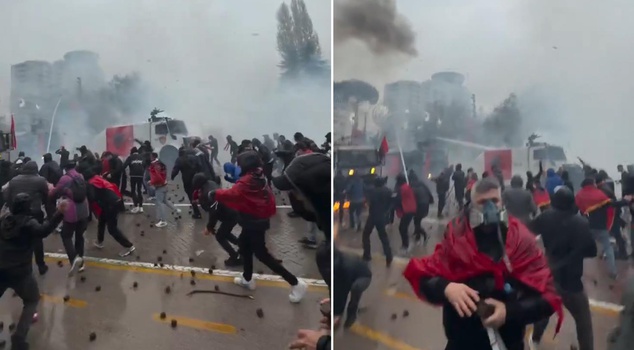
In Tirana, the capital of Albania, thousands of people took to the streets on the 114th anniversary of independence, demanding the resignation of Prime Minister Edi Rama. After stones and Molotov cocktails were thrown at government buildings, police intervened with tear gas and water cannons. While 47 people, including police officers, journalists and protesters, were injured, protesters chanted "Enough is enough, we want the entire system to change."
Anti-government protests that have continued for months in Albania turned into violent clashes on the country's independence anniversary. As thousands of people poured into the streets in the capital Tirana demanding the resignation of Prime Minister Edi Rama, scuffles broke out between protesters and police. In incidents in which stones and Molotov cocktails were thrown at government buildings, security forces responded with tear gas and water cannons. According to a statement by the Ministry of Health, at least 30 people were injured.
INDEPENDENCE CELEBRATIONS TURNED INTO PROTESTS
On November 28, the 114th anniversary of Albania's independence, the capital Tirana hosted anti-government demonstrations. Thousands of people from different regions of the country and from abroad gathered in Skanderbeg Square to demand the resignation of Prime Minister Edi Rama.
Protesters carrying Albanian flags began marching with anti-government slogans. The protests, which initially proceeded peacefully, escalated after some groups confronted security forces.
PROTESTERS ATTACKED GOVERNMENT BUILDINGS
During the march, some protesters who covered their faces with masks tried to break the windows of government buildings with stones and sticks. In incidents in which security cameras were also targeted, stones and Molotov cocktails were thrown at police teams.
After some protesters tried to reach Prime Minister Edi Rama's office, security forces intervened.
Police used water cannons and tear gas to disperse the crowd. After the intervention, protesters dispersed into side streets, while clashes occurred in different parts of the capital.
THERE ARE ALSO POLICE OFFICERS AND JOURNALISTS AMONG THE INJURED
Albania's Ministry of Health announced that at least 30 people were injured during the demonstrations. It was reported that police officers and journalists performing their duties were also among the injured.
Some local reports said the number of injured rose to 35. However, this number differs from the Ministry of Health's initial statement.
After the incidents in the capital, security measures were increased, and police teams carried out vehicle checks on the main roads entering and leaving Tirana.
NUMBER OF INJURED RISES TO 47
According to updated data later shared by the Ministry of Health, the number of people who applied to hospitals during the protests rose to 47.
It was announced that among the injured were 20 police officers, 15 protesters, 6 journalists, 4 bystanders, one security guard and one member of parliament.
It was reported that 5 of the injured were still being treated in hospital, while 42 people were discharged.
TRUMP'S SON-IN-LAW'S PROJECT IS ALSO BEHIND THE PROTESTS
At the start of the anti-government protests in Albania was a luxury tourism project planned on the country's southern coast.
Reactions to the project, linked to an investment company founded by US President Donald Trump's son-in-law Jared Kushner, turned into demonstrations in May.
Over time, students also joined the protests, which began to be called the "Flamingo Movement," in September. Reactions to education conditions, the high cost of living, unemployment and corruption allegations were effective in spreading the movement across the country.
The demands of the protesters, who initially focused on specific economic and social problems, expanded in the following months to include the resignation of Prime Minister Rama and changes to the political system.
"WE HAVE HAD ENOUGH, WE WANT THE ENTIRE SYSTEM TO CHANGE"
Students participating in the protests demanded a change in the country's economic conditions and education system.
One of the protesting students, Juna Vasili, noted that living conditions were becoming increasingly difficult and said they wanted not only the government but also the current political system to change.
Arian Lleshi, 33, who came from the United Kingdom to Tirana to join the protest, argued that the political parties in the country do not represent the people and stated that a new political generation is needed.
Retired Suzana Gjeta, who also joined the demonstrations, reacted to low pensions and corruption allegations and demanded that the Rama government step down.
RAMA'S RESIGNATION IS AT THE CENTER OF THE DEMONSTRATIONS
In the latest round of demonstrations that have continued for months in Albania, demands were directed directly at Prime Minister Edi Rama.
The fact that the protests, in which thousands of people participated on the independence anniversary, turned into clashes once again revealed the political and social tension in the country.
While protesters insist on Prime Minister Rama's resignation, how the anti-government protests will continue and how the government will respond to the demands remains uncertain.