07.07.2026 12:30
During the NATO summit panel held in Ankara, officials from Latvia, Lithuania, and Estonia discussed deterrence against Russia and Baltic vulnerability. Latvian Foreign Minister Braze stated that Russia is not ready to challenge NATO but is willing to create "false dilemmas."
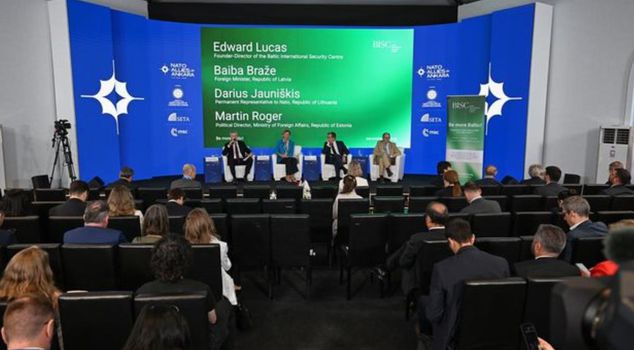
As part of the 36th NATO Summit of Heads of State and Government, the panel titled "Why Narva Is Not the Next Target: Examining Assumptions on Baltic Vulnerability" was held within the "Allies in Ankara" program organized by the Presidential Directorate of Communications in cooperation with the Munich Security Conference (MSC) and the Foundation for Political, Economic and Social Research (SETA).
Held at Ankara Palas under the moderation of the Baltic International Security Center, the panel "Why Narva Is Not the Next Target: Examining Assumptions on Baltic Vulnerability" featured speakers including Latvian Foreign Minister Baiba Braze, Lithuania's Permanent Representative to NATO Darius Jauniskis, and Estonia's Ministry of Foreign Affairs Political Director Martin Roger.
"RUSSIA IS NOT READY TO CHALLENGE NATO"
Braze stated that Russia is not ready to challenge NATO but is willing to create "false dilemmas," emphasizing that they must not lose seriousness regarding security and defense.
Noting that NATO affects the coherent work, planning, preparedness, and defense plans of allies, Braze said, "We must ensure that we invest in internal security, borders, and intelligence cooperation, that we as NATO trust ourselves, and that deterrence works."
Braze mentioned that they are subject to external interference and disinformation operations aimed at weakening support for Ukrainians.
Braze assessed that, regardless of origin, people in her country want to be part of the Latvian state, and despite different ethnic backgrounds, people wish to defend their country.
CRITICISM OF RUSSIA
Lithuania's Permanent Representative to NATO Jauniskis said they do not see Belarus as "separate" from Russia, arguing that Minsk is entirely dependent on Russia's energy, money, and support.
Referring to the issue of weather balloons entering his country from Belarus and carrying smuggled cigarettes, Jauniskis emphasized that these cause serious security problems.
Jauniskis pointed out that Russia and Belarus spread propaganda with incorrect information about his country's history.
Estonian official Roger drew attention to the issue of cybersecurity, noting that state institutions are combating it and that this ultimately increases public resilience.
Roger stated that Estonia's city of Narva on the Russian border is not Moscow's next target, saying, "I think the deterrence we have built in Estonia, both at the national level and with allies, has reached a point where the Russians truly cannot afford to take such a step in Estonia."
Roger emphasized that they are making significant investments in border security and noted that 81 percent of Estonians believe the country should resist in the event of an attack.