24.11.2026 15:13
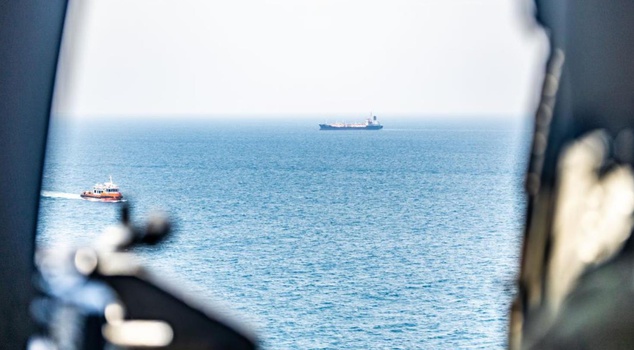
The crisis in the Strait of Hormuz disrupted Gulf countries' oil and natural gas shipments, causing billions of dollars in losses to their energy revenues. Qatar's third-quarter energy revenues fell 75.2%, while Saudi Arabia's oil revenues declined 22.8%. Saudi Arabia and the UAE, which can use alternative routes via pipelines, partially limited their losses, while Oman's oil and gas revenues increased by approximately $2.9 billion.
The impact of the crisis in the Strait of Hormuz on the energy revenues of Gulf countries has been reflected in official data. Access to alternative export routes and rising energy prices determined the difference between the countries.
QATAR, KUWAIT AND BAHRAIN WERE HEAVILY AFFECTED
The energy sectors of Qatar, Kuwait and Bahrain were heavily affected by shipment disruptions and production disruptions. Saudi Arabia and the United Arab Emirates (UAE) partially limited their losses thanks to pipelines that allow them to export without using the Strait of Hormuz. Oman's oil and gas revenues entering the state treasury in the same period increased.
QATAR'S ENERGY REVENUE FELL BY 75.2 PERCENT
According to data published by Qatar's Ministry of Finance on the official news agency QNA, the country's oil and natural gas revenues were 43 billion 356 million riyals in the third quarter of 2025, while they fell to 10 billion 748 million riyals in the same period this year. The 75.2 percent decline corresponds to 32 billion 608 million Qatari riyals, or approximately 9 billion dollars.
In Qatar, the crisis was not limited to disruptions in the passage of liquefied natural gas (LNG) tankers through the Strait of Hormuz. The explosion and damage at Ras Laffan, the world's largest LNG production facility, also narrowed export capacity.
SAUDI ARABIA RECORDS A $9.2 BILLION DECLINE
According to the report of Saudi Arabia's Ministry of Finance, the country's oil revenues in the July-September period fell from 150 billion 816 million riyals last year to 116 billion 495 million riyals. The 22.8 percent decline corresponds to 34 billion 321 million riyals, or approximately 9.2 billion dollars.
Saudi Arabia's total oil revenues in the January-September period, however, fell from 452 billion 359 million riyals to 446 billion 342 million riyals. The decline in the first 9 months was about 1.3 percent, at 6 billion 17 million riyals ($1.6 billion).
The country's East-West pipeline extending to the Red Sea allowed part of the oil to reach international markets without using the Strait of Hormuz. However, attacks on alternative lines and maritime transport also made the use of this route difficult.
KUWAIT'S EXPORTS HALVED
According to the second-quarter foreign trade data of Kuwait's Central Statistical Bureau, as reported by The Edge, the value of the country's crude oil exports decreased by 58.7 percent year-on-year in the April-June period. Crude oil exports, which were 2 billion 337 million 643 thousand dinars in the second quarter of last year, fell to 966 million 339 thousand dinars this year.
Refined petroleum product exports also decreased by 34.2 percent, falling from 1 billion 772 million 506 thousand dinars to 1 billion 165 million 885 thousand dinars. Thus, the total export value dropped from approximately 4.11 billion dinars to 2.13 billion dinars. The approximately 48.1 percent year-on-year decline corresponds to 1 billion 977 million 925 thousand dinars.
According to S&P Global Energy data, Kuwait's crude oil production also fell from 2.58 million barrels per day in February to 1.7 million barrels per day in August.
ADNOC GAS'S REVENUE IN THE UAE FELL BY $4.1 BILLION
The UAE was able to redirect part of its crude oil exports outside the Strait of Hormuz thanks to the pipeline extending to Fujairah. However, restrictions on shipments of natural gas and liquefied petroleum products were reflected in the companies' financial results.
According to the activity report published by ADNOC Gas on November 10, the company's revenue indicator fell from $17 billion 991 million in the same period last year to $13 billion 879 million in the first 9 months of the year. The approximately 22.9 percent decline corresponds to a revenue loss of $4 billion 112 million. The company's net profit also declined from $3 billion 993 million to $3 billion 80 million in the same period.
The company announced that disruptions in the Strait of Hormuz limited its exports of LPG, naphtha and LNG and prevented it from fully benefiting from rising prices in international markets.
OIL ACTIVITIES IN BAHRAIN CONTRACTED BY 37.2 PERCENT
In Bahrain, the impact of the crisis manifested itself in losses in crude oil and refined product production, as well as changes in export markets and rising transport costs. According to data from the Ministry of Finance and National Economy, oil activities in the country contracted by 37.2 percent at constant prices in the first quarter of the year compared with the same period last year.
According to the World Bank's October 2026 assessment, in the March-August period, the production loss in crude oil reached approximately 4.1 million barrels, while the loss in refined products reached 27.9 million barrels.
OMAN'S REVENUES INCREASED
In Oman, unlike other Gulf countries, energy revenues increased thanks to its geographical location and the advantage of alternative routes. According to data from Oman's Ministry of Finance, the country's net oil revenues rose from 4 billion 710 million riyals to 5 billion 46 million riyals in the January-September period. Net natural gas revenues also increased from 1 billion 296 million riyals to 2 billion 88 million riyals in the same period.
Thus, Oman's total net oil and natural gas revenues rose from 6 billion 6 million riyals to 7 billion 134 million riyals.