16.11.2026 15:10
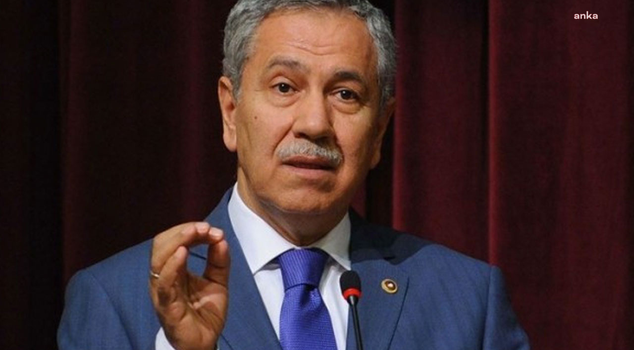
Former Speaker of the Grand National Assembly of Turkey Bülent Arınç proposed amending the constitutional provision requiring judges and prosecutors to retire at age 65 and raising the limit to at least 72. Arınç, who argued that trust in the judiciary has fallen due to inexperienced judges who entered the profession after July 15, also shared an incident he heard from a senior Court of Cassation member: A young judge appointed to the Court of Cassation as a rapporteur judge, when asked about his previous position, replied, "I was the party's district chairman."
Former Speaker of the Turkish Grand National Assembly Bülent Arınç, in his assessment following MHP Deputy Chairman Feti Yıldız’s statement on limiting the terms of Council of State and Court of Cassation members to 12 years, proposed changing the constitutional provision concerning the retirement age of judges and prosecutors. Recalling that under Article 140, paragraph 5 of the Constitution judges and prosecutors serve until they complete the age of 65, Arınç stated that this limit should be set at least at 72 years of age.
Arınç, who made a statement on his social media account regarding the issue, noted the following:
'IT MADE THE JUDICIARY DYSFUNCTIONAL'
“Mr. Feti Yıldız is a valuable politician whose legal views I respect. In his message dated November 4, by citing the relevant law, he recalled the statement ‘The terms of office of Council of State and Court of Cassation members have been limited to 12 years’ and summarized his views on this situation with the words ‘it will cause a serious loss of institutional memory on behalf of the high judiciary during the most productive and experienced period of their careers.’ While I agree with the views he put forward in this message, I would like to draw attention to an important issue underlying this matter. Under Article 140/5 of the Constitution, judges and prosecutors serve until they complete the age of 65. This provision covers all judges and prosecutors aged 65 and members of the high judiciary. The said article has led us to a crisis that produces extremely negative consequences today and renders the judiciary dysfunctional. In the treacherous coup attempt of July 15, 2016, around 5,000 dismissals from the judiciary occurred in total, comprising judges, prosecutors, and members of the high judiciary. In order to fill this gap, new judges and prosecutors who entered the profession through accelerated internships came to the bench at the age of 25-26. Trials faltered with people who had no experience in indictments or decisions, most of whom were well-intentioned but inexperienced. Some lawyers were also recruited into the profession; interviews have always been a subject of criticism.
'I WAS THE PARTY’S DISTRICT CHAIRMAN, SIR'
These young friends of ours became members of the high criminal court, prosecutors, and judges. They handed down aggravated life sentences. Contradictions emerged in decisions left to the discretion of those in presiding positions. Our young friends, due to their inexperience, followed suggestions and advice. Trust in the judiciary gradually declined. Because these people were needed, they were able to rise to all kinds of senior posts regardless of seniority. When I recently heard a tragicomic incident, I was truly startled. A senior Court of Cassation member recounted: A young judge, shortly after the place he was assigned by lot, was appointed as a rapporteur judge to the Court of Cassation; moreover, in a way that would not have been possible in the past. Our member looked at the file of the young rapporteur judge, was surprised, and wanted to meet him. He innocently asked, ‘Mr. Judge, what positions did you hold before coming here?’ The answer he received was likewise innocent: ‘... I was the party’s district chairman, sir.’ The person giving this answer will perhaps read a few folders of case files at the Court of Cassation and express an opinion toward reversal or affirmance. The situation is grave. Not only in our country but everywhere in the world, judges; if their mental faculties are sound and they have no ailment, gain value, knowledge, and experience through the files they examine, the decisions they make, and the affirmations and reversals they receive from the court of appeal and the Court of Cassation. In our country, however, the most valuable presidents and members of the Court of Cassation, HSK members, and members of the high judiciary come to say farewell, saying ‘I have completed 65 years of age.’ As they come, I feel very sad as well; because the judiciary is losing its most experienced and most successful members.
PROPOSAL OF 72 FOR THE AGE LIMIT
Although it is not a measure on its own, we can consider the 65-year age limit reasonable according to past conditions. However, TÜİK announced last year that the average life expectancy in Turkey was 78.5. Looking at the period we live in, I think the following: a temporary solution must be found on the issues Mr. Feti Yıldız points out. However, the definitive solution is possible only by changing this article of the Constitution. In my opinion, the issue of constitutional amendment is a regulation that all segments will find reasonable when these determinations and thoughts of ours are explained to them. If this article of the Constitution remains, the limit should be corrected to at least 72 years of age. If desired, during the amendment this article can be repealed and the matter can be evaluated as a separate article within itself. Amending the Constitution should not be difficult. Of course, there may be contradictions and objections on some issues; however, I think that this will be the common point of complaint for the parties within this judicial process we are experiencing. Our Honorable Minister of Justice may not wish to take a side on this issue due to his position. I definitely would not desire the Legal Policies Board to take a side; their agenda is very different. If our Honorable President gives permission and assigns this issue to one of our valuable people who has served as minister of justice or to myself, I am ready for the duty of bringing the issue among the parties and negotiating with them. I hope we will achieve this job as soon as possible.
We must do this urgently and as a single article. Either we must repeal this article and solve the problem with another regulation, or if the article remains, we must correct the age limit to 72. If this happens, by keeping today’s experienced judges and prosecutors in office, we will have the opportunity to benefit from them for at least 7 more years. I think they too would welcome this. Of course, in a Turkey where people who do not do their job, commit moral crimes, and where even a prosecutor can shoot a judge, these people must receive their punishments and be removed from the profession. Their penalties must definitely be applied in the heaviest manner within the scope of ordinary crimes. However, we need names who do their job well, are moral, faithful, well-mannered, and experienced as much as bread and water.”