20.11.2026 14:10
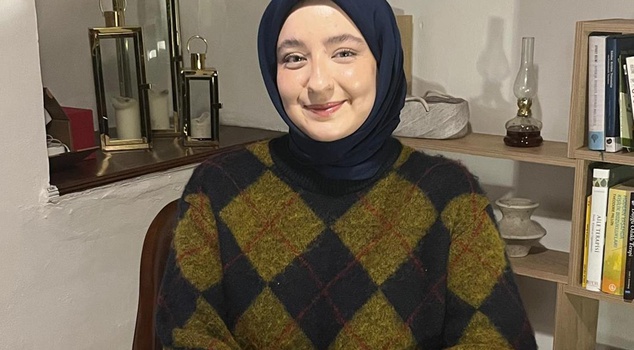
A new era has begun in the treatment of fears and phobias with virtual reality glasses. Clinical Psychologist Esma Burhan stated that with the help of artificial intelligence, they created an environment with giant butterflies for a client with a butterfly phobia, saying, "Even I was startled when I saw it." With this method, which is not yet widespread in Turkey, phobias such as fear of flying, insects, and heights are addressed through controlled simulations.
With the development of technology, virtual reality (VR) headsets have begun to offer new possibilities in psychological treatments. Thanks to this method used in the treatment of fear, anxiety and phobias, clients can confront their fears without leaving the clinical setting. Clinical Psychologist Esma Burhan stated that they can create personalized fear scenarios with AI-supported systems and described the simulation prepared for a client with a butterfly phobia. Burhan said that even she flinched when she saw the images featuring giant butterflies.
CONFRONTING FEARS IS NOW EASIER
In traditional psychotherapy methods, clients need to encounter the objects or environments they fear in a controlled way for the treatment of phobias. For example, a client with a fear of dogs may need to encounter a real dog, while a person with a hospital phobia may need to go to a hospital environment. However, time constraints, transportation problems, and the inability to bring some fear elements into the therapy room can make the process difficult.
Virtual reality headsets, on the other hand, aim to reduce these difficulties. Thanks to realistic environments created through special software, clients can experience the situations they fear under therapist supervision.
"TREATMENT IS NOT POSSIBLE WITHOUT EXPOSURE"
Clinical Psychologist Esma Burhan, who stated that she uses the PsyTechVR program in her therapies, said that the method is based on controlled exposure.
Burhan described the treatment process with these words:
"Treatment is not possible without exposure. The client needs to see this: 'I was exposed to this, I came face to face with the dog, but nothing happened to me. So it turns out it wasn't as important as I feared.' To enable them to make this meaning, we try to expose them to that situation."
IF PANIC OCCURS, THE THERAPIST CAN INTERVENE
Burhan, stating that in virtual reality applications clients with especially insect and height phobias may experience intense stress, emphasized that control of the system is entirely with the therapist.
Burhan, noting that the aim is for the client to realize they are safe while confronting their fear, said that they can stop the simulation immediately in case of intense panic.
Burhan said, "If the client is experiencing a panic attack so severe that they cannot cope, I can stop the process immediately because I have control of the program. Inside the system there are breathing exercises, relaxation techniques, and nature simulations such as walking along the seaside. Since seeing nature is very good for people and is a perfect match for stress management, we immediately direct clients to those environments."
SPECIAL SETTING AGAINST NAUSEA
Burhan also explained that VR headsets can cause nausea in some people, and stated that the software used has a two-stage setting to reduce this problem.
Burhan, saying that clients may want to take off the headset when they feel physical discomfort, stated that this setting helps prevent sessions from being interrupted.
EVEN THE PSYCHOLOGIST FLINCHED WHEN SEEING GIANT BUTTERFLIES
One of the most striking features of the virtual reality system is the ability to create personalized fear scenarios with AI support. For phobias not already available in the program, new environments suitable for the client's fear can be prepared.
Burhan described the simulation created for a client who fears butterflies and shared her experience with these words:
"I had a client who was seriously afraid of butterflies, but the program's ready content did not include butterfly phobia. We described the situation in the artificial intelligence section, and the system created an environment for us with giant-like butterflies that was very close to reality. Even I flinched when I saw it, but it was truly very realistic. In this way, whatever phobia our client has, we can create it with artificial intelligence and expose them to it."
FIVE-STAGE SIMULATION FOR FEAR OF FLYING
Burhan, stating that virtual reality technology can also be used for clients with a fear of flying, explained that the system recreates the flight experience in stages.
The simulation includes many stages, from packing a suitcase to going to the airport, from security checks to boarding the plane, and through to landing.
Burhan used the expressions, "They have made a very nice airplane simulation. It starts the process from home, from packing the suitcase. You go to the airport, pass through security checks, board the plane, and experience everything until the moment of landing. Thanks to the program, we try to overcome this experience, which would normally take hours, in 5 stages. Although there is no rule that it will always be overcome one hundred percent, we achieve very good successes."
She also mentioned that VR applications can provide an advantage in terms of time and cost compared to a real flight experience.
ALSO USED IN TRAUMA TREATMENTS
Burhan, saying that virtual reality-supported applications are not limited to phobias, stated that this technology can also be used in studies related to post-traumatic stress disorder and natural disaster trauma.
Burhan, explaining that the system also includes simulations such as nature walks for relaxation and stress management, stated that applications can be made for different psychological needs.
"WE ARE STILL VERY MUCH AT THE BEGINNING IN TURKEY"
Burhan, stating that virtual reality-supported therapies are more accessible in Europe and the US, said that the technology has not yet become widespread in Turkey.
Burhan also provided information about the number of users of the program she uses in Turkey and noted the following:
"We are currently very, very much at the beginning in Turkey. When I asked while making an agreement with the program, they said they work with only 3 experts in Turkey. Of course, there are other experts who use different programs, but its prevalence is very low. This technology needs to be a little more known, believed in, and its clinical success in Turkey needs to be proven."
Burhan's statements revealed that the areas of use of virtual reality and AI-supported applications in psychological treatments are expanding, but that more work is needed for them to become widespread in Turkey.