17.11.2026 18:01
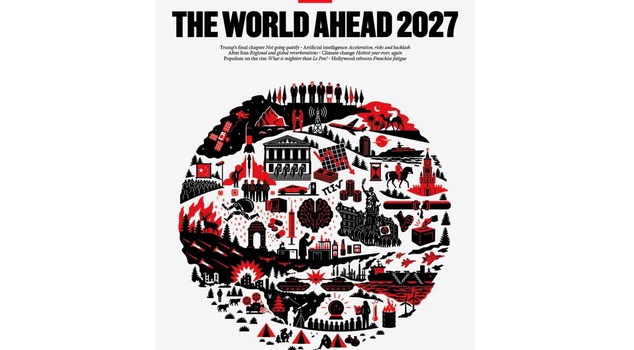
The British magazine The Economist has unveiled the cover of its special The World Ahead issue containing its 2027 predictions. The crescent-star motif on the red background in the upper right section of the cover and the figure riding a camel in traditional Arab clothing drew the attention of Turkish users on social media. While the magazine did not explain what the symbols represent, the post-Trump era, the effects of the Iran war, artificial intelligence risks, and global debt pressure stood out in the issue.
The British magazine The Economist introduced the 2027 edition of its annual The World Ahead special issue on November 17. In the magazine's assessments of the coming year, the post-Trump era in the US, the effects of the Iran war, risks stemming from artificial intelligence, the rise of the far right in Europe, and global debt pressure stood out.
THE CRESCENT AND STAR ON THE COVER DREW ATTENTION
On the cover, which uses black, red, and white colors, symbols related to fighter jets, tanks, fires, and financial markets appeared. Along with the crescent-and-star motif in the upper right part of the image, a figure wearing traditional Arab clothing and riding a camel attracted the attention of Turkish users on social media. While the crescent-and-star motifs on the red background were associated with Turkey, the magazine has no explanation of what these symbols represent.
Before The Economist's official cover was published, a fake image claimed to belong to the magazine also circulated on social media. It is stated that the cover, which has a cake with "2027" written in the middle, was created with artificial intelligence by imitating the magazine's cover from last year.
THE POST-TRUMP ERA AND THE EFFECTS OF THE IRAN WAR
Tom Standage, editor of The World Ahead 2027, stated that the post-Trump era in the US has begun to take shape, but that President Donald Trump's political influence will not end anytime soon.
Standage assessed that after Democrats take control of both chambers of Congress, Trump could act more aggressively and unpredictably, and might turn to presidential decrees, legal battles, and military initiatives to shape his political legacy.
The magazine predicted that the consequences of the Iran war would also shape the global agenda in 2027. It was stated that the war could change regional balances and energy flows, and that problems in fertilizer supply along with a strong El Nino weather event could threaten the food security of millions of people.
ARTIFICIAL INTELLIGENCE, THE ECONOMY, AND THE CLIMATE CRISIS
The Economist drew attention to the possibility that the growing debts of artificial intelligence companies and complex financing agreements could increase the risk of a crash in the markets. It was predicted that the political, financial, and cybersecurity risks of artificial intelligence would become more visible and that reactions toward large technology companies would increase.
In Europe, it was assessed that the possibility of Marine Le Pen winning the French presidential election could cause political upheaval in the European Union, and that rising public debts could increase pressure on bond markets. Tensions between China and Taiwan were also cited among the important risks of next year.
In assessments regarding climate change, it was stated that new temperature records, droughts, and forest fires could come onto the agenda in 2027, while it was noted that the importance of renewable energy against fluctuations in global energy markets would increase.