30.10.2026 13:43
US President Donald Trump was given a critical briefing by CENTCOM Commander Admiral Brad Cooper on the course of the war in Iran and the ongoing naval blockade. The US press suggested that after the November 3 midterm elections, large-scale attacks targeting Iran's nuclear facilities and energy infrastructure could resume. While Trump keeps the military option on the table, diplomatic initiatives supported by Turkey are being pursued to reach an agreement between Washington and Tehran.
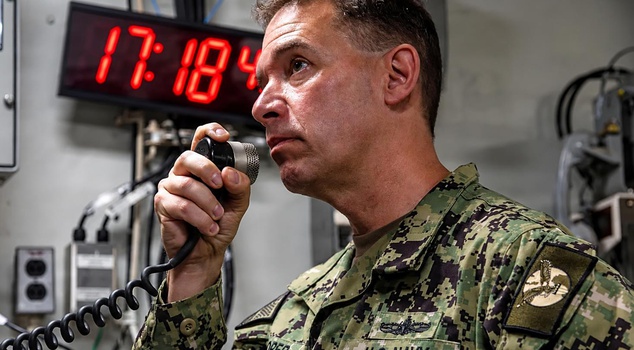
As tension between the US and Iran continues, a critical meeting was held in Washington. CENTCOM Commander Admiral Brad Cooper briefed US President Donald Trump on the current course of the war in Iran and the activities of the American military in the region.
According to a report by US-based Axios citing two American officials, one of the main agenda items of the meeting was the effects of the naval blockade imposed on Iran.
Cooper informed Trump about US operations aimed at ensuring the passage of oil tankers through the Strait of Hormuz. The economic pressure activities conducted by the American military in coordination with the Treasury Department were also discussed at the meeting.
SENIOR US ADMINISTRATION FIGURES ATTENDED THE MEETING
Key figures from Trump's national security and economic teams were also present at the meeting at the White House.
Defense Secretary Pete Hegseth, Treasury Secretary Scott Bessent, Chairman of the Joint Chiefs of Staff Dan Caine, Vice President JD Vance, and White House Special Envoy Steve Witkoff attended the meeting.
No official statement was made by the White House or CENTCOM after the meeting.
The meeting drew attention because it was held at a time when claims that military operations against Iran could resume after the midterm elections to be held in the US on November 3 were on the agenda.
CLAIM OF STRIKES AFTER NOVEMBER 3
In its report citing US, Israeli, and regional sources, Axios claimed that if no agreement is reached between Washington and Tehran, large-scale strikes against Iran could resume shortly after the midterm elections.
The report said the American administration is continuing preparations for a possible military operation but has not completely ruled out the possibility of a diplomatic solution.
It was reported that Israeli Chief of Staff Eyal Zamir also met with CENTCOM Commander Brad Cooper earlier in the week and discussed military coordination ahead of a possible operation.
IRAN'S NUCLEAR AND ENERGY FACILITIES MAY BE TARGETED
According to claims based on US and Israeli officials, the military options under consideration cover various strategic targets in Iran.
It was noted that the possible operation is expected to last about a week and that the possibility of attacks on Iran's leadership, energy facilities, nuclear facilities, and other critical infrastructure points was being considered.
However, no official decision regarding these plans has been announced.
It was stated that while the Washington administration continues its military preparations, it is trying to increase economic pressure on Tehran.
TRUMP: EITHER THROUGH A DEAL OR ANOTHER WAY
US President Donald Trump confirmed that talks with Iran through mediators are continuing but did not make a definitive assessment of the outcome of the negotiations.
Emphasizing that the Iran issue must be resolved, Trump said:
"We need to finish the job, either with a deal or another way. We will see whether the negotiations can succeed."
Trump's statement was interpreted as meaning that Washington continues to keep the military option on the table despite continuing its search for a diplomatic solution.
TURKEY ALSO INVOLVED IN DIPLOMATIC EFFORTS
Turkey, Saudi Arabia, and Pakistan are also supporting diplomatic initiatives led by Qatar aimed at preventing a new conflict in the region.
It was reported that in the initiative aimed at restarting negotiations between the US and Iran, work is being done on a formula that could meet the parties' mutual demands.
According to information reflected in the press, Qatar is preparing a proposal envisaging that Iran, in exchange for the easing of some American sanctions, allow United Nations inspectors to regain access to nuclear facilities damaged in attacks.
The main goal of the mediators is to resolve disagreements over Iran's nuclear program and the economic sanctions imposed by the US.
URANIUM STOCKS AND THE NAVAL BLOCKADE ARE ON THE TABLE
One of the most important obstacles to the negotiations is the future of Iran's enriched uranium stocks.
While the US administration wants Tehran to give up its enriched uranium stockpile, the Iranian side demands the lifting of the naval blockade and the release of its frozen assets.
It is stated that the mediators are working on new proposals that would reduce the parties' disagreements on these issues.
It was also claimed that Qatar conveyed to the Tehran administration a letter sent by US Vice President JD Vance to Secretary of Iran's Supreme National Security Council Mohsen Rezaei.
The letter reportedly proposed restarting negotiations while emphasizing that Iran's nuclear program should be one of the main topics of the talks.
US AMBASSADOR: WE ARE VERY CLOSE TO A DEAL
US Ambassador to Ankara and Special Representative for Syria Tom Barrack also made striking statements regarding the diplomatic contacts with Iran.
Speaking to CNN, Barrack said that the US and Iran are "very close" to an agreement that would reduce tension.
Noting that a comprehensive solution may not be achieved in a short time, Barrack stated that the parties could at least reach an interim understanding that would reduce the intensity of the clashes.
Barrack's statements showed that the possibility of a diplomatic solution still persists at a time when claims of a military operation are on the agenda.
EYES ON STEPS TO BE TAKEN AFTER THE MIDTERM ELECTIONS
It is not yet clear what path the Washington administration will follow regarding Iran.
On the one hand, claims that military preparations are continuing have come to the fore, while on the other, the groundwork for a new agreement is being sought through diplomatic contacts led by Qatar.
What step the US will take in its Iran policy after the November 3 midterm elections will be closely followed in terms of regional security balances and global energy markets.