08.11.2026 17:00
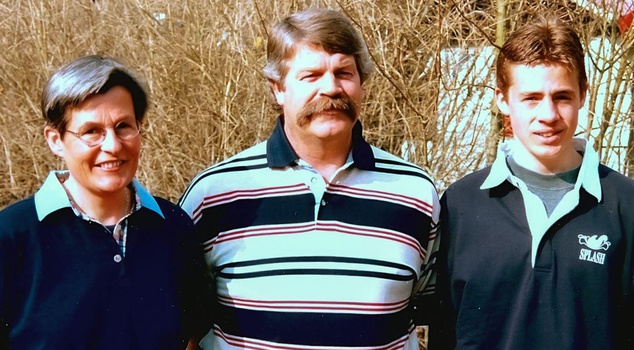
In the Netherlands, Jan and Els, a couple in their 70s, ended their lives together in June 2024 by carrying out "duo euthanasia" with lethal drugs administered by doctors at a care home. Bas, the couple's only child, whose father had lived with pain lasting for years and whose mother had been diagnosed with dementia, told the BBC more than two years later about that final journey, the months he spent trying to persuade his family, and the deep loneliness brought by losing both at once.
Some readers may find statements in this news story disturbing.
In the early morning of a day in June 2024, Bas pulled his car up next to his parents' caravan, parked in a sunny marina in the north of the Netherlands.
His father Jan and mother Els had spent much of their married life on the water. Now in their 70s, the couple could no longer continue living in a floating home. Their caravan, parked near yachts and small boats, was the best alternative.
Jan and Els got into their son's car. Bas started the engine. This would be the journey that took his parents somewhere for the last time. For Jan and Els, this journey—the trip to the local care home for euthanasia—was their final journey.
At 10:30 that morning, doctors would administer a lethal drug and end their lives through a procedure known in the Netherlands as "duo euthanasia." It is legal and rare, but every year more Dutch people choose to end their lives this way.
Three days before the euthanasia appointments that would end in death, Jan and Els gave an interview to the BBC in their caravan. Jan lived with constant pain caused by years of transporting cargo on the Netherlands' inland waterways. Els had been diagnosed with dementia. Their story was reported and debated around the world.
Now, more than two years later, the couple's only child talks about what they went through at the time. He describes how he tried to persuade his parents to postpone their deaths while also supporting their decision to end their lives. He also shares the emotional burden his parents' decision placed on him and the deep loneliness that followed.
THE FINAL JOURNEY: MY MOTHER WAS SURE OF HER DECISION
Bas had planned a scenic route through the meadows and canals of Friesland for the drive to the care home. "I still remember that whole journey," he says. His mother sat in the back seat, his father beside him. At first they talked. Els seemed determined in her decision to choose euthanasia.
"My mother was completely sure about it, sure of her decision," Bas says. "But my father was a little emotional."
Jan asked his son whether they were doing the right thing. Bas was caught off guard; he had thought it would be his mother who would have doubts. "My mother always loved life," he says. "I remember her saying, 'I would have liked to live to 80, or maybe even 90.'"
But his father had been talking about euthanasia for more than 10 years because of the pain he had suffered for years. Bas tried to reassure his father in the car. After Jan calmed down, they drove on without talking, listened to music and watched the scenery outside.
In the months before the family made this journey, Bas had tried to persuade his parents to postpone their deaths. "I tried to persuade them to stay a little longer. Why don't we wait until winter or until next year?"
Bas was in two minds. Although he thought his parents' decision to request euthanasia was right, he did not want them to go. "My father had been living in this condition for 10 to 15 years, so he could probably have held on for a few more years. But I think if they had waited another year, my mother would have been in a difficult position."
If Els postponed her euthanasia application, there was a risk that her Alzheimer's disease would progress. That could lead to a ruling that she no longer had the mental capacity to decide to end her own life.
A GOODBYE HAND IN HAND AT THE CARE HOME
Bas found a place to park his car. "My father said goodbye to my car. He loved my car and told me 'Well done' and 'thank you.' Then we walked inside," Bas says. "Imagine doing that. Put yourself in their shoes; imagine making that journey and that walk. It feels very surreal."
Over the next two hours, the couple's family members and friends came and went. They reminisced and listened to music. At one point, the thought of stopping the process crossed Bas's mind. "I thought to myself, 'Okay, let's go. Let's get in the car and drive away,'" he says. "But I didn't want to bring up anything that might create hesitation in them, because I had supported the entire euthanasia process. It was better to keep everyone calm and use that moment to say goodbye."
Shortly before 10:30, the doctors came to inject Jan and Els with the lethal drug that would end their lives. The couple lay down on hospital beds placed side by side, and in the final moments before they lost consciousness, Bas witnessed the closeness between his parents.
"I have probably seen them walking hand in hand three or four times in my whole life," he says. "But now they were lying there hand in hand. That really made me feel good; they were truly doing this together."
Bas remembers the first half hour after his parents stopped breathing; they were no longer alive. "After that, you realize what situation you are in. It is an indescribable feeling."
IT FELT AS IF MY LEGS HAD BEEN CUT OFF
At the care home, deep grief engulfed Bas. He began to feel a great loneliness. "Grieving is a very, very profound experience, and I have no brother or sister; I felt truly alone," he says.
Someone raised by two parents can share their memories and sorrow with the other parent when the first one dies. But Bas's mother and father had gone together. "It felt as if my legs had been cut off," Bas remembers.
He felt the grief physically too; for four or five weeks he felt ill. His body ached. "Maybe it was the best option for them, but losing both of them at the same time had a very, very great impact on me."
THE DILEMMA FOR DEMENTIA PATIENTS: TOO EARLY OR TOO LATE?
In the Netherlands, for people planning to apply for euthanasia, especially when it comes to dementia patients like Els, choosing the right time to end their lives can be complex.
As well as showing that they are suffering unbearably, people must be able to show doctors that they still have the mental capacity to decide for themselves that they want to die. Dr. Rozemarijn van Bruchem, a geriatrician and ethicist at Erasmus Medical Center in Rotterdam, says this can cause great distress in dementia patients considering euthanasia.
"They think: I have this power now, but it is too early right now. But maybe next month it will be too late. So how do I decide at what point I should start this process to see whether I meet the criteria and to learn whether I can receive euthanasia? And if I wait too long, might I have missed this opportunity?"
Dr. Bruchem says the reason her patients experience this anxiety is that euthanasia is legal in the Netherlands. They also know that obtaining permission for assisted death in advanced dementia cases is rare. In countries where euthanasia is banned, such as the UK, dementia patients may face many difficulties, but they rarely have to weigh such choices between life and death as Els did.
In a statement to the BBC in 2024, Els said that because there was a possibility Alzheimer's disease would progress, she and her husband could not wait. Jan was determined to die together with Els. He told the BBC that he might be going a little early, but that he had lived his life and felt his life was complete.
AN EIGHT-PAGE FAREWELL LETTER
Jan and Els were very aware of the burden their decisions about the end of their lives placed on their son. Bas attended all the conversations his mother and father had separately with their doctors throughout the euthanasia process. There were open conversations within the family.
When someone close to us dies, we often feel regret, especially about things that may have been left unsaid. That was not the case for Bas. Two days before Jan and Els's appointments at the care home on Monday, June 3, he wrote them a letter.
“It was about eight pages,” says Bas. “Late on Saturday night I went to the caravan. I read the whole letter to them. It was about our lives, thanking them for everything they had done for me.”
Jan and Els were deeply moved. Just as they rarely showed their love for each other in public, they were not people who generally expressed their feelings openly to their son either. “You feel that they loved you, but instead of saying it or hugging you, they showed it through the things they did,” says Bas. “After my mother developed dementia, she started hugging more, but my father never did.”
That changed in the caravan that last Saturday night. Jan hugged Bas. “He did it after that letter. It may have been one of the most beautiful moments of my life. Nothing was left unsaid.”