20.10.2026 09:31
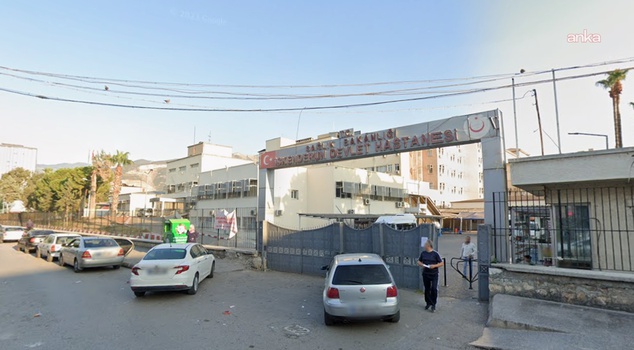
In the investigation into İskenderun State Hospital, whose A Block was destroyed in the February 6 earthquakes and where 125 people lost their lives, and which has been ongoing for 3 years and 8 months, the expert report has been entered into the case file. The report stated that although the building had been identified as being in a 'state of collapse' in 2012, it continued to be used; the building owner SSK, the building supervisor, and the institution officials who permitted its use were found 'primarily at fault'.
The expert report awaited in the investigation file concerning İskenderun State Hospital, where 125 people lost their lives in the February 6 earthquakes in Hatay, has arrived after 3 years and 8 months. In the report, it was stated that despite the determination of "collapse state" for the hospital in 2012, it continued to be used, and institution officials were found "primarily at fault".
In the February 6 earthquakes centered in Kahramanmaraş, 125 people lost their lives as a result of the collapse of Block A of İskenderun State Hospital (the former SSK Hospital), which also contained patients and healthcare workers.
A REPORT STATING THE BUILDING WAS NOT EARTHQUAKE-RESISTANT WAS ISSUED IN 2012
The investigation launched by the İskenderun Chief Public Prosecutor's Office could not be completed despite 3 years and 8 months having passed since the earthquake. In the investigation file, it was stated that a "not earthquake-resistant" report was issued for Block A of the hospital in 2012, that meetings regarding the demolition of the building were held in 2015, and that in 2016 an "earthquake safety inadequate" report was prepared and sent to the demolition commission. It was also recorded that, based on this report, the Ministry of Health included the construction of a new building in the "investment program" in 2019.
The Chief Public Prosecutor's Office requested that four academics it selected ex officio from Gazi University prepare the final expert report. The report was submitted to the case file.
PRIMARY FAULT ATTRIBUTED TO INSTITUTION OFFICIALS
According to information obtained by the ANKA News Agency correspondent, the Social Insurance Institution, which was listed as the building owner in the construction permit dated January 8, 1986, and the building responsible Müfit Tenmizil were found "primarily at fault". The then-acting İskenderun Municipality zoning director Azim Şahin, senior architect Necdet Şimşek, architect İbrahim Garbioğlu, and survey and cadastre engineer Refik Mert, whose signatures and approvals were on the permit, were found "faultless".
In the report, it was stated that Metin Demiray, the technical responsible person named in the document dated February 19, 1986, was "secondarily at fault". Contractor Adil Özçırpıcı, named in the petition dated October 7, 1987, and contractor, site chief, and technical responsible person Selahattin Tapanyiğit were also assessed as "secondarily at fault".
The expert panel, citing the technical report dated July 1, 2012, prepared by civil engineer Levent Çeliktürk, assessed the institution officials who allowed the hospital to continue being used as "primarily at fault". In the report in question, it was stated that the earthquake safety of the hospital's dormitory, cafeteria, Block A, and Block B buildings was inadequate and that all of them were at the "collapse state" performance level.
HOSPITAL USED DESPITE COLLAPSE RISK
The continuation of the expert report included the following statements:
"Considering the current condition of the building and the performance reports previously obtained for the building, it is understood that the building has material-related defects, interventions were made to the load-bearing system, walls that would affect the behavior of the building were relocated due to operations such as opening or closing spaces, and corrosion formed in its reinforcement due to the age of the building.
Furthermore, it is understood that although there was a report stating that the building was at the 'collapse state' performance level, it continued to be used. Therefore, it is considered that all legal responsibility regarding the fulfillment of administrative requirements as well as technical requirements should be investigated."