20.10.2026 14:01
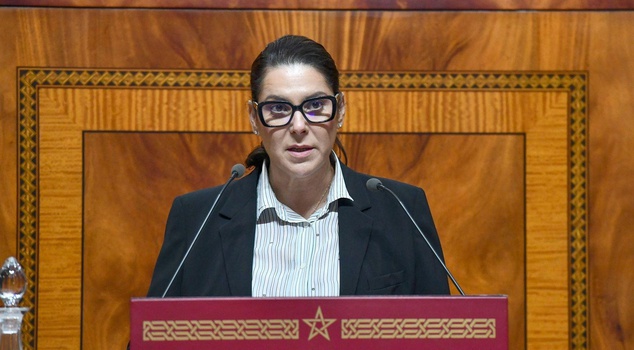
King Mohammed VI appointed Fatima Zahra el-Mansouri as the country's first female prime minister after the September elections, in which Mansouri's PAM party won the most seats. Following the appointment, the saying attributed to the Prophet, "A people who entrust their affairs to a woman will never prosper," came to the fore again; former Justice Minister Mustafa Ramid questioned whether it is right for a woman to hold the country's highest political office.
The saying attributed to the Prophet Muhammad, "A community that entrusts its affairs to a woman will never prosper," has resurfaced in Morocco after King Mohammed VI appointed Fatima Zehra El Mansouri as the country's first female prime minister.
The country's former justice minister, Mustafa Ramid, in a long Facebook post in early October, questioned whether it was right for a woman to hold the country's highest political office. Ramid argued that in Morocco, where the majority is Muslim, he was striking a balance between equality and the responsibilities of state leadership, since the highest royal office was still held by a man.
Morocco is governed as a constitutional monarchy. However, executive power rests with the 63-year-old king. Mansouri's Authenticity and Modernity Party (PAM) won the most seats in September's parliamentary elections. Thanks to the coalition it formed with three parties, PAM holds 207 of the 395 seats in Morocco's parliament.
HESITATION ON THE STREET, SATIRE ON THE INTERNET
Mansouri's appointment by the king was a historic event, but it brought to the surface existing reservations about women reaching powerful positions. A day after Mansouri's appointment, local broadcaster Chouf TV took to the streets to ask Moroccan men "what they thought" about a woman being at the head of the government.
Several men, most of them middle-aged or older, hesitated before answering. Some said they accepted the decision because it was the king's choice. A gray-haired man who did not give his name or age said: "It feels strange for a woman to be at the head of the government. I'm not sure whether that is very suitable for me. "
Criticizing the monarchy in Morocco carries legal risks. Under the penal code, certain insults and attacks against the king, the royal family, and the monarchy are criminal offenses. Mansouri's appointment as prime minister became material for political satire online. A video showing two women pulling each other's hair was widely shared, and comments under the video suggested that parliamentary disputes between Mansouri and her colleagues might look like this.
However, many young people, especially women, welcomed Mansouri's appointment.
INHERITANCE AND POLYGAMY DEBATE
Although attitudes are changing in Morocco, conservative and religious views still carry great weight. Among the most controversial issues related to gender equality in the country are inheritance and the family law governing marriage and divorce.
Under current inheritance rules, a daughter with the same circumstances generally receives half the share of a son. Morocco's High Council of Ulema, made up of religious scholars, opposes calls for equal inheritance, citing Islamic law.
Proposals to abolish the requirement that girl orphans without brothers share their inheritance with male relatives, including distant relatives, have also been rejected. Morocco's National Human Rights Council said in a 2022 report that unequal inheritance rules contribute to poverty among women. Polygamy is also legal in Morocco under certain conditions.
The proposed changes to the family code include allowing women to stipulate in marriage contracts that their husbands may not marry another woman. However, exceptions exist, including provisions related to the first wife's inability to bear children or her illness.
Women's rights groups criticize these provisions on grounds of privacy and medical confidentiality. These issues are at the center of proposals to reform Morocco's family code.
A TURNING POINT FOR WOMEN
In 2024, a package of amendments was announced, but the reforms have not yet become law. Some young women also hope the new prime minister will try to improve girls' education as well as family law.
Morocco's High Commission for Planning, the country's official national statistics agency, found in 2025 that only 55% of girls aged 15-17 in rural areas attend school. In these areas, poverty, early marriage, and dropping out remain significant obstacles. In cities, the school attendance rate for the same age group is 100%.
Chifae Laazouzi, a young Moroccan woman, told the BBC: "Many girls in rural Morocco leave school early because schools are far away, transport is not safe or unavailable, and families with limited means often keep their daughters at home." According to her, another reason is that many girls in poor and rural areas cannot afford sanitary products.
Laazouzi says, "Menstrual health is still treated as a taboo; I would like free menstrual products to be distributed in schools." Mansouri is no stranger to the world of politics. Over a public career spanning more than twenty years, she served as mayor of Marrakesh, held government posts, and sat in parliament.
For the past five years, during the term of former Prime Minister Aziz Akhannouch, she served as minister of national territorial planning, urban planning, housing, and city policy. Mansouri described her appointment as a turning point for Moroccan women. "
Being the government's first female head is a source of pride not only for me but for all the women of the kingdom," she said.
Since her appointment to the post, she has not made any statement about whether she will try to implement reforms to the family code. Throughout her career, Mansouri has not made any significant public statements on women's rights.
CRITICISM OF AUTHORITARIAN STATE FEMINISM
Dr. Irene Fernandez-Molina, a specialist in the Global South at the University of Exeter in the UK, assesses this appointment in the context of the monarchy's broader political interests. The expert tells the BBC: "Two headlines stood out in the news about [September's] Moroccan parliamentary elections: the lowest turnout in the last twenty years and King Mohammed VI's appointment of a woman as prime minister for the first time in the country's history. "The second cannot be understood without the first. "
According to official figures, only 38% of registered voters cast ballots; among all eligible voters, the rate was even lower.
Fernandez-Molina describes the appointment as an example of "the top-down, selective instrumentalization of the struggle for women's rights in order to secure the regime's legitimacy, that is, authoritarian state feminism." The academic says that even if the political system and the pace of social reforms remain largely unchanged, bringing a woman to the highest state office may aim to project an image of modernization and progress.
According to Moroccan women's rights advocate Yasmina Benslimane, this appointment removes a long-standing barrier. Benslimane emphasizes that Mansouri's background is also important: "This makes people question stereotypes. Because it finally breaks a barrier that had never been broken before. But how she reached [that position] matters. "
Mansuri's deceased father was a pasha, a senior local official and a diplomat.
Benslimane argues that her privileged background and access to political networks set her apart from many Moroccan women who have fewer opportunities to enter public life. Like many women's rights advocates in the country, Benslimane believes that the new government's most important test is reform of family law.
However, Mansuri's room for manoeuvre is shaped by the country's political system. While the king has broad powers in key areas including defence and foreign affairs, the head of government serves within a system in which power is shared. When it comes to family law reform, Mansuri will face religious scholars, the majority of whom are men.
While some Moroccan women welcome her appointment, they say what really matters is what she will do as prime minister. Sara Zouite, a young Moroccan woman, told the BBC: "I think el Mansuri should not be judged by the fact that she is a woman. Being a woman in power does not automatically make someone a women's rights advocate," adding: "Her party presents itself as a modernising political force, so I want to see whether this will translate into real change. "
This article, whose original is in English, was translated using artificial intelligence. A BBC journalist checked the translation before publication.
.