11.11.2026 15:14
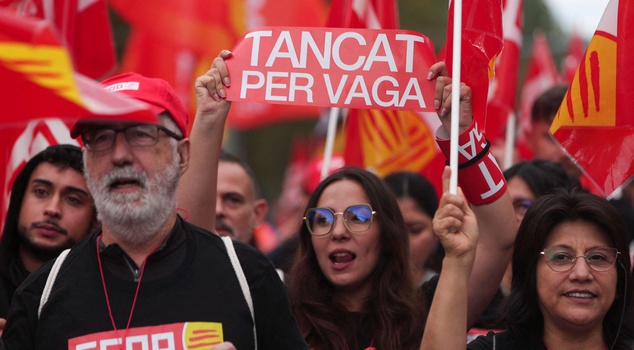
In Spain, workers went on a general strike for the first time in 14 years against the housing crisis and low wages. Work stopped at factories and ports, while public transport largely came to a halt. The CCOO union announced that 13 people were injured in police pepper-spray intervention in Madrid. The country, where rents have risen by 44 percent and wages by 22 percent since 2021, is heading to early elections on November 29.
Workers in Spain went on a general strike for the first time in 14 years. Work stopped at factories and ports, and public transport services largely came to a halt.
The strike, backed by the country's two major unions, the General Union of Workers (UGT) and the Workers' Commissions (CCOO), demands that the housing problem be overcome and wages improved. Other professional organizations and tenants' groups complaining about rising rents and evictions are also supporting the strike.
Workers took to the streets weeks before the snap elections called by Prime Minister Pedro Sanchez after his failure to implement housing reform. Spain will go to the polls on November 29. CCOO announced that 13 people were injured when police used pepper spray against workers in the capital, Madrid.
'I AM 36 YEARS OLD AND I CANNOT MOVE INTO MY OWN HOME'
Speaking to Reuters news agency, Madrid worker Jesus Gonzalez said the following about the housing crisis and the strike: "I am 36 years old and I still cannot move into my own home. I don't know how I will carry on with my life. Rents are rising, house prices are rising, it is impossible to make a living."
A woman named Isa, who lives in Madrid, said in a statement to the agency: "This strike is not to support the government. It is against the government, against rent increases, against the union bureaucracies that boycott us and against employers. It is a strike for the working class, by the working class."
RENTS UP 44 PERCENT, WAGES UP 22 PERCENT
According to the Spanish central bank, the country has a shortage of 750,000 homes. This figure is expected to exceed one million by 2028. The housing shortage is increasing pressure on the real estate and rental market.
According to the Spanish Youth Council, average rents in Spain, at 1,315 dollars (about 66,000 lira), amount to almost an entire young person's monthly salary.
Maria Jesus Fernandez Sanchez, senior economics expert at the Funcas analysis center, speaking to the BBC's Spanish-language service BBC Mundo, makes the following assessment about the rise in rental prices: "There are no official statistics on rents; we use data shared through websites. According to the best-known site, Idealista, rents have risen by 44 percent since 2021, while over the same period wages have been raised by an average of 22 percent."
Political scientist and political communications consultant Eduardo Bayon says in a statement to BBC Mundo that Spain has never before gone on strike over the housing crisis. The expert argues that holding the strike before the elections politicizes the action and stresses that, unlike previous strikes, this time the government is not the target.
EVICTION OF AN 87-YEAR-OLD WOMAN SPARKED THE PROTESTS
Actions in Spain against the housing crisis and the cost of living erupted after an elderly woman in Madrid was forcibly evicted from her home.
Maricarmen Abascal, 87, was forcibly carried out on a stretcher from the apartment where she had lived for more than 70 years in September after she could no longer afford rent increases. After the eviction, she was taken to hospital. Abascal's removal from her home caused widespread outrage across Spain.
The woman died on October 7 in the hospital where she was being treated. Before her death, an agreement had been reached so that the elderly woman could return to her home. However, amid ongoing protests, Prime Minister Pedro Sanchez decided to call snap elections.