29.11.2026 10:30
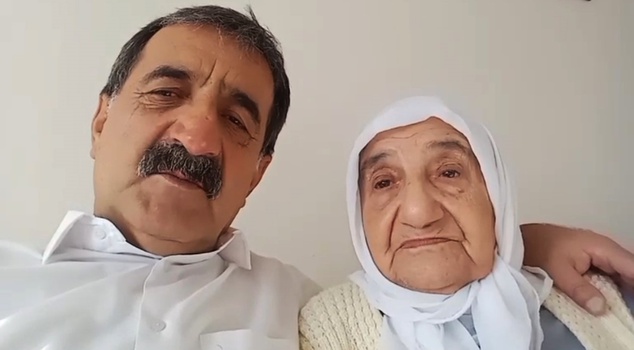
Salih Küçük, 63, who works as a bus driver in Kocaeli, ate a mushroom gathered from nature offered by his passengers, despite his wife's and mother's warning "Don't eat it." Küçük, who was poisoned along with his wife and mother, was discharged after receiving treatment in intensive care with his mother. Prof. Dr. Fethi Gül stated that during this period, 6 patients with mushroom poisoning were admitted to intensive care, 1 patient died, and 1 patient was transferred for a transplant.
Prof. Dr. Fethi Gül from Marmara University Pendik Training and Research Hospital drew attention to the recent increase in mushroom poisoning cases and issued warnings. Gül said, 'Six of our patients were in intensive care treatment during this period. We lost one patient, one patient was referred for transplant, and we discharged our other patients. The mother and son applied to an external center after cooking mushrooms collected in the village, with complaints of nausea, vomiting and diarrhea, and were then sent to us. Death can occur from a simple mushroom.' Salih Küçük, 63, who applied to the emergency department with his wife and mother on the third day after consuming mushrooms, said, 'It was a mushroom collected from nature. My mother and wife tasted it and said, Do not eat it, but I had already eaten it. The next day I began to have terrible pain, and my wife wanted us to go to the doctor. I did not go, thinking I had caught a cold. At the moment I, my mother and my wife are healthy; not everyone may be as lucky as we are.'
Salih Küçük, 63, a father of three who works as a bus driver in Kocaeli, was hospitalized with poisoning last month along with his 56-year-old wife Gönül Küçük and his 82-year-old mother Naringül Küçük after allegedly consuming mushrooms collected from nature and given by his passengers. According to the information obtained, Küçük took the mushrooms home in the evening for his wife to cook; although she did not want to cook them, she did not refuse her husband's request and prepared the mushrooms. Küçük, who said he later ate more than his wife and mother, stated that he did not listen to their warnings not to eat them. Küçük said they slept that evening and, although in the following period he did not pay attention to the symptoms, attributing them to causes such as catching a cold, on the third day he was taken to the hospital by his children with complaints such as diarrhea and nausea.
After the initial intervention, due to the need for intensive care, the mother and son were referred to Marmara University Pendik Training and Research Hospital on October 28, while Küçük's wife was referred to another hospital in Istanbul. The treatment of the mother and son was carried out by Prof. Dr. Fethi Gül, President of the Turkish Intensive Care Society (TYBD) and Head of the Anesthesiology and Reanimation Intensive Care Unit at Marmara University Pendik Training and Research Hospital, and his team. The mother and son, who arrived with serious symptoms, received treatment in intensive care for a while. After the successful process, the improving condition of the mother and son pleased both the team and the family. The mother, son and his wife were discharged after their treatments were completed. Prof. Dr. Gül provided information about recent admissions and mushroom poisoning, while the mother and son told what they had experienced.
MY WIFE DID NOT WANT TO COOK IT, MY MOTHER SAID 'DO NOT EAT IT'
Salih Küçük said, 'While I was working with my bus, my passengers offered me mushrooms,' and continued: 'They were mushrooms collected from nature around Kocaeli; I brought them home in the evening. Although my wife did not want to cook them, saying that it did not look like a good mushroom, she cooked them at my insistence. Then my wife took a bite to taste it and told me, Do not eat it. After that, my mother dipped bread in it and took one or two bites, and said, Son, do not eat this mushroom, but I had already eaten it. I slept, and there was nothing wrong during the night. I got up in the morning and had to go to work early. But in the afternoon I began to have terrible pain and diarrhea. I came home around 4 p.m.; my condition was very bad. I wanted to lie down immediately, and my wife wanted us to go to the doctor. Thinking I was very tired and had caught a cold, I did not go to the doctor. I wanted to solve it by sleeping again. When we got up in the morning, my wife had also become very ill, and my mother was very ill too. My wife wanted us to go to the doctor; I could no longer get up, and I did not even feel like going.'
Küçük said, 'When my wife called our children, they came running and took us to the hospital,' and added: 'The ambulances took my mother and me to the intensive care unit of Pendik Marmara Hospital. I saw care at that hospital, including from Fethi Hoca and his team, such as I have never seen anywhere in my life, and I was very moved. I saw how they worked day and night like bees to save a person. I offer my endless thanks. I regained my health. My mother also regained her health, and my wife is well too, thank God. We used to collect mushrooms in the highlands. My request to people is that we should not eat mushrooms as much as possible, because the end of mushroom poisoning is a disaster. Perhaps not everyone may be as lucky as we are.' Mother Naringül Küçük said, 'May God be pleased with our doctors. May Almighty God not leave them in difficulty in anything, and may God preserve our government.'
SOME SYMPTOMS APPEAR LATE
Speaking about the admissions and mentioning the National Poison Advice Center (UZEM), reachable on line 114, Prof. Dr. Fethi Gül said: 'Within October, the mother and son, two of our patients, were sent from an external center with mushroom poisoning. We also had other patients in the same period, and they too were admitted to our intensive care unit with mushroom poisoning. Six of our patients were with us during intensive care treatment. The mother and son applied to the emergency department of a hospital in an external center in Gebze and were then sent to us as a higher-level center. After cooking mushrooms collected in nature or in the village, they present with complaints of nausea, vomiting, diarrhea, dizziness and a tendency to sleep. These are two of our patients referred due to the need for intensive care because of mushroom poisoning. Especially in these treatments, the poison advice center's recommendations; there are medications for some poisonings, and we started applying them. Depending on our patients' conditions, we followed them in intensive care with hemoadsorption and dialysis treatments. As symptoms, especially complaints such as nausea, vomiting and dizziness may develop; patients may see these symptoms within about 2 to 6 hours. If there are no symptoms, we cannot say there is no mushroom poisoning, because some symptoms appear later. Even when patients feel well, they may face liver failure.'
WE LOST THE PATIENT WITHIN 1-2 DAYS
Gül stated that if people suspect any poisoning after consuming mushrooms, they must apply to a health center without waiting for the symptoms to intensify, and said: 'The amount of poisonous mushroom consumed is also important, but in the end, however small the amount, it is poison. Mushrooms collected from nature should not be eaten. The amount of mushroom the mother consumed was smaller, while the son's was higher. In one of our patients who applied, when respiratory failure and a change in consciousness occurred, and the picture of liver failure also deepened, we consulted the transplant center and placed the patient on the liver transplant list. A cadaveric liver transplant was performed. Another case was a young patient brought to the emergency department with poisoning from a mushroom collected from nature in Yakacık, and his breathing was about to stop. A patient we admitted to intensive care after intubation for respiratory and other organ support progressed so quickly that unfortunately we lost this patient within 1-2 days.'
Continuing his remarks, Gül said: 'We apply organ support treatments. We apply dialysis for kidney failure, and we have some medications we use for the poison. Some of our patients benefit from these treatments. Despite all this, if the clinical picture does not recover and is heading toward deterioration, it is absolutely necessary to consult the relevant specialties regarding transplantation and to begin transplant preparation.' With a simple mushroom, it can be possible to lose an organ or come face to face with death. During the mother and son's intensive care process, when the son began to recover, he started visiting his mother in her bed, and there were emotional moments. They stayed in intensive care for nearly a week; the son's condition was more critical. Liver failure fully developed and he was placed on the transplant waiting list, but he benefited from intensive care treatments and we were able to reverse the failure. We need to be aware that we can lose our lives from a simple food; I consider it a duty to convey this public message, especially in this period when mushroom poisonings are intense. We lost 1 patient, 1 patient went for transplantation, and we discharged our other patients"
On the other hand, UZEM, which provides service through the line numbered "ALO 114", provides detailed information and counseling services to citizens regarding the use of or exposure to toxic substances.
.