16.11.2026 11:03
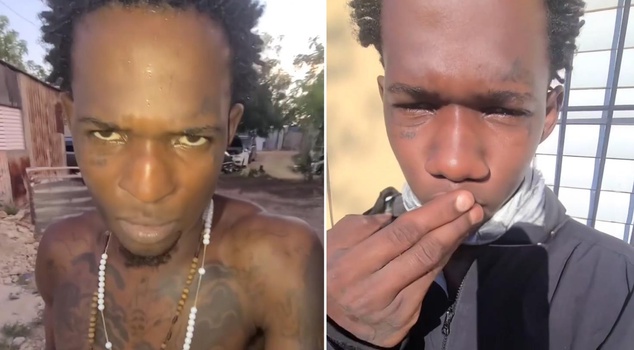
In the Dominican Republic, a young man introduced himself as a Haitian gang member and challenged El Salvador's President Nayib Bukele. The young man, who also shared his location, then addressed Bukele after the footage spread, pleading with him not to send a missile at him. The man's sudden change in attitude—first making threats and then saying his words were a joke—caused astonishment.
A young man living in the Dominican Republic identified himself as a member of a Haitian gang in a video he recorded. The young man, who challenged El Salvador President Nayib Bukele, used threatening statements. The young man also disclosed his location. However, after the footage spread on the internet, the young man's attitude changed completely.
THIS TIME HE BEGGED NOT TO BE SENT A MISSILE
With no trace left of the challenging attitude in his first video, the young man recorded a second video and addressed Bukele. Trying to explain that what he said was a joke, the young man asked that no missile be sent to him.
The young man's two completely different videos—first defying Bukele and then backing down in fear—caused astonishment.
EL SALVADOR'S OPERATIONS AGAINST GANGS IN HAITI
El Salvador President Nayib Bukele defends harsh interventions against armed gangs operating in Haiti. As the security crisis in Haiti deepens, military operations against gang structures and international security cooperation have also gained importance. Bukele's tough stance against gangs also forms the background to discussions about why the young man who identified himself as a Haitian gang member said in his second video that he was afraid of a missile attack.
BUKELE SENT THOUSANDS OF SOLDIERS TO HAITI
El Salvador President Nayib Bukele launched a military operation on October 18 to rescue four Salvadoran aviation technicians who went missing after being attacked by armed gangs in Haiti. Bukele, who sent more than 2,000 soldiers to Haiti, issued stern warnings to the gangs. Salvadoran soldiers conducted operations with armored vehicles and helicopters around the capital, Port-au-Prince. In an operation carried out together with Haitian police on November 9, the headquarters of 400 Mawozo, one of the country's largest armed groups, was targeted. It was reported that 20 people died in the operation. As Bukele's military intervention in Haiti continues, international human rights organizations called for the protection of civilians and clarification of the legal framework for the operations.