28.11.2026 00:20
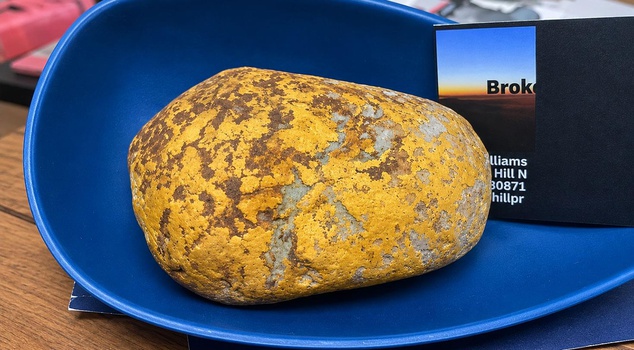
An amateur prospector searching with a metal detector in Australia found a gold nugget weighing 1 kilogram 218 grams when he dug up the area where he received a weak signal. It was determined that 77 percent of the piece, named the "Tibooburra Potato" due to its shape, consists of pure gold. It was reported that the value of only the gold contained in the nugget could reach 6 million 755 thousand TL.
An amateur prospector searching for gold with a metal detector near the town of Tibooburra in the northwest of Australia's New South Wales state has found one of the largest gold nuggets in the region in recent years.
HE FOLLOWED A WEAK SIGNAL AND FOUND A FORTUNE
After a weak signal from the metal detector, the prospector began digging the soil and unearthed a potato-sized gold nugget. Because of its shape and dimensions, the piece was named the "Tibooburra Potato".
According to a report by Daily Galaxy, examinations determined that the nugget weighs 1 kilogram 218 grams and contains 77 percent pure gold. The rest of the piece was found to consist largely of quartz.
ITS VALUE COULD REACH UP TO 200,000 DOLLARS
In calculations based on market prices at the end of October, the value of the gold contained in the nugget was stated to be between 150,000 and 160,000 Australian dollars (approximately 5 million to 5 million 404 thousand TL). Because it is a rare piece, the nugget's collector value was reported to be able to reach up to 200,000 Australian dollars (approximately 6 million 755 thousand TL). It was learned that the nugget has not yet been sold.
FOUND FOR THE SECOND TIME IN THE LAST 20 YEARS
Small gold pieces are frequently encountered in the region, where gold prospecting activities have been carried out since the early 1880s. However, according to local mining equipment suppliers, a gold nugget weighing over 1 kilogram has been found in the region only once more in the last 20 years.
HOW DO GIANT GOLD NUGGETS FORM?
A study by Monash University researchers published in the journal Nature Geoscience in September 2024 revealed that earthquakes may play a role in the formation of large gold nuggets. According to the research, quartz crystals subjected to pressure during seismic movements produce electrical voltage through the piezoelectric effect. This process allows dissolved gold in groundwater to accumulate on the quartz surface. With repeated seismic movements, existing gold deposits can grow over time.
In another study published in the journal Geology in 2024, it was stated that amorphous silica, which has no crystal structure, can attract gold nanoparticles quickly, and then, by crystallizing and turning into quartz, large gold deposits can form along cracks in rocks.