30.10.2026 21:41
City researcher Taner Özdemir uncovered a 1941 Council of Ministers decision that sheds light on Erzurum's oil history. With the decision bearing the signatures of President İsmet İnönü and the ministers, British petroleum geologist Cunningham Craig, who was employed at the MTA Institute, was granted permission to conduct research in Palandöken. Özdemir said that the scope and results of the research needed to be brought out from the archives.
In recent years, while efforts in our country to bring underground resources, especially oil, into the economy and to reduce foreign dependence attract attention, documents on the dusty shelves of history are bringing Anatolia's richness in this regard to light. The granting of oil exploration permission to the British in Erzurum Palandöken with the signatures of the then President İsmet İnönü and the Council of Ministers is just one of these.
City researcher Taner Özdemir has unearthed an important archival document dated 1941 that sheds light on Erzurum's oil past. The decision, which concerns permission for British national petroleum geologist Cunningham Craig, who worked at the MTA Institute, to conduct research in Palandöken, bears the signatures of the then President İsmet İnönü and the ministers.
İNÖNÜ AND THE COUNCIL OF MINISTERS GAVE APPROVAL
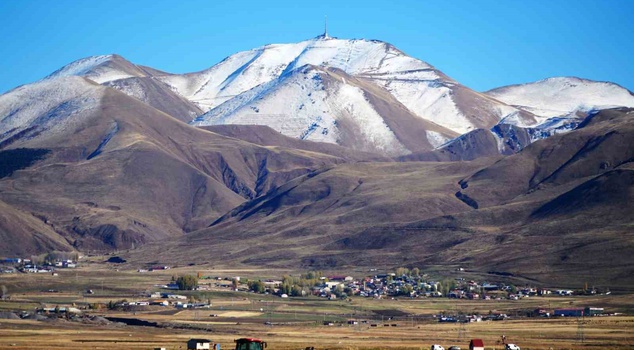
Taner Özdemir, who attracts attention with his research on Erzurum's historical past, this time brought to the agenda an important document regarding the city's oil history. The Council of Ministers decision taken in 1941 includes permission for British national petroleum geologist Cunningham Craig to conduct research in Erzurum's Palandöken locality. The decision, bearing the signatures of President İsmet İnönü and the ministers of the period, shows that Palandöken came onto the agenda 85 years ago within the scope of oil research. The document reveals that Erzurum should be considered not only with its military, political and cultural history, but also with its underground resources and the history of geological research.
City Researcher Taner Özdemir, stating that the document he unearthed draws attention to historical aspects of Erzurum that have not yet been sufficiently researched, made the following assessment: “Erzurum has been an important city throughout history with its strategic location, natural resources and geographical features. In order to understand our city's history in all its aspects, we must examine not only wars, congresses and political developments, but also its economic life and research into its underground resources. This Council of Ministers decision dated 1941 is noteworthy in that it shows that Erzurum also came onto the agenda in the past with regard to oil research. The permission for British national petroleum geologist Cunningham Craig, who worked at the MTA Institute, to conduct research in Palandöken, and the presence of İsmet İnönü's and the ministers' signatures under the decision, is a historical record that must be emphasized,” he said.
THE ANSWERS TO THESE QUESTIONS MUST BE RESEARCHED
Researcher Taner Özdemir also drew attention to the important questions that need to be answered here, saying, “Which geological features were intended to be researched in Palandöken in 1941? What was the scope of this research? Was any report prepared as a result of the studies? What information about this research is found in the MTA records of the period and other official archive documents? A comprehensive archival study is needed to reveal the answers to these questions. We cannot evaluate Erzurum's oil past solely based on today's conditions. We must examine together the research conducted in the past, the decisions taken and the scientific studies of the period. Archival documents help us understand in which periods and for what purposes a region was researched. Therefore, evaluating the 1941 decision together with related documents is of great importance.
Reminding that permission to conduct oil exploration in a region does not mean that oil definitely exists there, Özdemir said, “However, this decision reveals that Palandöken was put on the research agenda in terms of petroleum geology in that period. Our task is to illuminate the process indicated by this historical record with scientific data and to uncover the unknowns regarding Erzurum's past. While researching Erzurum's oil history, we should not remain limited to Palandöken. The geological structure of our city and the surrounding regions, the studies carried out in the past and the results of these studies should be considered as a whole. By examining MTA reports, decisions in state archives and official correspondence of the period, a comprehensive study on Erzurum's oil exploration history can be prepared. I believe that there are many documents in Erzurum's historical memory that have not yet been brought to light. Bringing these documents to light is important not only for learning about our past, but also for understanding the history of our city's economic and natural resources. Our aim is to examine historical documents with a scientific approach, share the information obtained with the public, and pass on the unknown aspects of Erzurum to future generations.”
PALANDÖKEN'S OIL HISTORY IS BACK ON THE AGENDA
The Council of Ministers decision dated 1941, unearthed by Taner Özdemir, brings new questions regarding Erzurum's history of oil research. The permission for Cunningham Craig to conduct research in Palandöken shows that the region was planned to be examined geologically in the past. In order for the historical information revealed by the document to be evaluated more comprehensively, the results of the research, the relevant MTA reports and other official records of the period need to be accessed. The 1941 decision bearing the signatures of İsmet İnönü and the ministers is among the important documents that can shed light on Erzurum's oil past. This record unearthed by Taner Özdemir reopens Palandöken's past research agenda to discussion, while also revealing the importance of conducting new studies on Erzurum's energy history.