19.11.2026 03:30
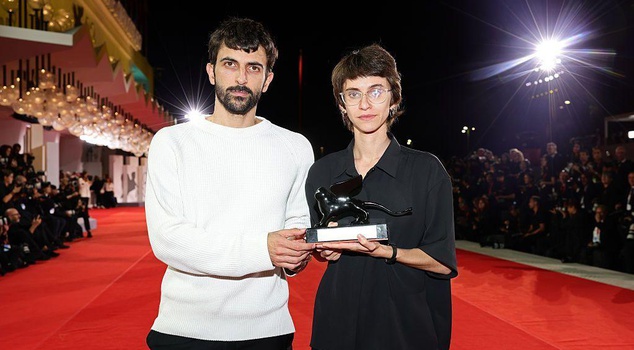
In the Naza documentary by Israeli directors Rachel Szor and Yuval Abraham, 24 anonymized Israeli soldiers and intelligence officers described how targets in Gaza are identified using AI-supported systems. One of the soldiers claimed to know of an attack in which the killing of 500 people for a single target was approved; the Israeli army denied the claim. The film, which won an award in Venice, sparked backlash in Israel, and Netanyahu called for the soldiers who spoke to be identified.
'This is the building I need to bomb. The Naza count for this strike was four,' says a man whose silhouette is all that can be seen.
'What is Naza?' asks a second man. 'Secondary damage. The number of civilians who will die as a result of a strike. '
This is a scene from the acclaimed documentary Naza, directed by Israeli filmmakers Rachel Szor and Yuval Abraham. 'Naza' is an Israeli military acronym that many people have learned since the film's release.
The documentary examines Israel's attacks in Gaza through interviews with 24 unnamed Israeli soldiers and intelligence officers. The soldiers describe how artificial intelligence is used to identify potential targets. In the film, Yuval Abraham interviews his anonymous sources on rooftops in Tel Aviv, with the city lights shining behind them.
The documentary won the Special Jury Prize at its premiere at the Venice International Film Festival. It also set a record with a 25-minute standing ovation. However, the film caused a fierce backlash in Israel.
Prime Minister Benjamin Netanyahu said the film was part of a global wave of incitement against Jews and ordered intelligence services to identify the soldiers who gave interviews. Chief of Staff Lieutenant General Eyal Zamir said the film was an attack on Israel, while Culture Minister Miki Zohar accused the directors of 'treason against the state' and called for their citizenship to be revoked. However, the two directors stand behind their work.
APPROVAL FOR THE DEATHS OF 500 PEOPLE FOR A SINGLE TARGET
The directors say their 80-minute documentary details 'the systems behind Israel's calculated mass killing of Palestinian civilians in Gaza' in the war after the Hamas-led attack on October 7, 2023. One of the interviewees describes knowing of a strike in which the killing of 500 people was approved for 'a single person to be targeted.' The Israeli army, however, argued that this claim is 'completely false.'
The film is the result of nearly three years of investigative journalism by the directors in collaboration with the British newspaper The Guardian and the Israeli-Palestinian media outlet +972 Magazine. While the film features 24 Israeli soldiers and intelligence officers, the directors say they spoke with more than 100 sources during their research.
In a statement to the BBC World Service's Newshour program, Yuval Abraham said, 'By speaking with these soldiers, we were able to gain insight into the targeting systems, AI-based systems and protocols behind the mass killing in Gaza.' According to the Hamas-run health ministry, more than 73,000 Palestinians have been killed in Gaza, including more than 20,000 children.
Abraham said the film stems from a sense of responsibility that comes with being an Israeli citizen: 'The film stems from the feeling of who we are as Israelis watching the Netanyahu government destroy the Gaza Strip and kill tens of thousands of civilians, and that we need to try to do something about it. '
The Israeli government says it has made great efforts to prevent civilian casualties while fighting Hamas militants embedded in locations such as hospitals, schools and shelters. Hamas denies allegations that it uses civilians in Gaza as human shields.
THE 'WHERE IS MY FATHER?' SYSTEM
The film includes statements from the Israeli government and military saying that their operations target only militants and that measures are taken to minimize harm to civilians. But the soldiers interviewed tell a different story.
In his statement to the BBC, Abraham said, 'What they describe is not a pinpoint military operation carried out with the intention of minimizing risk to civilians.' According to the directors, the film focuses on AI-powered targeting systems used to identify potential targets and estimate possible civilian casualties.
One of the systems featured in the documentary is called 'Where Is My Father?' The filmmakers say this system alerts intelligence officers when the target returns home. It is alleged that the system sometimes tracks family members through children's mobile phones. Rachel Szor says the surveillance system monitors conversations containing phrases such as 'Where is my father?' or 'When will he come?' and that these phrases may signal that the target has arrived home.
In his statement to the BBC, Abraham said, 'In the film you hear these Naza numbers mentioned. You hear that authorization to bomb up to 20 civilians is widely given. This is an algorithm that calculates how many people in each house will be bombed.' 'What actually happened after October 7 was that these Naza mechanisms normalized and permitted the killing of civilians instead of minimizing it. '
SHOT ON TEL AVIV ROOFTOPS
Naza is a film about the Gaza war with very little footage from inside the Gaza Strip. Most scenes were shot at night on Tel Aviv rooftops. There are scenes of daily life with stylish apartment buildings and brightly lit windows. These images contrast sharply with the destruction in Gaza, just 70 kilometers to the south, shown in the film's closing moments.
Rachel Szor said they chose Tel Aviv because most of the soldiers and intelligence officers they interviewed were from this city and because the city hosts Israel's military headquarters. 'They come from the elite segment of Israeli society. They sometimes see themselves as left-wing,' she said.
So how did they persuade so many soldiers and officers to speak so openly about what the Israeli army and they themselves did in Gaza? Abraham said building trust was one of the biggest challenges they faced. 'Many of them felt that they had taken part in something wrong, that they had been involved in unjustly committed crimes or killings. '
Noting that a large part of the Israeli media lacks a critical perspective, Abraham said this also helped with the interviews. 'Some of the people we interviewed said they thought they had never been asked these questions before. After we asked the questions, they agreed to talk. ' All sources in the film spoke on condition of anonymity. Abraham said, 'They are taking a great risk by speaking. That is why their identities are kept secret.'
DEATH THREATS AND ACCUSATIONS OF TREASON
Since the film's widely acclaimed screening at the Venice Film Festival, the directors say they have received numerous death threats and have been described as traitors by their opponents in Israel. Former prime minister Naftali Bennett described the film as 'a terrible libel against our sons and daughters,' while former defense minister Avigdor Lieberman described the directors as 'Israel-haters.'
There was also an extensive reaction from the Israeli army, and the film was accused of 'presenting a distorted, misleading and disingenuous picture of the Israeli Army's target planning and attack processes.'
It was stated that the film's narrative was based on "significant errors arising from a false and manipulative portrayal of reality." Abraham said that the filmmakers had contacted the Israeli military more than 10 times over about three years regarding all the key claims in the film, and rejected accusations that their film was false.
Abraham argued that the anger directed at the film reflected Israeli society's reluctance to confront what the army did in Gaza. He stressed that his films had also sparked public debate at a level not seen since the start of the war. "In a large part of the Israeli media, we witness either complete ignorance of these crimes or justification of these crimes," he said. "When the mass slaughter of civilians is normalized, the result is a state of complete denial. We hope this film will contribute to breaking down these walls of denial in Israeli society."
We used artificial intelligence in translating this article, whose original is in English. A BBC journalist checked the translation before publication.
.