24.11.2026 18:01
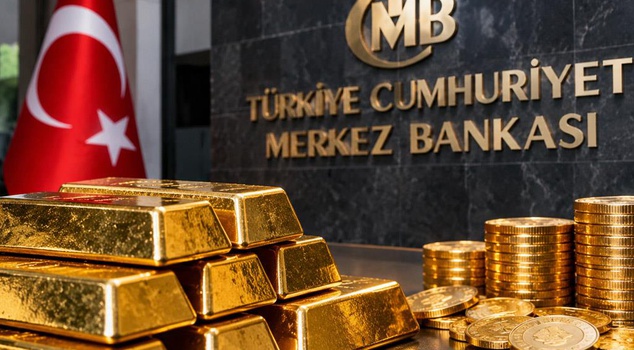
The gross reserves of the Central Bank of the Republic of Turkey, which stood at $210 billion before the war between the US and Iran, fell to $159 billion as of November 13. While it was stated that $32 billion of the approximately $51 billion decline was due to the depreciation in gold prices, experts noted that fluctuations in reserves could continue.
The gross reserves of the Central Bank of the Republic of Türkiye (CBRT) fell to $159 billion as of November 13, affected by fluctuations in global markets and the decline in gold prices. It was stated that about $32 billion of the approximately $51 billion decrease in reserves, which stood at $210 billion before the war, stemmed from the loss of value in gold prices. Experts noted that fluctuations in gold prices will continue to affect CBRT reserves.
$51 BILLION DECLINE IN CENTRAL BANK'S RESERVES
The gross reserves of the Central Bank of the Republic of Türkiye declined due to developments in global markets and the drop in gold prices. Gross reserves, which had been at $210 billion before the war, fell to $159 billion as of November 13. It was stated that $32 billion of the approximately $51 billion decrease in reserves resulted from the gold valuation effect.
Although the CBRT pursued an active, flexible, and controlled policy in reserve and liquidity management, developments in global markets were decisive in the course of reserves. Geopolitical risks, international capital movements, the current account balance, and changes in gold prices were among the factors affecting increases and decreases in reserves. The Central Bank's gross reserves reached $218 billion 158 million in the week of January 30, hitting their highest level of all time.
DOLLAR INDEX CLIMBS TO 20-MONTH HIGH
The strengthening of the dollar in global markets put pressure on gold prices. As expectations regarding interest rate hikes by the US Federal Reserve (Fed) strengthened, the dollar index surpassed the 104 level and reached its highest level in about 20 months.
While central banks around the world turned to gold purchases to protect against financial and geopolitical risks, diversify their reserves, and preserve their long-term value, the appreciation of the dollar was effective in the decline in gold prices.
Geopolitical risks originating from the Middle East increasing inflation concerns and the selling wave in international markets also caused reserves to follow a volatile course.
GOLD'S OUNCE PRICE LOST MORE THAN 15 PERCENT IN VALUE
The ounce price of gold has lost more than 15 percent in value this year. The additional decline in the past week and the deterioration in risk perception in global markets were also cited among the factors supporting the decline in the Central Bank's reserves.
Under current market conditions, the CBRT is diversifying the instruments it uses in reserve management through transactions such as gold-foreign exchange swaps and Turkish lira-foreign exchange swaps. The share of gold in total reserves being above 60 percent increases the impact of price movements on total reserves.
While declines in reserves were seen in past periods of capital outflows as well, it is noted that reserves recovered again as global uncertainties eased.
EXPERT EVALUATES THE DECLINE IN RESERVES
Üzeyir Doğan, Deputy General Manager of A1 Capital Yatırım Menkul Değerler AŞ, stated that the CBRT significantly increased its gold reserves in past years.
Recalling that at the beginning of 2024 gold reserves corresponded to almost half of gross foreign exchange reserves, Doğan stated that with the sharp rise in gold prices, this ratio rose to as much as 1.5 times that level.
Noting that the rise in gold prices played an important role in the CBRT's total reserves reaching historic peaks, Doğan said that in the period after the first quarter of the year, the Central Bank turned to reserve optimization through gold swap transactions and gold sales.
Stating that one of the main reasons for the recent decline in reserves was the loss of value in gold prices, Doğan made the following assessment: "Nevertheless, we have recently seen a decline in reserves due to the loss of value in the gold held physically. One of the main factors in this decrease in reserves was the drop in gold prices. As long as gold is held in reserves, these fluctuations in gold prices will continue to be decisive on reserves."
"FLUCTUATIONS IN GOLD PRICES WILL REFLECT ON RESERVES"
Stating that it is not possible to sell all the gold held in reserves or switch to a different investment instrument, Doğan said that within the scope of optimization efforts, reserves may periodically increase and decrease.
Drawing attention to the fact that central banks around the world are also increasing their gold reserves, Doğan reported that the People's Bank of China in particular continued its purchases even during periods when gold prices were high.
Stating that no additional reserve increase was made because the share of gold in the CBRT's reserves is high, Doğan said that reserve optimization was sought through gold swap transactions and sales.
Doğan concluded his assessment with the following words: "Because the share of gold in the CBRT's reserves is high, there was no additional reserve increase in this period. In fact, as I said, efforts were made to achieve this reserve optimization from time to time through swap transactions and gold sales. Therefore, as long as gold is held in reserves, every fluctuation in gold prices will also bring fluctuation to total reserves. I think this should be considered normal."
DEMAND FOR TURKISH LIRA MAINTAINS ITS STABILITY
It was stated that despite fluctuations in global markets, domestic foreign exchange demand remained limited. The demand for the Turkish lira maintaining its stable course is considered among the gains of the policies implemented by the economic administration.
It is stated that the CBRT's tight monetary policy stance and macroprudential framework also support demand for Turkish lira-denominated assets. With the normalization of risk perception in global markets, reserves are expected to increase again.