17.11.2026 16:33
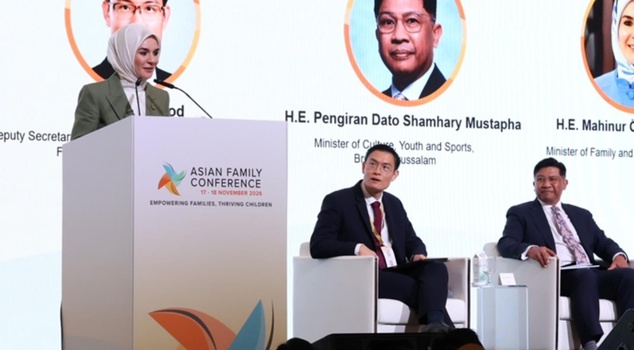
Minister of Family and Social Services Mahinur Özdemir Göktaş attended the ministers' session within the scope of the Asian Family Conference held in Singapore. Reminding that the regulation preventing social media platforms from providing services to children under the age of 15 entered into force on November 1, Göktaş said, "We believe that technology companies must take an active role in creating a safer digital environment."
Minister Göktaş explained Türkiye’s policies aimed at strengthening the family and protecting children from digital risks at the Asian Family Conference. Göktaş said that Türkiye is ready to work with its partners in Asia in this field.
“STRONGER FAMILIES, THRIVING CHILDREN”
According to a statement from the Ministry, Göktaş attended the “Ministerial Session on National Approaches to Supporting Children and Families” held within the scope of the Asian Family Conference in Singapore. Göktaş stated that the theme “Stronger Families, Thriving Children” reflects the understanding that guides work in Türkiye.
Expressing that their aim was to offer a mechanism that would meet the expectations of children and families, Göktaş said:
“Our Family Protection and Empowerment Vision Document and Action Plan provide a national framework for this approach. Our President, Mr. Recep Tayyip Erdoğan’s declaration of 2025 as the Year of the Family and the 2026-2035 period as the Decade of Family and Population has created the ground needed to focus on this national framework. This vision helps us plan for the needs of families in a period when fertility is declining and the population is aging.”
FOSTER FAMILY WORK
Göktaş reported that they are working to expand new foster family models such as temporary foster care throughout the country. Göktaş also recalled that during the 81st United Nations General Assembly, under the auspices of Emine Erdoğan, they brought together spouses of leaders from 15 countries to discuss common approaches to protecting children in online environments.
SOCIAL MEDIA REGULATION FOR UNDER-15s
Reminding that the secondary regulation enabling the implementation of the new framework on social media entered into force on November 1, Göktaş noted:
“This regulation prevents social media platforms from providing services to children under the age of 15, while it envisages separate services and protective measures appropriate to their age for children in the 15-17 age group. We believe that children’s safety is a shared responsibility and that technology companies must take an active role in creating a safer digital environment.”
Emphasizing that digital platforms can reach children by transcending borders, Göktaş noted that by working together, agreement could be reached on protective measures that children can trust and the responsibilities of technology companies could be clarified.
“WE ARE WORKING TO PROTECT FUTURE GENERATIONS FROM DIGITAL RISKS”
Answering questions in the question-and-answer session held after the speeches, Göktaş used the following statements:
“Advances in information and communication technologies, pleasure- and speed-oriented consumption habits, and globally harmful ideological movements aimed at eliminating biological differences erode family values. As the young population decreases and the elderly population increases, the labor force is narrowing, human capital is weakening, and this situation creates serious risks for all countries. We must also take into account the practical difficulties that families face in their daily lives, especially in raising children and protecting them. As Türkiye, we regard the protection, support, and empowerment of families as a fundamental humanitarian responsibility. We are also working to protect families and future generations from digital risks.”
SOCIAL RISK MAPS
Stating that they have placed children’s digital safety at the center of policies, Göktaş described the Ministry’s work as follows:
“Our Ministry has developed Social Risk Maps as an early warning tool. We analyze social, economic, and psychosocial indicators at the household level to determine where risks are concentrated and which families may need support. We monitor change in families through national research such as the Türkiye Family Structure Survey (TAYA). We are also working on the Family Index. All these data will help us monitor the progress recorded throughout the Decade of Family and Population (2026-2035).”
Göktaş emphasized that Türkiye is ready to work with its partners across Asia to implement these protective measures.