28.11.2026 21:50
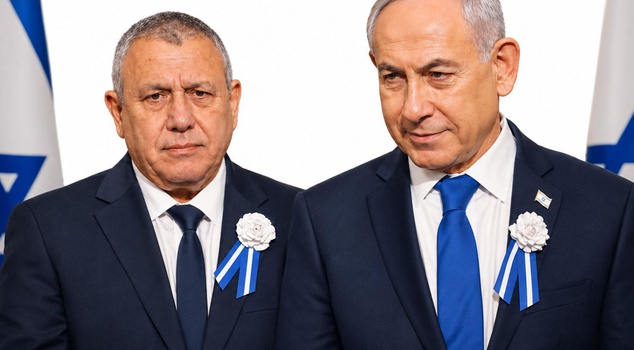
As coalition negotiations continue in Israel, Prime Minister Benjamin Netanyahu has offered a rotational premiership to Gadi Eisenkot, leader of the Yashar Party, who has been tasked with forming the government. Netanyahu, who agreed to leave the prime minister's seat to Eisenkot in the first term, proposed that he himself serve as alternate prime minister. Calling for the formation of a national unity government, Netanyahu also opposed the inclusion of Arab parties in the coalition.
Israeli Prime Minister Benjamin Netanyahu made a new statement regarding the period during which Yashar Party leader Gadi Eisenkot was tasked with forming the government following the general elections held in Israel on October 27.
HE AGREED TO GIVE THE FIRST TURN IN THE ROTATIONAL PREMIERSHIP TO EISENKOT
Claiming that Israel is "facing an existential danger," Netanyahu announced that in the likely "national unity" government, under a rotational premiership system, he agreed that Eisenkot would assume the role of prime minister in the first term.
In a statement on his social media account, Netanyahu called on Zionist political parties in Israel to unite and sought "realistic, sincere and accelerated negotiations" with the Yashar Party. Arguing that the new government is the only way to secure Israel's security and future, Netanyahu stated that the parties must be ready to compromise in order for the government to be formed.
Netanyahu argued that his Likud Party received about 250,000 more votes than Eisenkot's Yashar Party and that, therefore, under normal circumstances, he should lead the government. However, stating that he was ready to give up this demand because of the threats he claimed Israel faces, Netanyahu said, "My responsibility as a leader requires me to set everything aside. First, I accept that Eisenkot will serve as prime minister. I, for my part, will serve as alternate prime minister at the beginning of the term."
CALL FOR "FORMING A NATIONAL UNITY GOVERNMENT"
In his call for a unity government, Netanyahu also targeted Arab parties in Israel with ugly remarks. Netanyahu opposed the inclusion in the government of the Joint List alliance, made up of Arab parties representing Palestinian citizens in Israel and playing a key role in the elections.
Arguing that a significant portion of Israeli citizens want a national unity government, Netanyahu claimed that some people who did not vote for him in the elections were also calling for this. Continuing his statements on the politics of fear, Netanyahu stated that a compromise must also be reached with ultra-Orthodox Jewish parties.
In his call to Eisenkot, Netanyahu said, "In response to this acceptance of mine, I expect immediate real, sincere and accelerated negotiations to begin, and on the other side, with a similar willingness to compromise and make sacrifices, the formation of a national unity government that will avert the dangers and secure Israel's security and future."
COALITION NEGOTIATIONS CONTINUE IN ISRAEL
After the October 27 elections in Israel, Yashar Party leader Eisenkot, who assumed the task of forming the government, is continuing coalition negotiations with the party of interim Prime Minister Netanyahu, Likud, and the Haredi parties. In addition to Eisenkot's coalition negotiations with the Haredim and Likud, the possibility of forming a government with the support of parties representing Palestinian citizens of Israel also remains valid. Eisenkot had signed his first coalition agreement with Liberman.