26.11.2026 05:40
The US administration proposed new tariffs on imports from 14 economies, including China and the European Union. The tariffs are not expected to take effect before next year; Beijing and Brussels reacted to the decision.
The US has proposed imposing new tariffs on imports from 14 economies, including China and the European Union. The highest rate fell on China, with a tariff of up to 40%; it is followed by Vietnam with a rate of up to 35%, according to the BBC.
For other economies, the rates were announced as 20% or 25%. The list includes China and the EU, as well as Japan, South Korea, Taiwan, India, Vietnam, Singapore, Switzerland, Indonesia, Malaysia, Cambodia, Thailand and Bangladesh. Due to upper limits previously agreed by President Donald Trump, some rates will effectively be applied lower.
TARIFFS WILL NOT START BEFORE NEXT YEAR
The Office of the United States Trade Representative (USTR) announced the tariffs along with comprehensive reports describing how each economy's trade practices affect American trade. The new tariffs are not expected to take effect before next year; public comments will be sought first, and hearings will be held if necessary. According to Anadolu Agency, the deadline for written comments is January 5, 2027.
US Trade Representative Jamieson Greer said the tariffs would "provide a level playing field for American workers." According to Greer, many of the US's trading partners have for decades pursued industrial strategies aimed at manufacturing and suppressing wages.
THE SUPREME COURT HAD STRUCK DOWN THE FIRST TARIFFS
The White House launched the investigation into other countries' trade practices in March, after the US Supreme Court found Trump's "Liberation Day" tariffs unlawful. Trump had based those tariffs on emergency powers; the new tariffs are based on the USTR's authority to take measures against foreign trade practices.
Economist Chang Pao-Li of Singapore Management University said the new tariffs rest on "a firmer legal foundation" but could still be challenged in court. Stephen Brown, chief North America economist at Capital Economics, said the announcement was "not as alarming as it appears," that the new tariffs replace those announced in the summer, and that their effect on prices will remain limited.
BEIJING CALLED IT "POLITICAL MANIPULATION"
Chinese Foreign Ministry spokesperson Guo Jiakun described the tariffs as "political manipulation" and said the US claim that China produces more than it can consume is "false." The European Commission also rejected the tariffs and recalled that the rate for the EU is limited to the previously agreed 15%. Vietnamese Deputy Prime Minister Bui Thanh Son said the rate was incompatible with the realities of trade cooperation between the two countries.
Washington also proposed a 10% tariff on Brazilian goods under a separate investigation; the country will face tariffs on finished aircraft and sugar it sells to the US. The office of Brazilian President Lula da Silva said, "Brazil will not bow to such threats."
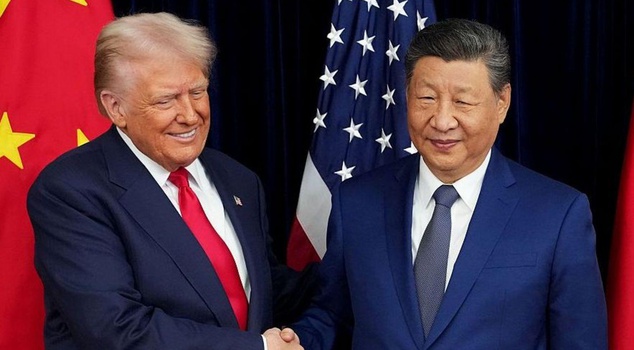
The mutual tariff war between the US and China is currently on hold. Trump and Chinese President Xi Jinping met last week, but it was not announced whether the ceasefire, which ends on January 10, will be extended.
Source: BBC