19.11.2026 01:10
With the bill accepted at the Turkish Grand National Assembly's Industry, Trade, Energy, Natural Resources, Information and Technology Commission, the collection of unpaid general health insurance premiums belonging to before January 1, 2017, along with the related delay penalties and late payment interest, will be waived. Previously paid premiums will not be refunded. The proposal also regulates under law the conditions to be sought in police and gendarmerie candidates and extends the incentive for women's and youth employment until the end of 2028.
News: Ogün AKKAYA(TBMM) -
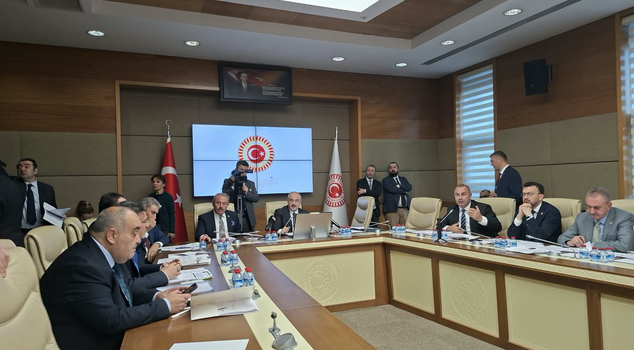
At the TBMM Industry, Trade, Energy, Natural Resources, Information and Technology Committee, which convened under the chairmanship of AK Party Bursa MP Mustafa Varank, the "Bill on the Law on the Use of Renewable Energy Resources for the Purpose of Electricity Energy Production and on Amendments to Certain Laws" was accepted.
The bill envisages regulating by law the conditions for admission to gendarmerie and police vocational schools, offsetting BOTAŞ's tax and similar obligations, writing off unpaid general health insurance premium debts from before 2017, and introducing liability exemption for those involved in the liquidation of investment funds. With an amendment submitted by AK Party MPs for Article 11 of the bill concerning corporate tax regulation, it was requested that the phrase providing for the exclusion of corporations engaged in electricity energy production from the reduced corporate tax application be removed.
GENERAL HEALTH INSURANCE PREMIUM DEBTS FROM BEFORE 2017 TO BE WRITTEN OFF
Article 10 of the bill envisages waiving the collection of unpaid general health insurance premiums from before 1 January 2017 and ancillary receivables related to these debts, such as late payment penalties and late payment interest.
According to the regulation, premiums paid for the periods in question up to the date of publication of the law will not be refunded or offset against other debts.
CONDITIONS TO BE SOUGHT IN POLICE AND GENDARMERIE CANDIDATES TO BE SET OUT IN LAW
Article 1 of the bill envisages amending the Law on the Organization, Duties and Powers of the Gendarmerie so that the conditions to be sought in candidates for active-duty officers and non-commissioned officers who will serve within the Gendarmerie General Command and Coast Guard Command, as well as in candidates to be admitted to faculties and vocational schools, are regulated by law.
According to the regulation, candidates to be admitted to faculties and vocational schools will be required to be Turkish citizens, not to have completed the age of 21 as of 1 January of the year of application, to be graduates of high schools or equivalent schools, and to meet the health conditions specified in the relevant legislation. Conditions such as not having an impediment to carrying weapons or performing armed duties, not having been deprived of public rights, and not having received treatment for alcohol, drug, or stimulant use will also be sought in candidates.
The regulation also includes conditions of not interfering in, supporting, or participating in actions, meetings, marches, and rallies of terrorist organizations and structures linked to them; and not being a member of any political party or subsidiary organizations of political parties at the date of application.
Article 6 of the bill envisages regulating by law the conditions to be sought in candidates who will apply to police vocational schools.
Accordingly, candidates will be required to be Turkish citizens, graduates of high schools or equivalent schools, not have an impediment to carrying weapons or performing armed duties, and meet the health conditions specified in the relevant legislation. The condition that candidates have completed the age of 18 as of the first day of October of the year in which the exam is held and have not reached the age of 26 as of 1 January of the same year will also be sought.
The regulation also includes conditions such as candidates not having received treatment for drug or stimulant use, not having been convicted of certain crimes or not being under prosecution for the relevant crimes, not having participated in actions linked to terrorist organizations, and not being a member of any political party at the date of application.
WOMEN AND YOUTH EMPLOYMENT INCENTIVE EXTENDED UNTIL THE END OF 2028
Article 3 of the bill envisages extending until 31 December 2028 the duration of the incentive applied to support the employment of women, young people, and unemployed persons with a vocational-technical training certificate, and granting the President the authority to extend this period until 31 December 2029.
Article 2 of the bill envisages increasing to 15 academic years the duration of the authority granted to the President regarding the extension of the state contribution practice carried out under the Vocational Education Law. The extension authority may be used for one academic year each time.
The regulation aims to preserve the wage guarantee for candidate apprentices, apprentices, students receiving vocational training in enterprises, and students continuing internships or complementary education, and to maintain the support mechanism aimed at reducing enterprises' financial burden regarding student admission.
REDUCED CORPORATE TAX FOR ELECTRICITY PRODUCERS
With Article 11 of the bill, among the corporations to be excluded from the 12.5 percent reduced corporate tax application in Article 32 of the Corporate Tax Law, precious metal refineries, oil refineries, tobacco product and alcoholic beverage producers, as well as corporations engaged in electricity energy production, had been included.
With an amendment submitted by AK Party MPs to the committee, it was requested that the phrase in the relevant paragraph, "except precious metal refineries, oil refineries, tobacco product and alcoholic beverage producers, and corporations engaged in electricity energy production," be changed to "except precious metal refineries, oil refineries, tobacco product and alcoholic beverage producers."
In the justification of the amendment, it was stated that the aim is for corporations engaged in electricity energy production to benefit from the corporate tax reduction to be applied at 12.5 percent. Thus, with the amendment, it was envisaged that the provision leaving corporations engaged in electricity energy production outside the reduced corporate tax application be removed from the text.
Article 4 of the bill introduces a regulation concerning floating LNG terminals leaving the location specified in their licenses and providing services in other regions. Accordingly, within the period and scope to be determined in line with the license holder's request, permission may be granted by the Energy Market Regulatory Board within the framework of the principles of ensuring supply security and after obtaining the Ministry's opinion.
Article 5 of the bill envisages offsetting the taxes, funds, and shares that BOTAŞ must pay to collection offices affiliated with the Ministry of Trade between 31 December 2026 and 31 December 2027 against the company's assignment fee receivables that have arisen or will arise from the Treasury until 31 December 2027.
It is regulated that the offsetting transaction shall be carried out monthly by the Ministry of Trade without being associated with the revenue and expenditure accounts of the central government budget. Ancillary receivables related to the tax principals to be cancelled will not be calculated.
BOTAŞ's accounting records and documents will be taken as the basis for calculating the assignment fee subject to the offsetting transaction. If, as a result of the examination to be carried out, it is determined that the calculated assignment fee is less than the cancelled amounts, BOTAŞ will fulfill its obligations without interest, and the amount in question will be recorded as revenue in the general budget.
With Article 7 of the Bill, it is envisaged that the allocation of Renewable Energy Resource Areas and connection capacities shall be made through competition. Which of the sealed bid, open descending bid, or open ascending auction methods, or which combination thereof, will be applied in the competitions shall be specified in the competition specification, taking into account the technical and administrative characteristics of the resource areas and the connection capacity.
With Article 8 of the Bill, it is envisaged that unlicensed electricity generation facilities that have completed their ten-year term and have an electrical installed capacity of at least 750 kilowatts may, upon the request of the facility owner, transition to licensed generation activity.
For this, if during the license term the hourly market clearing price formed in the electricity market is higher than the current Renewable Energy Resources Support Mechanism price applied for the relevant facility type, the price difference and the license acquisition fee will have to be paid as a contribution fee to the YEK Support Mechanism.
The license acquisition fee may not exceed 30 percent of the current unit investment amount by resource type determined by the Energy Market Regulatory Authority.
With Article 12 of the Bill, it is envisaged that in electrical capacity increases by holders of generation licenses based on wind or solar energy, the fee to be charged per megawatt shall not exceed 50 percent of the current unit investment amount determined by resource type.
The fees shall be determined by TEİAŞ within the framework of the principles of ensuring supply security and shall be collected in advance before the license amendment. The fees collected shall be recorded as income for TEİAŞ.
OTHER REGULATIONS AND EFFECTIVENESS
With Article 9 of the Bill, it is envisaged that, if the total accrued amount for treatment services provided by public university healthcare service providers that have entered into a service procurement contract on a lump-sum basis in 2026 under the contract until 31 December 2026 is lower than the lump-sum contract amount, the difference shall be written off. The written-off amount shall be covered from the appropriation to be allocated for this purpose in the budget of the Ministry of Labour and Social Security.
With Article 13 of the Bill, it is envisaged that a new paragraph shall be added to the Law on Certain Investment Funds Decided to be Liquidated.
Accordingly, those assigned in the work and transactions related to the law, and the banks carrying out liquidation, transfer, and takeover transactions and the persons assigned by the banks for these transactions, shall not bear legal, administrative, or financial liability for the decisions they have taken and the actions and transactions they have performed as of 17 September 2026 in relation to their duties. In the regulation, acts constituting crimes are excluded from this exemption.
Article 14 of the Bill regulates the entry into force provisions. Accordingly, it is envisaged that Article 2 shall enter into force on the date the law is published, effective as of 14 September 2026, and Article 13 shall enter into force on the date the law is published, effective as of 17 September 2026. Article 11 shall apply to gains obtained in 2027 and subsequent taxation periods. The other articles shall also enter into force on the date the law is published.
.