29.11.2026 12:41
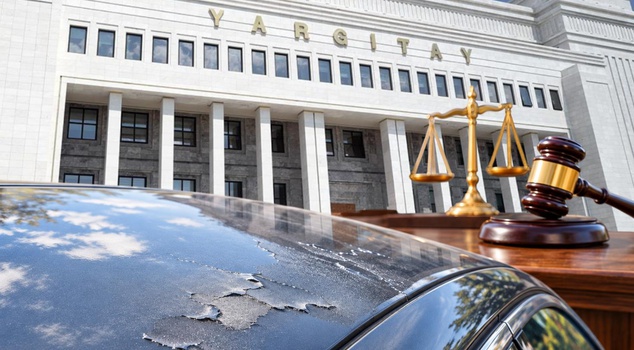
The decision regarding the replacement of a zero-kilometer automobile purchased in Ankara in 2020, whose roof paint peeled after 3 years, with a new one was upheld by the 3rd Civil Chamber of the Court of Cassation. The Chamber ruled that the defect arising from faulty painting during production was a "hidden defect." The vehicle owner, who did not accept the dealer's offer of 100 thousand lira, gained the right to have the vehicle replaced with a defect-free equivalent.
The Court of Cassation deemed the paint defect originating from production that emerged years after purchase a latent defect and found the decision to replace the zero-kilometer car with a new one lawful. The chamber emphasized that the consumer's request for replacement was equitable.
ROOF PAINT PEELED AFTER 3 YEARS
The roof paint of a car purchased new from a dealer in 2020 by a person living in Ankara began to peel in 2023. The vehicle owner, noticing the situation, applied to an authorized service. Some time later, the citizen, who was called by the dealer from whom he bought the car, was offered free painting and 100,000 lira payment for loss of value.
HE DID NOT ACCEPT 100,000 LIRA
Finding the offered amount low, the vehicle owner filed a lawsuit at Ankara 9th Consumer Court. The plaintiff requested replacement of the vehicle with an equivalent car free of defects, and if this was not possible, free repair and payment of the amount to be determined by expert witnesses.
The defendant company argued that the statute of limitations for liability for defective goods had expired. Claiming that there was no production-related problem in the vehicle, the company requested dismissal of the lawsuit.
DEFECT ORIGINATED FROM FAULTY PAINTING IN PRODUCTION
The local court, finding the plaintiff justified, ruled for replacement of the car with a latent defect with an equivalent car free of defects. In the decision, which was based on reports prepared regarding the vehicle, it was stated that the defect in the car originated from faulty paint applications during production and became visible over time.
COMPANY OBJECTED CLAIMING 'EXCESSIVE IMBALANCE'
The defendant company, which appealed the decision, argued that there was no defect preventing or making difficult the plaintiff's use of the vehicle. Arguing that defects that could be remedied by simple repair did not require replacement of the product or refund of the price, the company claimed that the decision led to excessive imbalance between the parties.
COURT OF CASSATION: REPLACEMENT DECISION IS BALANCED
The 3rd Civil Chamber of the Court of Cassation, which conducted the appeal review, found the replacement decision lawful and upheld it. In the chamber's decision, it was stated that the deterioration in the roof area of the vehicle originated from painting during the production process and constituted a latent defect.
In the decision, it was expressed that repair of the defect was possible, but that this would cause loss of value in the vehicle. It was emphasized that the plaintiff's use of his optional right as replacement with an equivalent was in accordance with equity and the balance of rights and interests between the parties.
WHAT DOES THE LAW SAY?
Article 11 of Law No. 6502 on the Protection of Consumers grants the consumer to whom defective goods have been delivered 4 optional rights: rescission of the contract, reduction in price in proportion to the defect, free repair, and replacement with an equivalent free of defects. According to Article 12 of the law, liability for defective goods is subject to a 2-year statute of limitations from delivery. However, if the defect is concealed by gross fault or fraud, this period does not apply.
THERE ARE ALSO CASES WITH DIFFERENT OUTCOMES
In September 2026, the 3rd Civil Chamber of the Court of Cassation had unanimously upheld the decision to replace a car on the grounds that production-related paint blistering on the roof of a car purchased new in Izmir constituted a latent defect. In July 2026, however, in a case concerning a new car in Adana some of whose parts were factory-painted, the chamber found the replacement decision disproportionate on the grounds that the defect did not affect the vehicle's use and driving safety, overturned it, and ruled for payment of loss of value.