16.11.2026 12:21
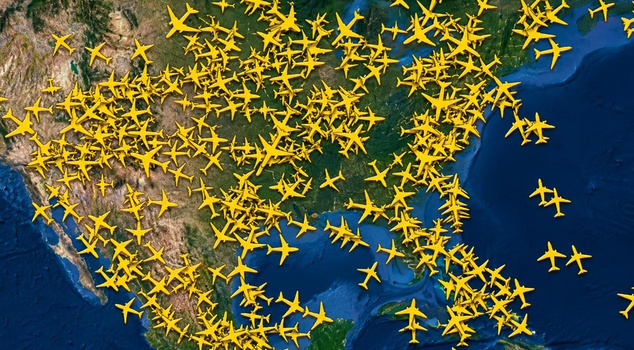
The radio recordings of the crisis in which flights were halted due to a malfunction in the air traffic control system in the US have emerged. During the outage that lasted about 4.5 hours, more than ten thousand flights were delayed, while hundreds of thousands of passengers were stranded at airports. Communication between pilots and control towers broke down, and airline companies sent instructions to flight crews to "disembark everyone from the aircraft." Although flights resumed, thousands of services were disrupted.
Details of the communication crisis that caused the US Federal Aviation Administration (FAA) to halt aircraft departures nationwide on Friday afternoon have come to light. The technical fault, reported to have occurred during the renewal of old equipment, caused serious disruptions in air traffic control systems.
Radio conversations and airline messaging records compiled by The Wall Street Journal revealed how the crisis began and how it quickly affected flight operations across the country.
PILOTS FIRST NOTICED STATIC ON RADIOS
Before flights were halted, pilots and air traffic controllers operating in airspace around Chicago, Indianapolis, and surrounding areas reported experiencing static and communication problems on radio frequencies.
At 3:12 p.m. US Eastern Time, an air traffic controller at Kansas City Center asked pilots, "Do you hear crackling on the frequency?"
A Chicago-based pilot replied, "Yes, we hear that static. When we first connected, we thought the microphone was stuck, so we returned to departure."
Because only one person can speak on the same frequency in radio systems used for air traffic control, the continuous static seriously disrupted communication between pilots and controllers.
"I AM CURRENTLY EXPERIENCING FREQUENCY PROBLEMS"
As communication problems spread to different regions, air traffic controllers began halting flights in the airspace they were responsible for.
At 3:47 p.m., a controller working at New York Center told the pilot of an aircraft heading to New York, "Okay, did you hear me call you? I am currently experiencing frequency problems."
The pilot, stating they could not hear the controller's call, replied, "No, neither of us heard you. Sorry about that."
"TRACON HAS LOST ALL FREQUENCIES, NO AIRCRAFT WILL DEPART"
As the communication outage grew, a critical announcement concerning all departure flights was made from the control tower at Chicago O'Hare International Airport.
The tower controller said, "All departure flights on frequency, we cannot release anyone for departure. TRACON has lost all frequencies, so no aircraft will depart right now due to TRACON."
Due to communication problems in the Terminal Radar Approach Control (TRACON) system, coordination of aircraft departure and arrival operations was seriously disrupted.
FAA HALTED FLIGHTS NATIONWIDE
At 3:54 p.m., as communication problems worsened, the FAA issued a national decision halting aircraft departures across the country.
After the decision, the controller at Kansas City Center announced, "Due to widespread frequency outages, the ground stop is now in effect nationwide for all centers and all destinations until further notice."
With departures halted, congestion increased at airports, and some incoming aircraft had to be diverted to alternate airports because they could not find suitable parking.
PILOTS SENT EMERGENCY MESSAGES ONE AFTER ANOTHER
As of 4:43 p.m., the congestion at airports was also reflected in the ACARS messaging system used between airline operations centers and aircraft.
In a message sent from American Airlines flight 2438, the words "There is no parking left at San, we may need ont and lax as alternatives" were used.
From the same company's flight 0358, the message "Hey hey hey what's up buddy, is there any update on the air traffic control ground stops/communication failure?" was sent.
The messages revealed that pilots were trying to get information on when flights would resume and that parking areas at airports were beginning to fill up.
AIRLINES HALTED OPERATIONS OVERNIGHT
As the ground stop decision dragged on, around 7:00 p.m. some airlines began ending operations they were scheduled to conduct overnight.
In an ACARS message sent to an American Eagle flight operated by Envoy, it said, "Word from management, the airline is halting operations overnight. If you haven't already, deplane everyone. Expect cancellations within the next hour."
With uncertainty continuing about when flights would resume, instructions were given to deplane passengers and cancel flights.
"I HAVE GOOD NEWS, BUT FLIGHTS WILL START VERY SLOWLY"
In the later hours of the crisis, a message sent to United Airlines flight 659 contained hopeful statements that flights might resume.
The message said, "Not sure if you're still with me, but I have good news. The ground stop is expected to end soon. The FAA had previously said this would be a controlled and measured start. I expect a very slow start to flights. But there is hope."
FLIGHT BAN LIFTED 4 HOURS 25 MINUTES LATER
The FAA's ground stop decision, made at 3:54 p.m., was lifted at 8:19 p.m. However, the effects of the outage, which lasted about 4.5 hours, continued after the decision was lifted.
According to the information shared, more than 35 percent of flights scheduled for Friday were canceled, over ten thousand flights were delayed, and hundreds of thousands of passengers were stranded at airports.
Aircraft, pilots, and cabin crews remaining at different airports made it difficult for airlines to reorganize their operations. Many pilots and cabin crew reaching legal duty time limits also caused additional problems in rescheduling flights.
The radio and messaging records that emerged laid bare how a technical communication failure quickly affected air transportation across the country.