26.11.2026 10:50
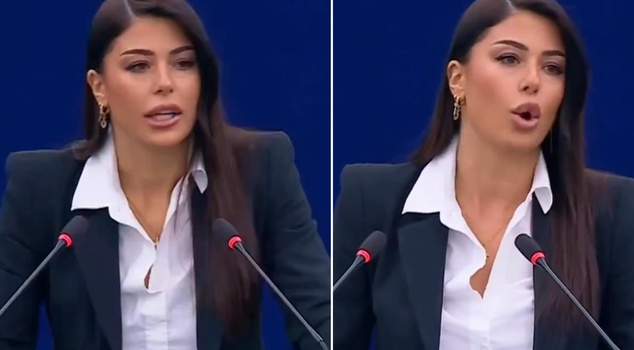
Greek politician and Member of the European Parliament Afroditi Latinopoulou used harsh statements against Turkey. Targeting the maritime jurisdiction areas agreement between Turkey and Libya, Latinopoulou said, "Turkey has no history, but it has a criminal record." The Greek MEP called on the European Union to cut all relations with Turkey, arguing that Ankara should be seen as an enemy of Europe.
Afroditi Latinopoulou, leader of the Foni Logikis (Voice of Reason) Party in Greece and Member of the European Parliament, used harsh statements against Turkey. Targeting the maritime jurisdiction areas agreement between Turkey and Libya, Latinopoulou used the phrase "Turkey has no history, only a criminal record" and called on the European Union to cut all relations with Turkey.
SHE TARGETED TURKEY
Latinopoulou's statements received wide coverage in the Greek press. Accusing Turkey over the Cyprus issue, disputes in the Aegean and migration policies, the Greek politician claimed that Ankara uses migration movements toward the European Union as a tool.
SHE WAS DISTURBED BY THE TURKEY-LIBYA AGREEMENT
Also targeting the Memorandum of Understanding on the Delimitation of Maritime Jurisdiction Areas signed between Turkey and Libya, Latinopoulou claimed that the agreement was unlawful. Arguing that the maritime jurisdiction areas of Crete, Rhodes and Kastellorizo were ignored, the Greek MP criticized Turkey's policies in the Eastern Mediterranean.
CALL TO THE EUROPEAN UNION ON TURKEY
Latinopoulou argued that Greece and the European Union should end all kinds of cooperation with Turkey. The Greek politician also claimed that Turkey should be seen as an enemy not only of Greece and Southern Cyprus but of the entire European Union.
THE DEVELOPMENT IN LIBYA BROUGHT THE AGREEMENT BACK ON THE AGENDA
The memorandum signed between Turkey and Libya in 2019 began to be debated again after the House of Representatives in eastern Libya approved the agreement on October 20, 2026. While Greece objects to the agreement, Ankara argues that the memorandum is in accordance with international law and protects the rights of the two countries in the Eastern Mediterranean.