20.11.2026 07:10
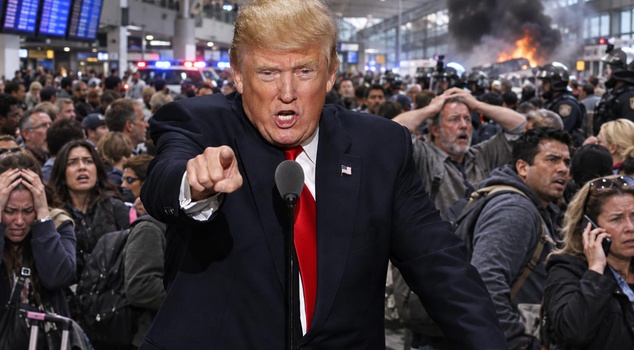
In the US, after technical disruptions lasting for days in air transportation, banking, digital services, and national security networks, a critical move came from the Trump administration. During the process in which thousands of flights were canceled, Microsoft services were disrupted, and problems were experienced in the NSA's secret network, White House National Cyber Director Sean Cairncross was dismissed. After the decision backed by Trump, Kirsten Davies is expected to be temporarily appointed to the position.
Following technical outages that have continued for days in the US and affected many critical areas from air transport to banking, and from digital services to national security, a notable personnel change took place at the White House. US President Donald Trump supported the removal of National Cyber Director Sean Cairncross. As the outages that caused thousands of flights to be cancelled across the country, banking transactions to be disrupted, and problems in the intelligence network made the Washington administration the target of criticism, it was announced that Pentagon Information Technology Director Kirsten Davies would be temporarily appointed in Cairncross's place.
CRITICAL DISMISSAL DECISION FROM TRUMP
After successive technology crises in the US over the past week, White House National Cyber Director Sean Cairncross left his post. A source close to the White House speaking to Reuters said Trump fully supported Cairncross's removal. Another source stated that Cairncross was assessed as not having sufficient technical expertise for the role. However, Axios reported that the departure took place within a framework of mutual understanding and that Cairncross did not want to continue in his post for another two years. It was not officially announced that the removal occurred directly because of the outages.
THOUSANDS OF FLIGHTS CANCELLED IN US
The biggest link in the crisis occurred in the aviation sector on November 13. Due to a technical problem in the air traffic control systems of the US Federal Aviation Administration (FAA), aircraft takeoffs were temporarily halted nationwide. The decision, which lasted about 4 hours and 45 minutes, caused major disruptions in air transport. According to FAA data, about 12,462 flights were cancelled the same day, while 9,082 of these were flights by major airlines. The agency stated that not all cancellations were directly caused by the flight suspension decision. The effects of the crisis carried into the following days. About 6,700 flights were cancelled on November 14, and more than 2,300 on November 15.
OLD SYSTEMS EMERGED BEHIND AVIATION CRISIS
In the FAA's investigation, it was determined that the air traffic control infrastructure became unstable due to excessive data traffic. According to the agency, sending approximately one thousand connection requests to the systems every 4-5 seconds led to problems in communications with aircraft and radar data. It was announced that the fault may be linked to work carried out during the conversion of old copper cables to fiber optic infrastructure. The FAA reported that 17 of 22 air traffic control centers were affected, that takeoffs were halted nationwide for safety purposes, and that about 3,500 aircraft in the air landed safely. After the problem, the installation of some new routers was suspended.
MICROSOFT CRASHED, EMAIL AND MEETING SYSTEMS DISRUPTED
One day before the aviation crisis, on November 12, a global outage occurred in Microsoft's digital services. Problems in services such as Outlook, Teams, Exchange Online and Copilot affected the daily work of companies and public institutions. Users could not access their emails, organize meetings, or carry out some of their transactions. After the outage, which lasted about 24 hours, Microsoft explained that the problem was caused by a software change made months earlier being triggered during subsequent network operations. The company reported that the incident was not linked to a cyberattack or artificial intelligence.
BANKING TRANSACTIONS ALSO CAME TO A HALT
On November 16, this time a problem occurred in the systems of JPMorgan Chase, one of the major US banks. Due to a software-related disruption, some banking transactions and money transfers were delayed. It was reported that the problem also affected the transactions of other financial institutions. The delays customers experienced in payment and transfer processes once again brought up the dependence of critical financial infrastructure on technology. Authorities did not announce any finding that the disruption in banking systems was linked to the previous aviation and Microsoft outages.
NATIONAL SECURITY AGENCY'S SECRET NETWORK ALSO AFFECTED
Another development on November 17 occurred at the National Security Agency (NSA), one of the most important US intelligence agencies. A technical problem occurred in the network called NSANet, used for sharing classified information and internal communication. Due to the outage, it was reported that the arrival times of some employees at the Fort Meade headquarters in Maryland were rearranged while certain activities were directed to other facilities. The NSA announced that temporary performance loss was experienced during planned maintenance work, but critical operational capabilities continued to operate.
AIRLINES AND APPLE ALSO AFFECTED
The successive disruptions were not limited to these. United Airlines temporarily halted some takeoffs on November 16 due to a technical problem in internal company systems. It was stated that pilots experienced problems accessing flight planning applications and the aircraft's latest weight data. One day later, outages were reported in Apple's App Store, Apple Music, AppleCare and some iCloud services. Technical problems were also experienced during the same period in some services of human resources and payroll software provider Workday and Amazon Web Services.
CYBERATTACK? STATEMENT FROM INTELLIGENCE LEADERSHIP
The outages that occurred at short intervals in critical infrastructures raised the possibility of a coordinated cyberattack. However, US Director of National Intelligence Jay Clayton announced that there was no finding that the incidents were part of a common attack. Clayton stated that the problems emerged during maintenance work, software updates and renewal of old infrastructures carried out at different institutions. Secretary of State Marco Rubio also said that the incidents were independent of one another and that there was no evidence of interference by a foreign state.
TRUMP ADMINISTRATION TARGET OF CRITICISM
The outages in aviation, finance and intelligence systems increased debates over the resilience of US critical infrastructures. Democratic politicians criticized the Trump administration's staffing shortages in cybersecurity and its efforts to protect technology infrastructure. Democratic member of the Senate Intelligence Committee Mark Warner, meanwhile, stated that artificial intelligence technologies enabled security vulnerabilities in systems to be detected faster, but that updates made at the same time could create serious pressure on old infrastructures.
KIRSTEN DAVIES REPLACES SEAN CAIRNCROSS
Sean Cairncross, who had served as National Cyber Director since August 2025, was responsible for coordinating cybersecurity policy across the federal government. Cairncross, who previously worked as an executive at the Republican National Committee, had also held various roles during Trump's first presidential term. According to Reuters, Cairncross declined to comment on his departure. Kirsten Davies, the Department of Defense's Director of Information Technology, is expected to take over temporarily. The permanent appointment must pass Senate confirmation.
THE BALANCE IN THE SENATE IS CHANGING
The timing of the personnel change is also significant for the political balance in the United States. After the midterm elections in November, Democrats taking control of the Senate majority in January made the Trump administration's process of selecting a nominee for the new cybersecurity director more delicate. According to Axios, one of the reasons Cairncross's departure occurred early was to allow the new nominee's Senate confirmation to be completed before the administration change.
CRITICAL QUESTION: HOW SECURE IS THE US TECHNOLOGY INFRASTRUCTURE?
Within a week, outages spanning from airports to banks and from technology companies to intelligence agencies exposed vulnerabilities in the US digital infrastructure. Experts point out that more comprehensive security and backup mechanisms are needed against errors that may occur while making legacy systems compatible with modern technology. The personnel change at the White House has brought the question of how to produce a solution to these problems back onto the agenda.
.