05.11.2026 20:01
In the investigation into the death of former Minister of Transport Arif Ahmet Denizolgun, who was found dead in his home in 2016, the report of the Council of Forensic Medicine has been completed. The report, which also examined samples taken after his grave was opened in August, stated that the death occurred as a result of a brain hemorrhage due to high blood pressure, and that no evidence of death due to poisoning or trauma was found.
The Forensic Medicine Institute report prepared within the scope of the investigation into former Minister of Transport Arif Ahmet Denizolgun being found dead at his home in 2016 has been completed. In the report, it was stated that Denizolgun's death occurred as a result of a brain hemorrhage due to high blood pressure. It was noted that no findings of death due to poisoning or trauma were found in the examinations.
Within the scope of the investigation initiated after the death of former Minister of Transport Arif Ahmet Denizolgun was found suspicious, the report prepared by the 1st Specialization Board of the Forensic Medicine Institute has emerged. In the report, it was stated that Denizolgun was found dead at his home on September 7, 2016, and that scopy, postmortem examination and autopsy procedures were carried out at the Forensic Medicine Institute Morgue Specialization Department on September 8. It was conveyed that during the autopsy, samples were taken for biological, toxicological and histopathological examinations, and as a result of the evaluations, the report stating that death occurred due to pathological (non-traumatic) brain hemorrhage was sent to the Beykoz Chief Public Prosecutor's Office on October 17, 2016.
SAMPLES TAKEN FROM HIS GRAVE WERE EXAMINED
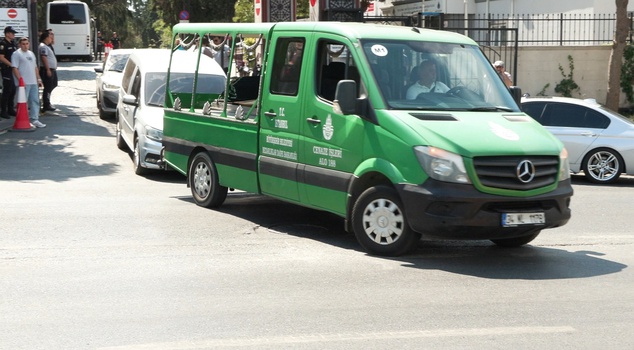
Within the scope of the investigation, it was reported that an exhumation was carried out at Denizolgun's grave on August 19 and the samples taken were examined. In the report, it was recorded that heavy metals such as 'molybdenum', 'cadmium', 'mercury', 'thallium', 'lead', 'cobalt', 'nickel', 'arsenic' and 'vanadium' were found in different amounts in bone and soil samples, and 'antimony' was also detected in one bone sample. In the examinations conducted, it was stated that the heavy metals detected in the tissues were at normal levels. It was assessed that the fracture detected in the neck cartilage occurred during the burial and exhumation procedures.
NO FINDINGS OF POISONING OR TRAUMA WERE FOUND
In the report, it was stated that the 3 ecchymoses detected in Denizolgun's chest area (bruising or contusion formed by blood leaking and accumulating under the skin as a result of rupturing or damage to capillaries) occurred in the 3 to 14-day period before his death, and that the findings in question were not of a nature to cause death. It was also stated that there was no medical evidence that death occurred as a result of covering the mouth and nose, applying pressure to the neck, or pressing on the chest.
In the Forensic Medicine Institute's assessment, it was recorded that no medical finding was found indicating that Denizolgun died due to traumatic effect or poisoning. It was determined that the death of Denizolgun, who was stated to have high blood pressure and cardiovascular disease, occurred as a result of a brain hemorrhage due to high blood pressure.