16.11.2026 09:54
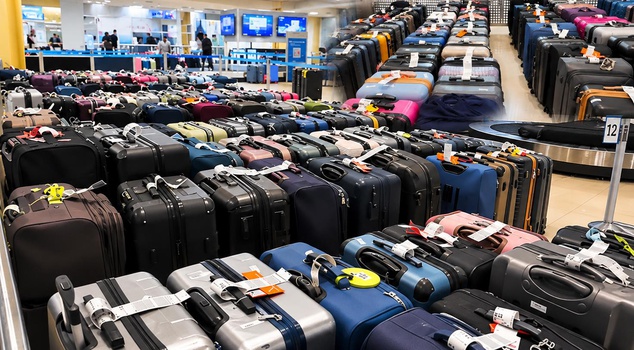
The flight crisis that began after a major malfunction in the air traffic control system in the US continues to have an effect on its third day. With thousands of flights canceled and more than 11,500 flights disrupted on Sunday, congestion at airports across the country continues, while passengers' suitcases piled up like mountains at Ronald Reagan National Airport in Washington. Authorities are continuing their efforts to return flights to normal.
A technical malfunction that began at air traffic control centers in the US on Friday, November 13 quickly affected flights across the country. The Federal Aviation Administration halted aircraft takeoffs at all airports due to instability in radar and communication systems.
The flight ban, which lasted about 4.5 hours, was lifted at 8:15 p.m. US Eastern Time. However, the resumption of flights did not end the crisis. Because aircraft, pilots, and cabin crews were stranded at different airports, cancellations and delays continued throughout the weekend.
According to official data published by the FAA on November 15, about 12,462 flights were canceled nationwide on November 13. Of these, 9,082 were flights belonging to major airlines. The agency also stated that not all cancellations were directly caused by the flight ban.
LUGGAGE PILED UP LIKE MOUNTAINS IN WASHINGTON
One of the most striking consequences of the crisis occurred at Ronald Reagan National Airport near Washington. Due to canceled and delayed flights, passengers' luggage piled up in the baggage claim area.
With suitcases piled up in different parts of the hall, an unusual scene formed at the airport. As passengers whose flights had changed searched for their luggage, the crowd waiting in the terminal grew steadily.
At the airport in Washington, hundreds of passengers waited to get information about their flights. When seating areas filled up, some passengers sat on the floor, while others used their suitcases as tables and continued their business on their computers.
Airport officials announced that terminals remained open during the flight ban, but passengers would face serious delays.
PROBLEMS OCCURRED AT 17 OF 22 AIR TRAFFIC CENTERS
The FAA's latest review revealed that the malfunction had spread over a much wider area than initial statements suggested. System instability occurred at 17 of the 22 air traffic control centers in the US. The problem later also spread to some control units managing aircraft approaching and departing airports.
At the center of the malfunction was the old telecommunications infrastructure connecting air traffic control units. Sending about 1,000 connection requests to the system every 4-5 seconds overloaded the communications network.
Excessive data traffic affected the systems that enable communication with pilots and the transmission of radar data. The FAA stated that the malfunction did not disable all communication channels and that some frequencies and radar connections continued to operate.
TRACE OF MALFUNCTION EXTENDED TO TWO STATES
Technical investigations focused on a radar station in Amarillo, Texas, and a radio communication facility in El Dorado, Arkansas.
L3Harris, the company providing the FAA's network services, was carrying out work at the El Dorado facility, including the installation of a new router. When excessive data traffic began in the system, connections from two points were blocked and the communications network was rebalanced.
To prevent similar problems from recurring, authorities disabled the same function on about 60 routers as a precaution. Investigations into the exact technical cause of the malfunction are ongoing.
3,500 AIRCRAFT IN THE AIR LANDED SAFELY
When the flight ban began, there were about 3,500 aircraft in US airspace. Air traffic controllers and pilots used the available communication channels to ensure aircraft landed safely.
The FAA announced that no aircraft was lost during the incident, all aircraft landed safely, and passengers' safety was not endangered.
After the airspace reopened, more than 8,000 flight operations were carried out on Friday night alone.
CRISIS ALSO SPREAD TO EUROPE AND MEXICO
The flight ban in the US also affected international air transport. Flights scheduled to depart from Europe to the US were temporarily halted, while restrictions were also imposed on flights from Mexico.
In the first hours of the flight ban, hundreds of aircraft changed routes. Some aircraft returned to the airports they departed from, while others were diverted to different airports.
The crisis affected not only passenger aircraft but also air cargo transport. Cargo companies, including FedEx, took measures against possible disruptions in deliveries.
MORE THAN 11,500 FLIGHTS AFFECTED ON SUNDAY
Two days after the flight ban was lifted, congestion continued at airports. According to a Reuters report dated November 15, about 2,100 flights were canceled and 9,400 flights were delayed across the US on Sunday.
Thus, the number of flights affected by disruptions on Sunday alone exceeded 11,500. On Saturday, about 6,700 flights were canceled and more than 9,100 were delayed.
About 28 percent of JetBlue's flights and 20 percent of American Airlines' flights were canceled on Sunday. Cancellations also occurred at United Airlines, Southwest, and Delta.
CALL FOR PASSENGERS TO POSTPONE THEIR FLIGHTS
Airlines began efforts to rebook passengers on new flights and reposition aircraft stranded at different airports after the cancellations.
Delta Air Lines advised customers who could be flexible with their travel dates to postpone their flights to Monday or later. American Airlines was reorganizing its operations, while Alaska Airlines warned that aircraft and staffing planning would take time.
FAA Administrator Bryan Bedford announced that they expected flight schedules to return largely to normal by Sunday evening. Transportation Secretary Sean Duffy also predicted that air transport would recover on Monday.
RESPONSE TO POSSIBILITY OF CYBERATTACK
After the malfunction that halted air transport nationwide, the possibility of a cyberattack was also investigated. The FAA and the US Department of Homeland Security announced that current findings did not indicate any cyberattack.
Authorities also determined that the incident was not linked to the outage experienced in Microsoft services during the same period.
The malfunction reopened debate about the US's aging air traffic control infrastructure. The Department of Transportation emphasized that additional investment was needed to modernize the systems.
LONGEST FLIGHT GROUNDING DECISION SINCE 2001
The approximately 4.5-hour flight ban on November 13 was the longest nationwide grounding of flights imposed in the US since the September 11, 2001 attacks.
In the US, nationwide aircraft departures were halted for about two hours last in January 2023 due to a malfunction in the system that sends flight safety notifications to pilots.
This time, after the malfunction, flights took hours to restart, while it took airlines days to return to normal operations.
.