17.11.2026 13:14
In the village of Komyshuvakha in southern Ukraine, the death toll from two consecutive attacks on a humanitarian aid center on November 2 has risen to at least 72, according to BBC reporting. Ukrainian officials alleged that a 3-ton aerial bomb was dropped on an underground shelter where people had taken refuge, and that Russia also targeted rescue operations that had been ongoing for two weeks. Russia’s Ministry of Defense did not respond to questions.
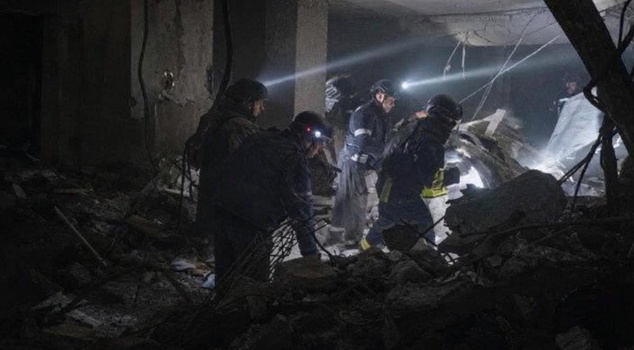
In a village near the front line in Ukraine, an attack on a center where civilians had gathered for aid distribution became one of the single deadliest attacks of the war that began in February 2022. There are still bodies under the rubble that have not been recovered.
CLAIMS THAT RESCUE TEAMS WERE ALSO ATTACKED
Ukrainian officials alleged that Russia also targeted search and rescue operations that had been ongoing for two weeks. According to a report by the BBC’s verification team, footage filmed in the days after the attack shows emergency vehicles and heavy machinery at the scene damaged.
The State Emergency Service of Ukraine announced that repeated attacks were carried out during the rescue operations. According to the service, 3 police officers, 4 workers and 2 search dogs were injured and 5 vehicles were damaged in these attacks. The service said, 'Due to the threat of repeated bombardment, teams often have to stop work and withdraw to a safe place.'
THEY HAD GATHERED FOR AID DISTRIBUTION
The villagers had gone to the center after it was announced in a local Telegram group that aid would be distributed between 10:00 and 12:00. According to the Ukrainian authorities, the first attack at 09:45 hit above-ground buildings and a woman was killed.
THOSE MOMENTS ON BODY CAMERA
In body camera footage released by the Ukrainian police, people are seen trying to pull an injured person from the rubble. Meanwhile, a warning of a second attack is heard being repeated with growing alarm over police radios. Then everyone is told to run to the underground shelter.
In footage filmed about an hour after the first attack, people are seen waiting silently in the shelter. Then a loud explosion is heard and the image goes dark.
CLAIM THAT A 3-TON BOMB WAS DROPPED ON THE SHELTER
Ukraine announced that a 3,000-kilogram aircraft bomb was dropped on the underground shelter where people had taken refuge. In footage filmed later, bodies are seen being removed from a huge crater opened directly above the shelter.
Munitions expert Trevor Ball, who examined the footage, said the crater was consistent with the damage left by a 3,000-kilogram Russian-made FAB-3000 bomb capable of destroying underground structures. Chris Proops, a former investigator at the UK National Crime Agency, expressed the same view.
SBU: THE VEHICLES WERE CLEARLY MARKED
An intelligence officer investigating the incident on behalf of the Security Service of Ukraine (SBU), who wished to be referred to only by the name Oleksiy, stated that the rescue vehicles were 'clearly marked.' The officer accused Russia of deliberately destroying humanitarian aid equipment. He also said there were still bodies in the rubble that had not been recovered. Funeral ceremonies are held almost every day for those killed in the attack.
RUSSIA DID NOT RESPOND
The Russian Ministry of Defence did not respond to questions about Komyshuvakha. In the ministry’s general statement on 2 November, it said that energy and transport infrastructure used by the Ukrainian army had been targeted. There is no military or industrial facility in the village. However, the settlement is located near an important route used by Ukrainian troops for transportation and evacuation.
EXPERTS: A WAR CRIME IF DONE DELIBERATELY
Ben Saul, professor of international law at the University of Sydney, said the incident was 'either a deliberate attack on civilians or an indiscriminate attack.' Saul stressed that both are considered war crimes. Prof. Samuel Moyn of Yale University also said that directly targeting rescue workers or their equipment is a serious violation of international humanitarian law.