11.11.2026 17:01
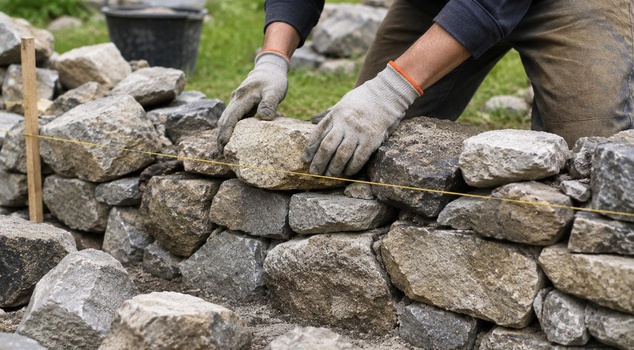
With the spread of modern construction technologies, the 2,000-year-old art of mortarless dry stone walling, which had fallen into oblivion, has regained value in Europe. In particular, the restoration of historic buildings and growing interest in environmentally friendly architecture have increased demand for this ancient craft. However, the insufficient number of trained masters has caused a serious labor shortage in the sector.
The traditional dry stone walling craft, which had almost disappeared with the spread of concrete and brick use, regained importance after many years. This method, practiced by interlocking stones without mortar, has become indispensable to restoration projects in many parts of Europe, especially Spain.
DEMAND EXPLODES FOR A 2,000-YEAR-OLD PROFESSION
The revival of rural tourism, the preservation of traditional agricultural areas, and growing interest in sustainable architecture have increased the need for dry stone wall masons. Budgets allocated for the restoration of centuries-old agricultural terraces, sheepfolds, granaries, and stone paths in Spain's Catalonia, Balearic Islands, Aragon, Murcia, Valencia, and Andalusia regions have brought momentum to the sector.
However, it has become increasingly difficult to find trained masters in the profession, which was not adequately passed on to new generations for many years. With the increase in restoration projects, the lack of qualified labor has become one of the most important problems facing the sector.
UNESCO'S 2018 DECISION BECAME A TURNING POINT
UNESCO's decision in November 2018 was also influential in the dry stone walling craft regaining importance. The traditional construction technique, carried out by interlocking stones without mortar, was included in the Representative List of the Intangible Cultural Heritage of Humanity. This decision was considered an important step in preserving the method practiced for centuries and passing it on to future generations.
PROVIDES NATURAL PROTECTION AGAINST FLOODS AND EROSION
According to experts, dry stone walls do not only have historical and cultural value. They also play an important role in combating landslides, floods, avalanches, and erosion. These structures, which contribute to the formation of a natural microclimate in agricultural lands, are shown among examples of environmentally friendly architecture.
FINDING MASTERS IS BECOMING INCREASINGLY DIFFICULT
With the repair of historical agricultural areas and the spread of rural development projects, the need for dry stone wall masons continues to increase. However, because the profession was forgotten for many years, a sufficient number of trained masters cannot be found. Sector representatives point out that the shortage of qualified labor is one of the biggest obstacles to the revival of the 2,000-year-old craft.