28.07.2026 08:50
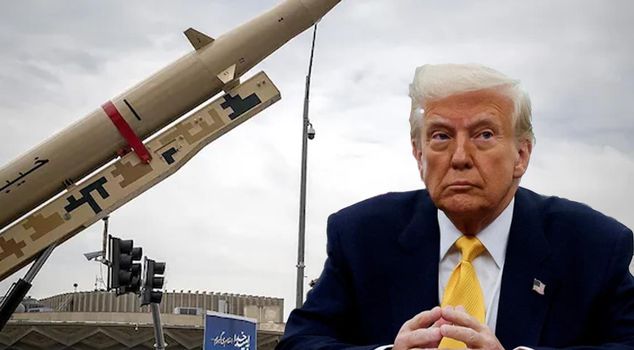
The curtain has been lifted on the behind-the-scenes dynamics of US President Donald Trump’s call for Iran to return to the negotiating table, even if through threats. Despite five months of continuous US-Israeli bombardment, the Tehran administration has managed to maintain its missile capabilities and is now striking American bases in the region with much greater precision. Iran’s transition to next-generation missiles, mobile launch tactics, blinding of American radars, and intelligence support from external sources are steadily eroding Washington’s air defense shield in the region.
As the military operation launched by the US and Israel at the end of February to destroy Iran's missile capacity enters its fifth month, it appears that expected results have not been achieved. According to an analysis by the Financial Times, despite hundreds of airstrikes, Iran continues its ballistic missile operations and keeps targeting American bases and allied facilities in the region.
OPERATION FAILED TO MEET ITS OBJECTIVES
The primary goal set by US Defense Secretary Pete Hegseth at the start of the operation was to destroy Iran's offensive missiles and production capacity. However, expert assessments indicate that despite heavy losses, Iran has reactivated its underground bases and rapidly adapted its operations to the changing conditions of the war.
KEY FACTORS INCREASING IRAN'S RESILIENCE
The strategic moves that stand out in Iran's ability to preserve its missile capacity and continue its attacks include:
- The fragile ceasefire that began in April and the US's restriction of its strikes to the south gave Iran's missile units an opportunity to regroup.
- Instead of older, less accurate missiles, Iran has shifted to more modern systems like the Kheibar Shekan, which can change course in the terminal phase.
- In the early stages of the war, Iran targeted radars and early warning systems in Kuwait, Jordan, and Bahrain, blinding defense systems like Patriot and THAAD.
- New tactics have been developed, such as blurring terrain in launch site images, abandoning the burning of vegetation that facilitated location tracking, and conducting daytime launches.
- Ballistic missiles, cruise missiles, slow-moving drones, and decoys are used simultaneously to overwhelm air defense systems.
- Although not definitively proven, it is believed that Russia has provided Iran with intelligence about US bases, and Iran has studied and replicated tactics from the Ukraine war.
THE MILITARY DILEMMA FACING THE US
Iran's operations using cheap missiles and drones place significant pressure on the US's limited stockpiles of Patriot and THAAD interceptor missiles, which take years to replenish. The current situation pushes the Washington administration into a difficult strategic choice.
UNCERTAINTY IN TARGET ACCURACY
Experts note that it is difficult to precisely measure Iran's technical hit accuracy. Due to the close proximity of buildings at US bases, a missile that misses its target by a few hundred meters can still hit another military structure.
The resulting picture shows that Iran's missile power is far more resilient than initial estimates, and Tehran continues to complicate US plans in the region by adapting to changing conditions.