18.11.2026 23:31
The ECtHR imposed a two-year ban on representing clients on a Romanian lawyer who used court judgments fabricated by AI and case law that did not actually exist in his petition. It was stated that the lawyer, who admitted making erroneous citations, did not sufficiently check the information he submitted and prolonged the court’s review process.
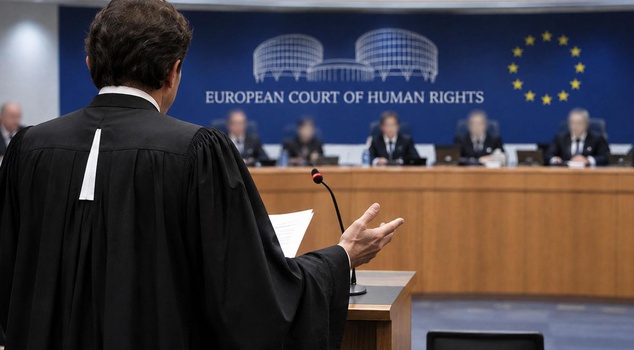
President of the European Court of Human Rights (ECHR) Mattias Guyomar banned a Romanian lawyer who used non-existent case law generated by artificial intelligence from representing clients before the court for 2 years.
HE USED FICTITIOUS COURT RULINGS GENERATED BY ARTIFICIAL INTELLIGENCE
According to a written statement from the ECHR, a Chamber of the Court found that in the application submitted to the Court, the Romanian lawyer also used non-existent case law generated by artificial intelligence and paragraphs not found in actual court rulings.
The relevant Chamber, in a reasoned proposal submitted to ECHR President Mattias Guyomar, reported that the Romanian lawyer acknowledged that he had not sufficiently checked the case law used in the application and that this conduct caused the Court to spend too much time checking all matters in the application.
HE WILL NOT BE ABLE TO REPRESENT CLIENTS FOR 2 YEARS
The Chamber requested that Guyomar ban the said lawyer from representing any client before the court for 2 years.
By his decision of 13 November, Guyomar accepted the Chamber's request and banned the said lawyer from representing or assisting any client before the ECHR for 2 years.
The lawyer acknowledged that he used artificial intelligence to write his observations in the application and argued that he made "incorrect citations".
Article 44D of the ECHR Rules of Court gives the President of the Court the authority, in exceptional circumstances, to prohibit a lawyer from representing a party before the Court or assisting that party.