13.11.2026 14:41
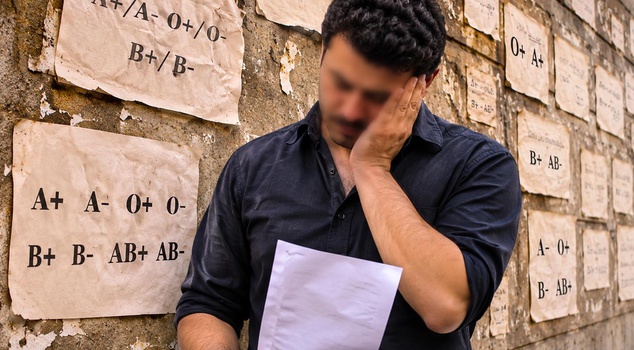
The deepening economic crisis in Iran is pushing citizens to make difficult decisions in desperation. In the capital Tehran, the walls of some streets have been filled with advertisements from people wanting to sell kidneys, liver tissue, and bone marrow. One of the citizens interviewed by the Iranian Labor News Agency ILNA rejected the 1.5 billion tumans offered for his kidney on the grounds that it would not be enough to pay off his debts. Another worker said he was asking 4 billion tumans for bone marrow.
In Iran, due to the rising cost of living, low wages, and accumulating debts, some citizens are trying to sell a part of their bodies. The field research published by the Iranian Labor News Agency ILNA revealed the scale of economic hardship in the capital, Tehran.
Ferheng Hosseini Street in central Tehran has begun to be called "Kidney Street" among the public. Phone numbers of people who want to sell their organs are written on the walls, metal doors, and buildings in the area.
The presence of a charity supporting kidney patients and a health center in the nearby area causes those seeking organs and those wanting to make a sale to concentrate in this area. However, the advertisements include not only kidneys but also liver tissue and bone marrow.
HE WAS OFFERED 1.5 BILLION FOR HIS KIDNEY, HE DID NOT ACCEPT
Among the people ILNA reached was a 30-year-old motorcycle courier. The young man, who makes a living by delivering orders, said he put his kidney up for sale to pay off his accumulated debts.
The courier was offered 1 billion 500 million tumans for his kidney. Even with an additional payment of 200 million tumans that could be obtained from insurance, the money he would receive was not enough to close his debts.
Therefore, the young man rejected the offer and said he now wanted at least 3 billion 500 million tumans for his kidney.
THE 33-YEAR-OLD WORKER PUT THREE SEPARATE ORGANS UP FOR SALE
One of the most striking examples in the research was the experience of a 33-year-old construction worker. The worker, who said he put his bone marrow up for sale due to financial difficulties, asked for 4 billion tumans for it.
The young worker explained that he did not limit himself to bone marrow and also placed advertisements for his kidney and liver tissue.
The worker, stating that he had undergone health checks and had the necessary documents, said that financial hardship was behind his decision to sell his organs.
HE MADE A 30 PERCENT DISCOUNT TO PAY HIS DEBT
Another person affected by the economic crisis was a self-employed man approximately 58 years old.
The man, who said he had a debt of 700 to 800 million tumans due to a bounced check, stated that he was ready to sell one of his organs to close his debt.
The man, explaining that he urgently needed money, expressed that he was willing to reduce the asking price by 20 to 30 percent in order to find a buyer.
SALARY 30 MILLION, 100 MILLION TUMANS NEEDED TO GET BY
The gap between income and the cost of living in Iran also drew attention in the research.
According to ILNA, the monthly earnings of workers employed at the minimum wage level in the country, including supplementary payments, vary between 20 and 30 million tumans. Independent labor rights advocates, however, calculate that a family of four needs approximately 100 million tumans per month to meet its basic needs.
According to these estimates, a family's basic living expenses can reach three to five times the monthly income at the minimum wage level. The inability of those working in temporary and seasonal jobs to earn a regular income further increases the economic pressure.
8 MILLION PEOPLE FACE EXTREME POVERTY
Ali Babayi Karnamei, Head of the Social Affairs Commission of the Iranian Parliament, said in a statement on November 8 that approximately 8 million people had been pushed into conditions of extreme poverty and malnutrition.
Karnamei stated that approximately 50 million more people were having difficulty meeting their food needs.
Advertisements for organ sales in the country are not a new phenomenon. However, the latest research shows that working people are also turning to putting their organs up for sale to pay their debts and cover housing expenses.
In Iran, there is a regulated system that allows payment in exchange for kidney donation. However, it cannot be said that all advertisements posted on the streets are under legal and medical supervision. The prices stated in the advertisements do not represent completed sales but the amounts requested by individuals.