18.10.2026 18:52
A scandal at a kindergarten in China exposed a practice that disregarded children's health. It was revealed that the school administration, seeking to make meals look more colorful and appetizing, mixed lead-containing paints that are prohibited in food into the meals. In the incident, 247 children were poisoned, while the heavy prison sentences handed down to those responsible sparked public reaction.
It has emerged that lead-containing paints, which are not food-safe, were used at a kindergarten in China to make meals look more colorful and appetizing. In the scandal, abnormal lead levels were detected in the blood of 247 children, while the kindergarten's operator was sentenced to life imprisonment. The director was sentenced to 15 years, and four kitchen workers to 6 to 8 years in prison.
The poisoning incident at Heshi Peixin Kindergarten in the city of Tianshui, Gansu Province, China, revealed a serious food safety scandal that endangered children's health. It was determined that lead-containing pigments, which are absolutely not suitable for consumption, were mixed into meals to make the food served to children look more colorful.
The Lanzhou Intermediate People's Court sentenced the kindergarten's operator, Li Huifang, to life imprisonment in the case concerning the incident. The kindergarten's administrative director, Zhu Jinglin, was sentenced to 15 years in prison, while four kitchen workers who mixed the paints into food in accordance with instructions were given prison sentences ranging from 6 to 8 years.
THE PAINTS HAD A “NOT SUITABLE FOR CONSUMPTION” WARNING ON THEM
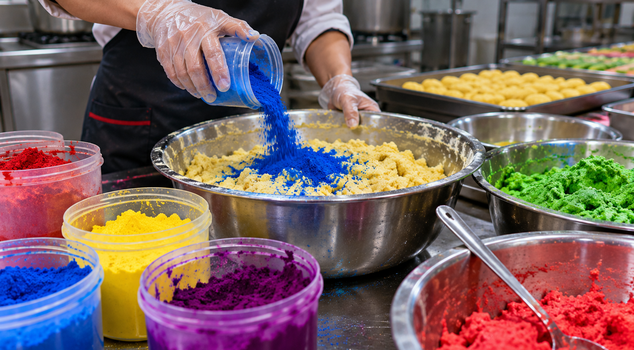
The investigation determined that the kindergarten management wanted the meals to look more vivid and attractive, thereby drawing more attention in the school's promotion. To this end, it was established that paints purchased online, which were clearly stated not to be used in food, were used in the kitchen.
It was reported that the paints were added to dough mixtures and used in preparing bread, cake, and similar foods. It was stated that although food dyes were cheaper, lead-containing pigments were preferred because they produced more vivid colors.
HIGH LEAD LEVELS IN THE BLOOD OF 247 OUT OF 251 CHILDREN
The scandal came to light in July 2025 after children experienced health problems and families filed complaints. In the examinations, it was determined that the lead levels in the blood of 247 of the 251 children tested were abnormally high. Abnormalities were also detected in the test results of 28 of 34 staff members.
It was reported that symptoms such as vomiting, dizziness, abdominal pain, hair loss, and changes in tooth color were seen in the children.
LEAD POISONING CAUSES PERMANENT DAMAGE
Lead exposure can cause serious health problems, especially in children of developmental age. High levels of lead can damage the brain and nervous system; it can adversely affect cognitive functions, attention skills, and development.
Following the court's ruling, it was also ordered that the operator Li Huifang's assets worth 500,000 yuan be confiscated. The director Zhu Jinglin was fined 300,000 yuan.
The incident brought discussions about the safety of food consumed by children and the responsibility of school administrations back onto the agenda.