07.11.2026 20:02
More than 2 million automobile tires dumped into the ocean in the US to create new habitats for marine life turned into a major environmental problem years later. In the project launched to create an artificial reef, the tires scattered under the impact of storms and damaged natural coral reefs. The step taken to protect the environment brought with it cleanup efforts lasting decades.
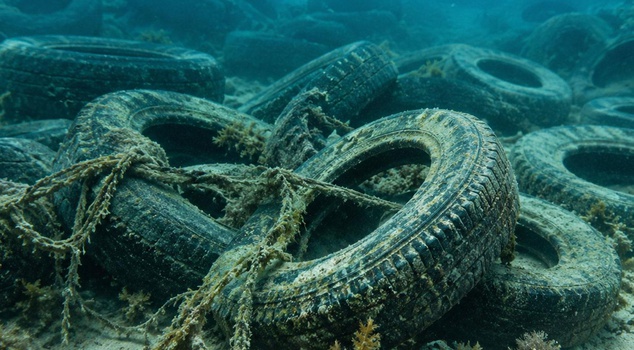
An environmental project launched in the US state of Florida nearly half a century ago produced the exact opposite of the expected results. Millions of used automobile tires were placed on the ocean floor to expand marine life habitats. However, the tires that were expected to benefit nature gradually scattered and turned into a serious threat to the marine ecosystem.
THEY DUMPED MORE THAN 2 MILLION TIRES INTO THE OCEAN
As part of the Osborne artificial reef project carried out in Florida in the 1970s and 1980s, more than 2 million old automobile tires were dumped onto the seabed. The aim of the project was for structures made from the tires to provide a suitable surface for coral growth and to create new habitats for marine life, especially fish.
Nylon ropes and steel clamps were used to keep the tires fixed on the seabed. However, the connections weakening over time completely changed the future of the project.
STORMS SCATTERED THE TIRES ACROSS THE SEABED
Storms and hurricanes affecting the region caused the connections holding the tires together to break. Millions of tires that were supposed to remain fixed drifted across the seabed and spread over a wide area.
The structures expected to serve as nests for marine life began damaging the surrounding natural coral reefs as they moved. Thus, the project prepared to improve the environment turned into a problem threatening the ecosystem it was meant to protect.
A MAJOR CLEANUP OPERATION WAS LAUNCHED IN 2007
In 2007, a comprehensive cleanup effort was launched to address the environmental problem that had persisted for years. US Navy and Coast Guard divers, together with volunteers, took action to remove the tires from the seabed. However, the fact that millions of tires had spread over a wide area prevented the work from being completed quickly. Removing the tires from the seabed stretched over many years.
DECADES HAVE PASSED, BUT THE PROBLEM HAS NOT ENDED
Despite the cleanup efforts, it is stated that a significant amount of automobile tires still remains off the Florida coast. The Osborne artificial reef project, initially implemented to support marine life, became an example of the long-lasting consequences of poorly planned environmental practices.
The tires that were once expected to create a habitat for marine life turned, years later, into waste that had to be removed from the seabed.