26.11.2026 14:34
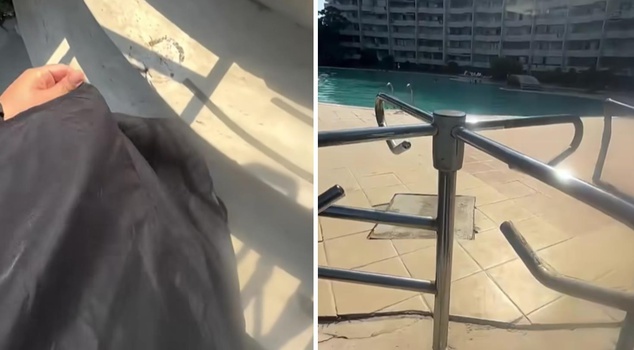
In the Mezitli district of Mersin, housing complex manager H.M.G. was sentenced to 1 year in prison and pool attendant B.D. to 10 months in prison for preventing a mother wearing a haşema from moving around the housing complex pool to keep an eye on her 4-year-old son. The court ruled that the defendants committed the crime of 'preventing the exercise of freedom of belief, thought and opinion.' The detained housing complex manager was released.
A lawsuit filed over allegations that a veiled mother in Mersin was not allowed around the pool because of her clothing has been decided. In its reasoned judgment, the court emphasized that the defendants' actions constituted an interference with the mother's lifestyle.
RESIDENTIAL COMPLEX MANAGER RELEASED
In the case heard at Mersin 25th Criminal Court of First Instance regarding the incident that occurred on June 19 at Zafer Residential Complex in Mezitli district, a verdict was issued concerning detained residential complex manager H.M.G. and pool attendant B.D., who was subject to a judicial control measure. The judge sentenced H.M.G. and B.D. to one year in prison each for the offense of "preventing the exercise of freedom of belief, thought and opinion."
Considering the time H.M.G. spent in detention, the judge decided to release H.M.G. and, applying a discretionary reduction, reduced B.D.'s sentence to 10 months. It was decided to suspend the pronouncement of the judgment against B.D. and subject B.D. to a 5-year probation period.
"SHE MAY ACCOMPANY IN A BIKINI OR SWIMSUIT"
The reasoned judgment included the information that pool attendant B.D. did not allow A.T., who was wearing a burkini and said that "she was around the pool to keep an eye on her 4-year-old son and would not use the pool," to enter the pool area.
In the judgment, it was described that residential complex manager H.M.G., whom B.D. called by mobile phone, told the mother—who stated that "accompanying her child at the pool was her constitutional right and that the limits of freedom could not be determined"—that "veiled people cannot enter the pool and its surroundings, and if a child is to be accompanied, they can accompany the child in a bikini or swimsuit."
"THE RIGHT TO PROPERTY WAS VIOLATED"
The judgment, which stated that the swimming pool was a common use area of the residential complex residents, included the following assessment:
"It was considered that the residents have the right to benefit from this pool within the scope of their property rights; therefore, the rule applied to the residential complex pool and the application of this rule by the defendants violated the right to property guaranteed by the Constitution and was consequently unlawful. Accordingly, by saying that 'the complainant could be admitted to the pool in a bikini or swimsuit,' the defendants' actions of not admitting her to the pool in a burkini—used by veiled individuals to enter pools or the sea—were considered to constitute interference with the complainant's lifestyle preferences arising from her beliefs, thoughts and opinions through unlawful conduct, and to amount to forcing her to change them."
DEFENDANTS: WE APPLIED THE RULES FOR HYGIENE REASONS
The reasoned judgment also included the defendants' defenses. B.D. argued that they were an employee and were carrying out instructions. H.M.G. claimed that because they helped everyone with their work, they were nicknamed "manager," but were not the manager, and that they applied the rules due to a board of directors decision and hygiene.
"THE POOL RULES ARE ARBITRARY"
The court evaluated the defendants' defenses in the final section of the judgment with the following statements:
"It was found that defendant H.M.G.'s defenses that they were not the manager did not reflect the truth; on the other hand, no general assembly decision was found in the residential complex decision book regarding the application of the relevant article written on the sign concerning entering the pool, and therefore the pool rules applied were arbitrary. Furthermore, although defendant B.D. stated in their defense that they were 'an employee and a person who applies the rules,' unlawful instructions cannot be carried out; even if such an instruction and duty had been given in writing, this provision regulated in Article 137 of the Constitution (unlawful order) with respect to public services must be applied a fortiori in other areas as well. For the reasons explained, B.D. was responsible for their actions. Apart from all this, it was not understood why swimsuits and bikinis and clothing referred to as 'burkini or long shorts' were subjected to different treatment; people may prefer to wear these clothes for reasons such as their beliefs and health reasons, and these preferences of people cannot be arbitrarily restricted. Considering that the defendants' defenses were aimed at avoiding crime and punishment, it was decided that they be punished."
THE CHIEF PUBLIC PROSECUTOR'S OFFICE HAD LAUNCHED AN INVESTIGATION
Following the incident, the Mersin Chief Public Prosecutor's Office had launched an investigation. Residential complex manager H.M.G. and pool attendant B.D., who were taken into custody on charges of "inciting the public to hatred and hostility or insulting" and "depriving a person of their liberty," were arrested. B.D. was released during the trial process subject to judicial control conditions.