27.11.2026 01:11
A 70-year-old man skating on the world-famous Lake Louise in Alberta, Canada, died after falling into the water when the ice broke. It emerged that two other people had a similar accident at the same lake a day earlier, while experts noted that above-normal temperatures made ice formation difficult. A warning was issued that the strong El Niño effect could reach record levels in the coming months.
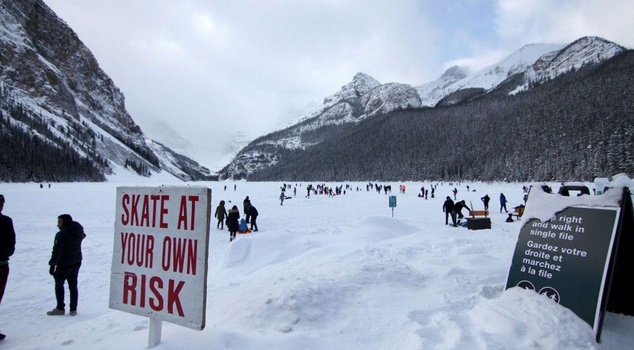
In Lake Louise, located in Banff National Park in Alberta, Canada, where skating enthusiasts flock during the winter months, the ice broke; a 70-year-old Banff resident fell through the ice and died. According to police, the unidentified man fell into the water after breaking through thin ice while skating alone on the lake Tuesday evening. A rescue team found the man two hours later; he was taken to hospital, where he died.
TWO MORE PEOPLE HAD FALLEN THROUGH THE DAY BEFORE
The fatal accident was not the first incident at the same lake. On Monday, two more skaters fell into the lake's icy waters, and both were rescued. In an announcement issued Monday, Parks Canada called on visitors to the world-famous park to "think twice" before stepping onto the ice. The agency warned, "Visitors should be able to rescue themselves if they fall into the water. If you choose to skate on natural ice, you do so at your own risk." The agency also reminded that ice at the start of the season is unpredictable, that it does not monitor the safety of natural ice surfaces, and that it does not mark dangerous spots. The Royal Canadian Mounted Police, meanwhile, offered its condolences to his family and warned the public about the dangers on the ice.
NOVEMBER WAS 3 DEGREES WARMER
The accidents coincided with a period when Canada was experiencing a November with above-normal temperatures. In Toronto, the country's largest city, temperatures reached 15 degrees this month. Environment Canada meteorologist Alysa Pederson said temperatures in Alberta were about 3 degrees above the recorded average for November. Pederson noted that while temperatures normally drop below minus 10 degrees for a few days in November, this year they stayed at minus 6 on the coldest day, saying, "When temperatures don't drop enough, ice formation becomes more difficult."
RECORD EL NIÑO WARNING
Environment Canada's seasonal forecast indicates that winter will be warmer than average across much of the country from Vancouver to Halifax. One reason is the El Niño phenomenon, which affects global weather by changing wind patterns in the Pacific. Pederson said, "We are currently in a very strong El Niño event; it could break records when it peaks in the next few months." The meteorologist noted that warm weather increases not only the risk of thin ice but also avalanches, and called on those heading outdoors to be careful.