19.11.2026 00:33
Ukrainian soldiers have been fighting Russian troops for 7 months in an old Soviet gas pipeline in the Kharkiv region, where drones cannot fly. They have advanced 15 kilometers along the line called the 'Kupyansk metro'.
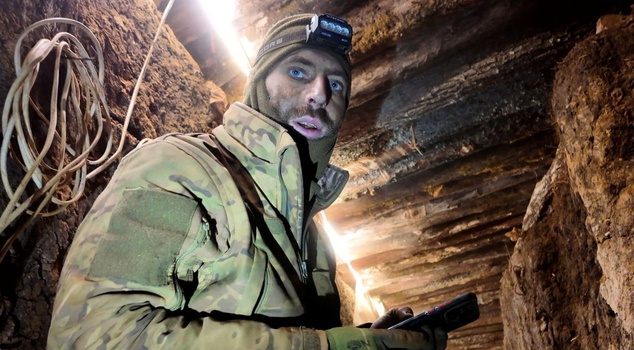
The new front in the war in Ukraine is underground. Ukrainian soldiers have been living inside an old Soviet gas pipeline in the Kharkiv region in the country's northeast for the past seven months, fighting Russian troops there; BBC defense correspondent Jonathan Beale entered this underground front near Kupyansk.
The pipeline, slightly more than a meter in diameter, can only be traversed by crawling. But compared with the drones that fill the sky above the front line and make it almost impossible for either side to advance, this place is relatively safe.
SOLDIERS CALL IT THE "KUPYANSK METRO"
A specially designed electric vehicle is used to transport soldiers and materials along the pipeline. The soldiers have named this line the "Kupyansk metro." The BBC team traveled for 40 minutes in this vehicle, heads bowed and legs crossed. At the entrance to the tunnel, the first thing that stood out was the lingering smell of gas and the heavy, stale air.
The Russians were the first to use the pipeline. Russian soldiers used this pipe to infiltrate the nearby city of Kupyansk in September 2025. Russia had previously used underground pipelines in the capture of Avdiivka in 2024 and in fighting in the Kursk region. Ukrainian forces, meanwhile, gradually turned the situation around.
A soldier nicknamed "Musician" says he has spent the last three months underground, coming to the surface only briefly to clean up and go to the toilet. Vovochka, returning from positions on the surface, says, "It's more comfortable inside the pipe, because drones don't fly here, and artillery shells and guided bombs don't fall here either."
THEY ADVANCED 15 KILOMETERS IN 7 MONTHS
Operation Veles, named after the underworld god in Slavic mythology, began in April. Since then, Ukraine has advanced 15 kilometers along the pipeline. Soldiers of the 13th Khartiia Brigade of Ukraine's National Guard began by clearing the water, debris, and Russian barricades inside the line. According to the soldiers, some barricades had been booby-trapped, and the bodies of Russian soldiers had been piled on top of others.
Ukraine said it killed more than 100 Russian soldiers and captured 30 during the operation. Living in a confined space is hard on the soldiers: Commander Biashym says some soldiers have had panic attacks, while others have had difficulty breathing. Hundreds of Colombian volunteers also took part in the operation; one of them said it took 30 days to clear just 500 meters.
"THE ONLY WAY IS TO FIGHT UNDERGROUND"
Zanuda, the brigade's planning chief, said, "Ground operations are now almost impossible. Everyone understands that for now, the only way to fight is underground." Zanuda, recalling that during the Soviet era oil, gas, and ammonia were transported to Europe through Ukraine, predicted that such missions would increase: "Pipelines run everywhere."
Ukrainian President Volodymyr Zelensky described the operation as a success. The operation helped retake some lost territory and provided a morale boost, but on its own did not change the course of the war.
Source: BBC