13.10.2026 07:20
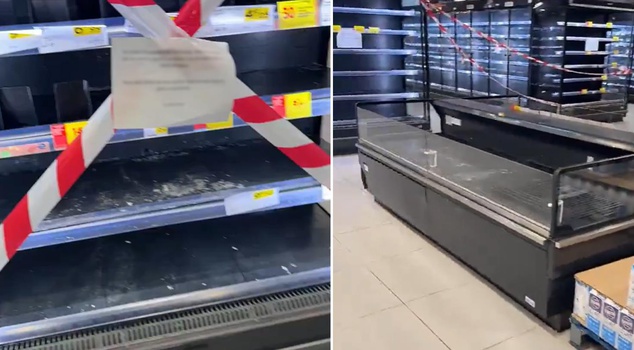
In France, hackers seized control of the cooling systems of hundreds of supermarkets, raising temperatures to as high as 50 degrees. Due to the attack, meat, fish, dairy products, and frozen foods became unusable, while it was stated that the damage could reach millions of euros. As the Paris Prosecutor's Office launched an investigation into the attack, which also caused fires in some markets, it emerged that the hackers exploited security vulnerabilities in old cooling software.
In a cyberattack carried out in France on the night connecting October 11 to October 12, the cooling systems of the country's leading supermarket chains were hijacked. Instead of stealing customer data or accessing bank accounts, the attackers interfered with the temperature control systems of the refrigerators in the supermarkets.
Hackers who gained remote access activated the automatic defrost process of the cooling systems. Normally intended to run briefly, this process continued for hours in some supermarkets.
According to the French newspaper Le Monde, the attackers increased the duration of the defrost process from one hour to eight hours, causing alarm systems to activate late. As a result, a large number of products spoiled before supermarket employees noticed the situation.
TEMPERATURE ROSE TO 50 DEGREES, SOME EQUIPMENT MELTED
The most striking detail of the attack was the unusual temperatures recorded in the cooling systems. While the temperature in the cold storage rooms of some supermarkets rose to 50 degrees, it was reported that equipment at an Intermarché store in La Haye in the Manche region melted under the effect of temperatures reaching 80 degrees.
Charles Dezon, owner of an Intermarché store in Gradignan in the Gironde region, said the attack probably began around 11:00 p.m., but came to light around 4:00 a.m. when it was noticed that the warehouse had flooded.
It was stated that the automatic fire extinguishing system was activated due to the excessive rise in temperature. French authorities confirmed that some fire incidents linked to the attack also occurred.
HUNDREDS OF SUPERMARKETS AFFECTED
The attack was first detected in the Intermarché and Coopérative U supermarket chains. In initial statements, it was announced that 150 to 200 Intermarché stores and about 100 Coopérative U branches were affected.
However, subsequent information published in the French press revealed that the attack spread over a much wider area.
According to the latest data reported by Le Monde, about 300 stores in the Intermarché and Netto group, close to 100 within Coopérative U, 80 in the Carrefour chain, and about 30 at Monoprix were affected by the attack. Similar problems were also experienced at some stores affiliated with the E.Leclerc group. Thus, the number of stores affected by the attack exceeded initial estimates.
TONS OF FOOD WENT TO WASTE, DAMAGE COULD REACH MILLIONS OF EUROS
After the attack, meat, fish, dairy products, and frozen foods whose cold chain was disrupted were withdrawn from sale. Many supermarkets had to destroy their products to avoid risking customers' health.
It was reported that the total damage of two supermarkets in Haguenau in the Alsace region reached 270,000 euros. The owner of an Intermarché store in Gradignan, meanwhile, announced that product losses of 21,000 euros were experienced at his business alone.
It is stated that the total damage across France has not yet been finalized, but the loss could reach millions of euros, even tens of millions of euros. The fact that some businesses' insurance policies do not cover damages caused by such cyberattacks also creates a separate problem.
SECURITY VULNERABILITY BEHIND THE ATTACK IDENTIFIED
There was an important development in the investigation regarding the technical vulnerability used by the attackers.
According to information in the French press, the attack exploited security vulnerabilities in cooling control software developed by the Danish company Danfoss.
Danfoss announced that most of the affected systems were old products that had reached the end of their service life and no longer receive software and security updates. It was stated that the company's AK-SM800 and AK-SC355 models were also among the affected systems.
The company reported that it had previously advised its customers to install security updates and renew their old systems.
PARIS PROSECUTOR'S OFFICE LAUNCHED AN INVESTIGATION
After the attack, the Paris Prosecutor's Office took action. In the investigation transferred to the cybercrime unit, the aim is to identify the businesses affected by the attack, determine financial damages, and investigate the connection between the fires that occurred and the attack.
The French National Information Systems Security Agency (ANSSI) also joined the examinations. French authorities announced that contact had been established with the cybersecurity agencies of other countries because similar systems are also used in other European countries.
European Union Commissioner for Agriculture and Food Christophe Hansen condemned the attack and called for more measures to be taken to protect food safety.
RETURN TO NORMAL IN SUPERMARKETS COULD TAKE DAYS
While cooling systems were restarted in some stores affected by the attack, it was reported that the systems were not reconnected to the internet against the risk of a new attack.
Due to the destruction of spoiled products and the restocking of shelves, it was stated that a return to normal in supermarkets could take several days.
On the other hand, no hacker group has yet claimed responsibility for the attack. The investigation into the identity and possible motives of the attackers is ongoing.