27.11.2026 10:03
Following the stranding of rarely seen venomous sea snakes on the southern coast of the US state of California, scientists warned the public. It is assessed that the snakes, whose venom can cause muscle damage, paralysis, and breathing difficulty, were carried farther north by ocean waters warmed by El Niño. Nests belonging to rare sea turtles have also been identified in the region, and citizens were asked not to touch these creatures under any circumstances and to notify the relevant institutions when they see them.
Scientists sprang into action after rare venomous sea snakes washed ashore on the southern coast of the US state of California. While citizens were warned against the snakes, whose venom can cause muscle damage, paralysis and breathing difficulties, nests belonging to rare sea turtles were also identified in the region.
SEEN ONLY 8 TIMES SO FAR
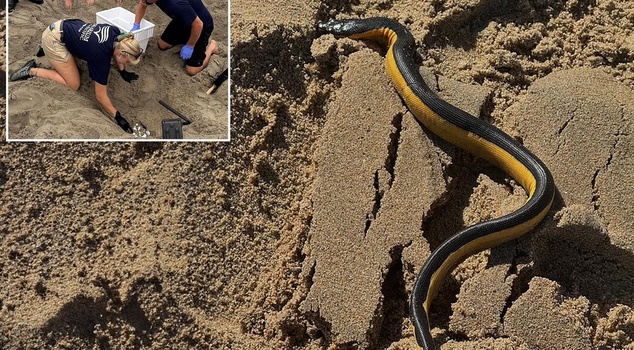
Most recently, on November 22, a yellow-bellied sea snake was found at Bolsa Chica beach in Orange County. The snake was reported to be the eighth specimen recorded in Southern California to date. It was stated that the venom of this generally non-aggressive species can cause serious health problems.
IT CAN CAUSE PARALYSIS AND BREATHING DIFFICULTIES
Yellow-bellied sea snakes, about 45 to 76 centimeters long, can be distinguished by their dark backs and bright yellow bellies. Scientists warned that the venom of these snakes can cause serious health problems such as muscle damage, paralysis and breathing difficulties.
LINKED TO WARMING OCEAN WATERS
Researchers believe that ocean waters being warmer than normal, linked to the El Niño weather phenomenon, pushed these creatures farther north than their usual habitats. In late November, while seawater temperatures off the US west coast normally range between 13 and 18 degrees, air temperatures on Southern California beaches are above seasonal norms.
FIRST RECORDED IN 1972
Greg Pauly, an expert at the Los Angeles County Natural History Museum, stated that yellow-bellied sea snakes were first seen in California in 1972. At that time, a strong El Niño was also in effect, and a snake of the same species was found at San Clemente beach.
RARE TURTLE NESTS ALSO FOUND
Scientists also identified rare nests belonging to olive green sea turtles in the Orange, Ventura and Santa Barbara regions. It is assessed that the turtles may have headed to different areas to lay eggs due to rising water temperatures in their usual nesting areas.
"DO NOT TOUCH" WARNING TO THE PUBLIC
Scientists asked citizens walking on the beaches to be careful around sea snakes that have washed ashore and turtle eggs. People who encounter these creatures were asked to take photos or videos from a safe distance and report them to the relevant institutions along with location information. It was emphasized that snakes, turtles and their eggs should absolutely not be touched.