11.11.2026 14:21
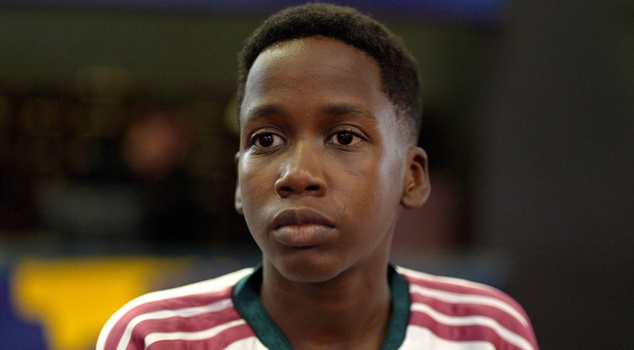
Real Madrid star Vinícius Júnior sent a personal video to 13-year-old Zaher, who lost both legs in a drone attack in the civil war in Sudan. The boy, who watched Vinícius's message inviting Zaher—who is learning to walk again with prosthetic legs in Cairo—to a Real Madrid match, left the room and returned wearing a Vinícius jersey.
In a dark room in Cairo, a 13-year-old boy stares at the television screen almost without blinking. On the screen, Real Madrid star Vinícius Júnior speaks in Arabic and addresses the young boy directly: "Hello Zaher!" Zaher barely moves, eyes wide, locked on his favorite footballer.
Zaher and the BBC team first met a year ago among the ruins of Sudan's capital, Khartoum. He was a quiet little boy bearing the marks of war; one of millions of children whose lives have been turned upside down since the country's army and the paramilitary Rapid Support Forces (RSF) began fighting in 2023.
According to the United Nations children's agency UNICEF, more than 17 million children in Sudan are currently in need of humanitarian aid. The agency says it has been able to verify that at least 4,300 children have been killed or maimed, but believes the true figure is much higher.
Zaher had lost both legs in a drone attack. With limited access to specialist treatment, Zaher dreamed of the day he could walk again and play football.
More than a year later, in an apartment in Egypt's capital, Zaher greeted the BBC team with a huge hug. His mother, Habiba, hugged them too. The shy, withdrawn boy they remembered is almost unrecognizable: self-confident, mischievous, constantly smiling and standing tall on two new prosthetic legs.
Cairo has been his home for about a year. Here he underwent surgery and months of rehabilitation; now he can walk again and kick a ball.
A PERSONAL VIDEO FROM VINÍCIUS
In their first meeting in 2025, Zaher said his favorite footballer was Vinícius Júnior. This information was passed on to the Real Madrid star, who said he wanted to send a personal video of support. The video was watched together when they reunited in Cairo.
The Brazilian footballer begins the video: "I heard about your story. I know how difficult the last few months have been for you." Vinícius has become a leading voice challenging racism in football and supporting Black people.
A smile appeared on Zaher's face when the star footballer told the little boy: "You are a very hard-working Black man. I really hope you use your new prosthetic legs well, return to football and find happiness. You deserve it." Then came the invitation: "I want to invite you to a Madrid match. We can spend a day together."
Deeply moved by this message, Zaher stood up and left the room. A few minutes later he returned in a new Vinícius Júnior football shirt. Hoping that one day he would get a visa and be able to accept the offer, he said: "Tell Vinícius that I love him." "The message really encouraged me a lot." His mother Habiba said: "It is as if the whole world is supporting Zaher, wanting him to succeed."
A CHILDHOOD SHATTERED BY WAR
Zaher lost his legs in 2024 when he and his mother were trapped in Khartoum. Much of the city had been turned into a battlefield because of the fighting between the Sudanese army and the RSF. Food and basic necessities were scarce, and the family did not have enough money to flee. To survive, they sold lentils on the streets.
One morning, as Zaher and his mother were working side by side, a drone attack struck. Recalling the incident last year, Habiba said: "Suddenly I looked at my son and he was bleeding. Everything was covered in blood." "When he woke up, he would ask, 'Why did you let them cut off my legs?' I could not answer."
At that time, Zaher moved through the rubble of his neighborhood in his wheelchair, passing burned cars, abandoned tanks and destroyed houses. Zaher, who loved football very much before the war, could play only on his knees after the attack; a painful process that exposed him to a serious risk of infection. "I wish I had prosthetic legs so I could play football with my friends the way I used to," he had said.
His story resonated far beyond Sudan. In an online campaign led by Dena Latif, a British lawyer of Sudanese origin who saw the BBC report, £45,000 ($60,000) was raised for medical costs. But Zaher and his mother had no passports, and their birth certificates had been destroyed during the war. After months of planning, the two were able to fly to Cairo, where an apartment filled with food had been prepared for them and medical appointments had been arranged.
A CHANCE TO BE A CHILD AGAIN
After another surgery, Zaher underwent months of physiotherapy, learned to use his prosthetic legs and received psychological support to help him overcome his trauma. Dr. Bintelmuna Eltayeb, one of the doctors involved in his treatment, says: "He was shy, a little depressed and sad. It was almost impossible to get a smile out of him, but now you can see him laughing. His self-confidence is very high."
Eager to try new things, from horse riding to cycling, Zaher wants to become a pilot. He has not yet played football, but he is looking forward to playing a match with his friends back home. His mother, Habiba, is worried about her son's future, his education and how he will be received in Sudan, which is still in the grip of civil war.
The state of emergency in Khartoum has been lifted and the Sudanese army has regained control, but buildings across the capital lie destroyed. According to a statement by the US and 30 other Western countries, 41 percent of Sudan's population is experiencing high levels of food insecurity. Zaher and his mother have now returned to Khartoum; they hope that as Zaher grows, his prosthetic legs can be checked and adjusted there.
Dena Latif says, "I hope Zaher's story does not end with him," and hopes that his recovery will bring more attention and funding to thousands of Sudanese children who have suffered life-changing injuries.