05.02.2026 07:50
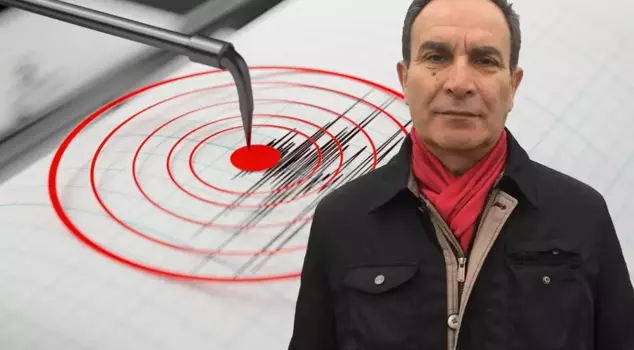
Earthquake expert Prof. Dr. Haluk Eyidoğan stated that the expected major earthquake in the Sea of Marmara will affect not only Istanbul but also 7 to 10 provinces along the Marmara coast. Eyidoğan emphasized that the term "Istanbul earthquake" used in the public is incomplete and misleading.
Earthquake expert Prof. Dr. Haluk Eyidoğan stated that the major earthquake expected to occur in the Sea of Marmara will affect not only Istanbul but also the provinces bordering Marmara, and therefore the process should be considered as a "Marmara earthquake" rather than an "Istanbul earthquake."
Speaking at the "Disaster-Resilient Tekirdağ Workshop" organized by Tekirdağ Metropolitan Municipality at the Yılmaz İçöz Stage, Eyidoğan expressed that the term "Istanbul earthquake," which is frequently used in public discourse, does not fully reflect the reality.
"7 TO 10 PROVINCES BORDERING MARMARA WILL BE AFFECTED"
Pointing out that the expected earthquake will occur not within Istanbul but in the Sea of Marmara, Eyidoğan said, "They say 'Istanbul earthquake,' but the earthquake will not be in Istanbul; it will be in the Sea of Marmara. If an earthquake of magnitude 7 or higher occurs in the Sea of Marmara, 7 to 10 provinces bordering Marmara, especially Istanbul, will be affected. Therefore, this earthquake is not an Istanbul earthquake; it is a Marmara earthquake."
Eyidoğan emphasized that an earthquake of magnitude 7 or higher occurring in Marmara will negatively impact not only the region but also the entire Turkey socially and economically.
"DESTRUCTION CANNOT BE EXPLAINED SOLELY BY FAULTS"
Indicating that the magnitude of the earthquake, rather than the fault line, is decisive in how cities are affected by earthquakes, Eyidoğan stated: "There are provinces with faults running through them that do not collapse, and there are provinces far from faults that do collapse. We clearly saw this in the earthquakes centered in Kahramanmaraş. So, it is not necessary to attribute the event solely to the fault. If we had attributed it only to the fault, the Avcılar district would not have collapsed in the Gölcük-centered earthquake on August 17, 1999. Therefore, major earthquakes are regional earthquakes, and if there are faults in the structures, the ground, or the buildings, it finds and destroys them. So, this is a reality. Destruction cannot be explained solely by faults. Errors in the structure and the ground will definitely emerge in major earthquakes."
CRITICAL WARNINGS FROM THE PROFESSOR
Eyidoğan noted that soil studies, proper site selection, and effective supervision are of vital importance. He emphasized that incorrect planning, liquefaction, and settling in landslide areas pose significant risks, stating, "Settling in unfavorable locations for buildings is the first mistake. The second mistake is to open such areas to development. Therefore, such places should be prohibited for construction. Even if there is no soil problem, mistakes made during the construction process are significant. In other words, we have serious deficiencies in the process of producing earthquake-resistant structures. Therefore, when these factors come together, there is no hope of escaping from the earthquake."