11.08.2026 09:41
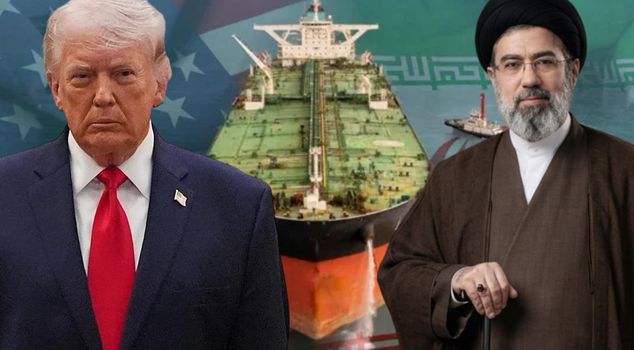
Statements from Iran and Oman that talks on a new arrangement to manage passage through the strategically important Strait of Hormuz have been 'positive' and are at an advanced stage have raised hopes for the resumption of shipping traffic. The Tehran administration has set six conditions for the US to reopen the strait, the most notable of which was a demand for 'war reparations' from the US. US President Trump, in response to Iran's demand, stated that he too is seeking reparations from Tehran.
Statements that talks on a new arrangement to manage passage through the strategically important Strait of Hormuz between Iran and Oman were 'positive' and at an advanced stage have raised hopes that ship traffic will resume.
6 CONDITIONS FOR THE US TO OPEN HORMUZ
In recent days, talks have focused on a potential new route through the strait under the joint responsibility of Iran and Oman. However, amid growing optimism, Iran has publicized a series of demands it says the US must meet before the vital waterway reopens.
WILL THE US MEET THE DEMANDS?
While most of these demands go far beyond some sections of the Memorandum of Understanding signed between Iran and the US on June 17, some repeat the demands and link them to the reopening of the strait. So what are these conditions and can the US meet them?
In a statement broadcast on Iran's state television IRIB, Mohammad Baqer Zolkadir, former secretary of Iran's Supreme National Security Council and currently an advisor to religious leader Mojtaba Khamenei, warned that the US must "correct its behavior" and meet a series of demands.
The statement said that "correcting behavior" meant the following:
1. Do not threaten Iran in any way and do not insult the sacred values of this nation. Iran says the US must stop threatening the country and provide assurances that such threats will not be repeated. This is largely a political and security demand. While ceasefires implicitly assume restraint from both sides, publicly demanding guarantees against future threats appears to be a broader strategic condition rather than a condition explicitly stated in the terms of the previously reported interim agreement.
2. Permanently end the war and aggression against Iran and its allies in Lebanon, Palestine, Yemen, and Iraq. Iran insists that military operations be stopped not only against itself, but also against its allied and partner groups in Lebanon, Palestine, Yemen, and Iraq. The June memorandum of understanding used the phrase "all fronts, including Lebanon," indicating a quest for broader regional security guarantees by naming other countries.
3. Lift the naval blockade and withdraw your forces (naval and air) from around Iran. According to the US-Iran memorandum of understanding signed in June, the US was required to end its blockade within 30 days, but this was not directly linked to the reopening of the strait.
4. Pay compensation for the damage inflicted on Iran in the two aggressive wars. This includes the 12-day war in 2025 as well as the most recent war. Compensation mechanisms were expected to be negotiated as part of the final agreement after the June memorandum of understanding. But Tehran is now linking compensation directly to the reopening of the Strait of Hormuz.
5. Lift the "cruel and illegal" sanctions imposed against the Iranian nation. A timeline for lifting sanctions was already expected to be part of negotiations toward a final settlement. So Iran is not raising a completely new issue here. What is new is its insistence that sanctions relief be explicitly tied to the reopening of the strait.
6. Unconditionally release the frozen and stolen assets of the Iranian people. This demand is also not new. The release of blocked or frozen overseas assets has been discussed before. These six conditions expand on the terms Iran says must be met for the Strait of Hormuz to be reopened.
BBC Middle East analyst Sebastian Usher says this shows Iran's stance has hardened: "These are conditions that exist as part of the framework Memorandum of Understanding, but the timing and mechanism seem very different." According to Usher, Tehran may believe it is in a stronger position because the Strait of Hormuz is "essentially still closed."
However, Trita Parsi of the American foreign policy think tank Quincy Institute told the BBC World Service that the Iranians themselves know these positions are exaggerated and will likely step back. "What is voiced publicly is not always reflected in the same way at the negotiating table," he says.
It is also assessed that this could be a negotiating tactic to prolong the process. Many of the regime's hardline elements are believed to think that Iran accepted the memorandum of understanding too quickly in June. But the agreement broke down just days after it was signed, and mutual attacks resumed.
WOULD THE ATTACK ORDER HAVE BEEN DELAYED IF NEGOTIATIONS HAD LASTED LONGER?
Some in Iran argue that if negotiations had lasted longer—which would have driven oil prices even higher and caused more damage to the global economy—President Trump might not have given the order to attack Iranian targets so quickly.
Iran apparently does not want to make this mistake again. Despite this, it predicts that an agreement on the Strait of Hormuz could be reached within just a few days. Those waiting for ships or tracking oil prices hope Parsi's predictions will prove right.
We used artificial intelligence in translating this article, which was originally in English. A BBC journalist checked the translation before publication.
TRUMP'S REACTION TO "COMPENSATION"
US President Donald Trump, upon hearing Iran's conditions, responded particularly to the "war compensation" demand among these conditions on his social media account.
Trump argued that the compensation issue had never come up in any of their previous talks, called it an "interesting idea," and said that he too would now demand compensation from Iran.
Trump used the following statements in his statement:
"I see that representatives of the Islamic Republic of Iran are demanding compensation for the damages they incurred during the last five months of military conflict (which started due to the fact that they were never allowed to possess nuclear weapons); yet this issue was never raised in any of our previous talks or meetings! Still, it's an interesting idea, because I too now demand compensation from Iran."
I am demanding compensation for all the people they killed and seriously wounded, starting with the actions led by General Soleimani — through roadside bombs and those many firefights they became famous for — including the families of those who lost their lives in the USS Cole attack and the thousands killed in the conflicts. Not to mention the 52,000 people killed in the last five months; compensation must also be paid to the families of the hundreds of thousands of innocent protesters Iran has slaughtered over the past 50 years. I have instructed my representatives to make this issue an indispensable part of all future negotiations. Thank you for your interest in this matter!"