23.11.2026 15:00
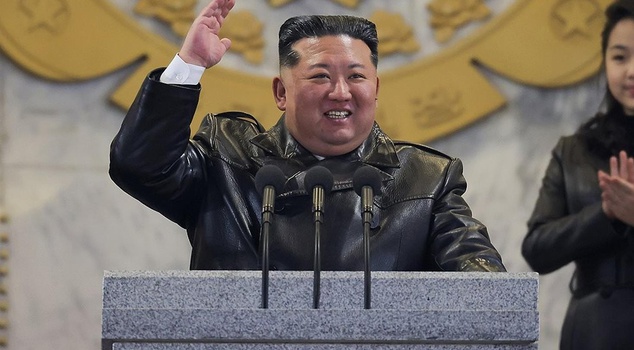
North Korean leader Kim Jong-un set a precedent after more than 30 years by personally accepting the credentials of ambassadors from 10 countries, including Russia, India, Brazil, and Sweden, in the capital Pyongyang. At the historic ceremony, Kim argued that his country has no expansionist goals and stated that they will continue to strengthen their defense capacity. South Korea, meanwhile, assessed this step as an attempt by Kim to strengthen his position as head of state in the international arena.
North Korean leader Kim Jong-un personally accepted the credentials of the new ambassadors of 10 countries in the capital Pyongyang, restarting a diplomatic tradition that had not been practiced for more than 30 years. Kim, who met with representatives of countries including Russia, India, Brazil, and Sweden, argued in his speech at the ceremony that his country is not seeking regional supremacy or expansionism. South Korea, meanwhile, assessed this step as an attempt by Kim to strengthen his position as head of state in the international arena.
AFTER MORE THAN 30 YEARS, A FIRST OCCURRED
North Korean leader Kim Jong-un accepted the credentials of the newly appointed ambassadors of 10 countries at a ceremony held in the capital Pyongyang on November 22.
The Korean Central News Agency (KCNA) announced that at the ceremony Kim met with the ambassadors one by one, shook hands with them, and had commemorative photos taken.
According to Yonhap News Agency, the ceremony was regarded as a historic development in that, after a gap of more than 30 years, North Korea's top leader directly accepted the credentials of foreign ambassadors.
AMBASSADORS OF 10 COUNTRIES MET IN PYONGYANG
The ambassadors accepted by Kim Jong-un represented the following countries:
- Russia
- Indonesia
- Sweden
- Vietnam
- Brazil
- Czech Republic
- India
- Philippines
- Thailand
- Bangladesh
North Korean Foreign Minister Choe Son-hui also attended the ceremony held at the building of the Central Committee of the Workers' Party of Korea.
It was also confirmed by the Russian Embassy that Russian Ambassador to Pyongyang Andrey Podelishev presented his credentials to Kim Jong-un.
A REMARKABLE MESSAGE FROM KIM JONG-UN
Addressing the ambassadors at the ceremony, Kim Jong-un made statements on North Korea's foreign policy and regional security issues.
Arguing that his country does not aim to establish supremacy over other states or expand its territory, Kim justified his policy of increasing military capacity with the need to protect national security.
Kim stated that the international environment is becoming increasingly unstable and said that North Korea is ready to develop friendship and cooperation with countries that respect its sovereignty.
The North Korean leader also gave the message that his country will continue to strengthen its defense capacity.
THERE IS A CONSTITUTIONAL AMENDMENT BEHIND THE HISTORIC STEP
Kim Jong-un's direct acceptance of the ambassadors came after a constitutional amendment carried out in North Korea in March.
With the said regulation, the authority to accept the credentials of foreign ambassadors was given to the office of Chairman of the State Affairs Commission, which Kim Jong-un holds.
In the previous practice, this duty was performed by the Chairman of the Standing Committee of the Supreme People's Assembly.
During the era of North Korea's founding leader Kim Il-sung, ambassadors' credentials were presented directly to the country's leader, while during Kim Jong-il's era this practice was changed.
With the new ceremony, Kim Jong-un has put back into practice the diplomatic protocol of his grandfather's era.
FIRST ASSESSMENT CAME FROM SOUTH KOREA
South Korea's Ministry of Unification assessed Kim Jong-un's personal acceptance of 10 ambassadors as a development with political meaning beyond diplomatic protocol.
Ministry Spokesperson Yoon Min-ho commented that the ceremony was intended to make Kim's title of head of state visible both domestically and internationally.
According to experts, the acceptance of representatives of countries from different regions at the same ceremony may also be an indication of the Pyongyang administration's desire to diversify its diplomatic relations.
In particular, the presence at the ceremony of representatives of Sweden, Brazil, and India, as well as traditional partners such as Russia and Vietnam, drew attention.
NORTH KOREA'S DIPLOMATIC OPENING DRAWS ATTENTION
The ceremony took place at a time when North Korea is again increasing its diplomatic contacts after its long period of closure to the outside world during the pandemic.
According to the Wall Street Journal's assessment, Pyongyang aims to gain new visibility in its foreign relations with the return of foreign diplomats and international representatives to the country. However, North Korea's nuclear program and disputes in its relations with the US continue.
The messages Kim Jong-un gave at the recent ceremony also indicate that Pyongyang aims to develop its international diplomatic relations without stepping back from its defense policy