29.10.2026 23:28
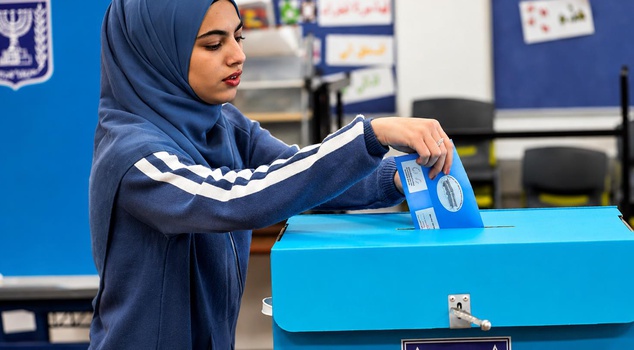
In Israel, general elections will be held on time for the first time since 1988. After the wars against Gaza, Lebanon, and Iran, 7.3 million voters going to the polls tomorrow will determine the new members of the 120-seat Parliament. With 37 parties competing in elections that are critical to Netanyahu's political future, difficult coalition negotiations are expected after the results emerge from the ballot box.
After the four-year term of the government led by Prime Minister Benjamin Netanyahu, voters in Israel will go to the polls tomorrow for the general election to be held on time for the first time since 1988. In the elections to be held after the attacks on the Gaza Strip, the occupation in southern Lebanon and the war launched against Iran together with the US, the members of the 26th term of the 120-seat Israeli Knesset will be determined.
7.3 MILLION VOTERS WILL GO TO THE POLLS
According to data from the Israeli Central Elections Committee, there are 7.3 million voters eligible to vote in the country. Most voters are expected to cast their ballots at 18,000 ballot boxes in 12,018 polling stations to be set up across the country.
While 100,000 personnel have been assigned to ensure the elections run smoothly, 15,000 cameras have been installed at polling stations to ensure security.
A budget of 690 million shekels, approximately 220 million dollars, has been allocated for the general elections.
Voting will begin tomorrow at 07:00 local time and end at 22:00. Voters waiting to vote at the closing time of the polls will also be able to cast their votes.
37 PARTIES WILL COMPETE FOR 120 SEATS
Israel applies a proportional representation system in which the entire country is considered a single electoral district. Voters vote not directly for parliamentary candidates but for political parties.
In the elections, a total of 37 parties and lists will compete to pass the 3.25 percent election threshold and send members to the 120-seat Israeli Knesset.
Parties that pass the election threshold will be represented in parliament according to the proportion of votes they receive. The votes of parties that remain below the threshold will not be taken into account in the distribution of seats.
The elected members of parliament will normally serve for four years.
SOME PALESTINIANS WILL BE ABLE TO VOTE
Approximately 1.2 million Palestinians who hold Israeli citizenship also have the right to vote in the elections. This population is stated to make up approximately 21 percent of the total voters.
More than 750,000 Israeli settlers living in the occupied West Bank and East Jerusalem will also be able to vote in the elections.
On the other hand, approximately 6 million Palestinians living in East Jerusalem, the West Bank and the Gaza Strip will not be able to vote in the elections because they are not Israeli citizens.
The exclusion of this population, which is directly affected by the policies of the Israeli government, from the election process constitutes one of the most striking details of the country's electoral system.
SPECIAL ARRANGEMENT FOR ISRAELIS LIVING ABROAD
According to Israeli law, most Israeli citizens living abroad cannot vote in the countries where they are located. Those who have the right to vote must come to Israel in order to go to the polls.
However, Israeli diplomats and state representatives serving abroad are exempt from this restriction.
Meanwhile, voting for soldiers and commanders began on October 20 at a total of 850 centers, including the Syrian, Lebanese and Palestinian territories held under Israeli military occupation.
NETANYAHU IS RUNNING FOR PRIME MINISTER ONCE AGAIN
The elections in Israel will be between the coalition led by Prime Minister Benjamin Netanyahu and the opposition parties.
Netanyahu, who is the longest-serving prime minister in Israel's history and has held this office for a total of 19 years in different periods, is running to become prime minister again at a time when he is being tried on corruption charges.
The bloc led by Netanyahu includes far-right and ultra-Orthodox parties.
The coalition includes Finance Minister Bezalel Smotrich's Religious Zionism Party, National Security Minister Itamar Ben-Gvir's Jewish Power Party, the Shas Party led by Aryeh Deri, the United Torah Judaism Party led by Yitzhak Goldknopf, and the Israeli People's Party led by Ofer Winter.
THE PROMINENT NAME OF THE OPPOSITION IS GADI EISENKOT
Former Chief of Staff and Yashar Party leader Gadi Eisenkot is among the prominent figures of the opposition bloc against Netanyahu.
In public opinion polls conducted before the election, it is stated that the Yashar Party is in a strong position and that Eisenkot receives high support among voters for the prime ministership.
The opposition bloc also includes the Beyahad (Together) Party led by former prime ministers Naftali Bennett and Yair Lapid, Avigdor Liberman's Yisrael Beiteinu Party, and the Democrats Party led by Yair Golan.
Polls show that both main blocs may have difficulty reaching 61 members of parliament, enough to secure a majority on their own in the 120-seat parliament.
BENNY GANTZ WITHDREW FROM THE ELECTION
Benny Gantz, one of the important names in Israeli politics, a former Chief of Staff and Defense Minister, withdrew his Blue and White Party, which he led, from the election race.
The Ahi Party, which represents ultra-Orthodox Jews, also decided not to participate in the elections.
This decision by the party came after Netanyahu's promise to Ahi Party leader Rabbi Yosef David Abargel regarding the position of deputy minister and that Haredim studying in Torah schools would not be drafted into the military.
PALESTINIAN VOTERS ARE REPRESENTED BY TWO LISTS
Palestinians with Israeli citizenship are represented in the elections by the Joint List and the United Arab List (Raam Party).
The Joint List, formed by the Hadash, Ta'al and Balad parties, is led by Yusuf Jabirin.
Balad leader Sami Abu Shehadeh, on the other hand, was forced to withdraw from the election race just before the Israeli Supreme Court discussed the election ban against him.
On the other side, the Raam Party led by Mansour Abbas is known for the role it plays in coalition negotiations in Israeli politics.
ARAB PARTIES MAY BE DECISIVE IN COALITION BARGAINING
After the March 2021 elections, the Raam Party supported the Bennett-Lapid government with four members of parliament, enabling the government to be formed.
With this development, Raam became the first Arab party to join a government coalition in Israel's history.
After the new elections, there is also a possibility that Raam and the Joint List will gain an important position in coalition negotiations.
While the Arab parties announce that they will work to end the Netanyahu government, they also keep open the option of supporting the formation of a new government.
On the other hand, the opposition bloc led by Eisenkot states that it will not negotiate a government with the Arab parties.
Netanyahu's accusation in the election campaign that the opposition cooperates with Arab parties is also among the important topics of these debates.
THE PRESIDENT WILL ASSIGN THE TASK OF FORMING THE GOVERNMENT
After the elections, eyes will turn to the distribution that will emerge in the 120-seat Israeli Parliament and to coalition negotiations.
Following the announcement of official results, President Isaac Herzog will meet with representatives of the political parties that enter parliament.
During the talks, the parties' proposals regarding the prime ministerial candidate will be received.
The President will not necessarily have to assign the task of forming the government to the leader of the party that receives the most votes. Instead, the person with the highest chance of receiving the support of 61 members of parliament will be tasked.
THE FIRST PERIOD FOR THE COALITION IS 28 DAYS
The leader tasked with forming the government will be given 28 days for coalition negotiations.
If a government cannot be formed within this period, an additional 14 days may be granted.
If the first person tasked fails, the President may hold consultations again and task another person from parliament with forming the government.
The second candidate will have to form the coalition within 28 days.
IF A GOVERNMENT CANNOT BE FORMED, NEW ELECTIONS WILL BE HELD
If the second candidate also fails to form a government, a new opportunity will be given to the members of parliament.
At this stage, for any member of parliament to be tasked with forming the government, they will need to collect the signatures of 61 members of parliament within 21 days.
The person who secures the necessary support will be given two weeks to form the government.
If this process also ends in failure, the Israeli Parliament will be dissolved and the country will go to new general elections within three months.
NETANYAHU MAY REMAIN IN OFFICE AS INTERIM PRIME MINISTER
In Israel, the current prime minister continues to temporarily carry out his duties until a government is formed.
Therefore, if a new government cannot be formed after the elections, Netanyahu may temporarily continue his role as prime minister.
If coalition negotiations fail, Netanyahu's term of office may be extended until a new government is formed.
COALITION BARGAINING WILL BE DECISIVE IN ISRAEL
To date, no political party in Israel has been able to secure a majority in parliament on its own. Therefore, following the election results, coalition negotiations between parties play a decisive role in the formation of the government.
If the parties reach an agreement, the cabinet formed will officially take office after receiving a vote of confidence from parliament.
If coalition negotiations remain inconclusive, Israel will enter an early election process again.
The elections to be held after the wars against Gaza, Lebanon, and Iran will shape not only Israel's new government but also the country's domestic and foreign policy line in the coming period.
.